The AI Tipping Point: How Artificial Intelligence Is Rewriting the Real Estate Playbook
Artificial intelligence is no longer a futuristic perk for tech‑savvy agents — it has become a defining force reshaping the entire real estate landscape. From AI‑powered listing creation to lightning‑fast virtual staging, the industry has entered an era where adopting AI isn’t just smart. It’s survival.
This in‑depth story is inspired by Real Estate News’ feature, “The Ten: Real estate faces an AI tipping point,” which highlights the profound shift occurring within the industry. To explore the full original reporting, visit RealEstateNews.com.
From Cautious Beginnings to a Full‑Blown AI Surge
Before ChatGPT became a household name, tech giants like Google were quietly developing image‑generating AI tools — but with heavy caution. That caution opened the door for a more daring player: OpenAI. Within two months of release, ChatGPT skyrocketed to 100 million users, becoming the fastest‑adopted app in digital history.
The real estate world quickly joined the race. Brokerages adopted AI initiatives, startups flooded the market and tech partnerships exploded as companies searched for ways to leverage generative AI responsibly — and competitively.
Real Estate’s New Reality: Better Experiences, Higher Stakes
A few years ago, early AI listing tools required heavy editing to remove hallucinations. Today, AI‑generated content is more accurate, nuanced and visually impressive than ever. Agents and consumers can redecorate rooms in seconds, create walkthroughs instantly and stage homes virtually with ease.
But with increased power comes increased risk. As WIRED revealed in its “AI slop era” investigation, some tools can produce misleading upgrades or digitally altered features that simply don’t exist. Leaders now weigh innovation against legal obligations, listing integrity and fair housing regulations.
Click to explore the biggest AI risks
• Misleading virtual upgrades
• Biased or inaccurate recommendations
• Data integrity issues
• Regulatory conflict in fair housing and advertising laws
• Over‑reliance leading to skill degradation
Adoption Isn’t Optional Anymore
A recent survey shows that 46% of agents still don’t use AI, and 17% don’t plan to adopt it soon. According to strategist Matt Britton, that hesitation could become a career‑changing misstep. He warns that what agents do in the next few months may define their next decade.
The next leap? Approachable automation. Agents can now build custom GPTs that assist with lead nurturing, onboarding, training and 24/7 client engagement — without complex tech skills.
What Agents Can Automate Today
• Lead qualification and follow‑up
• Email and marketing campaigns
• Training new team members
• Customer service and FAQs
• Property research and market analysis
What This Means for Today’s Professionals
Whether you’re in real estate, mortgage lending, insurance, finance, healthcare or another licensed field, embracing AI is now a strategic advantage. The technology is becoming foundational — much like the internet in the early 2000s.
For professionals seeking to expand skills or stay competitive, Cameron Academy provides modern, flexible licensing and continuing education across Florida and all 50 states. Our programs help professionals stay informed, compliant and prepared for an AI‑accelerated economy.
A Future Defined by Humans and Machines — Together
Real estate will always be a people‑first business. AI won’t replace empathy, negotiation skills or intuition — but it will enhance them.
As Matt Britton noted: “You do not need to be an expert to do something great. You just have to figure out the most important problems you want to solve.”
With AI reshaping the real estate world month by month, now is the moment for professionals to adapt and lead — not chase from behind.
For deeper reporting, visit RealEstateNews.com and explore their full feature on AI’s impact on real estate.
More Articles
Getting licensed or staying ahead in your career can be a journey—but it doesn’t have to be overwhelming. Grab your favorite coffee or tea, take a moment to relax, and browse through our articles. Whether you’re just starting out or renewing your expertise, we’ve got tips, insights, and advice to keep you moving forward. Here’s to your success—one sip and one step at a time!
Newman Properties, a Massachusetts-based investment firm, has expanded its footprint into Connecticut with the $3.65 million acquisition of a 6,350‑square‑foot retail building in Enfield. Anchored by national restaurant chain Red Robin, the property offers the type of stable tenancy investors seek when entering new markets. The deal underscores growing confidence in anchored retail assets and provides a valuable real-world example for real estate professionals studying market analysis, investment strategy, and portfolio expansion.
JPMorgan now expects national home prices to flatten in 2026, but the Sunbelt is telling a very different story. Florida home values are down 5.1%, Texas is down 2.4%, and analysts warn that years of rapid building are finally catching up to the region. As demand stabilizes and inventory swells, real estate professionals — especially in Florida — face a market full of challenges, opportunities, and critical timing decisions.
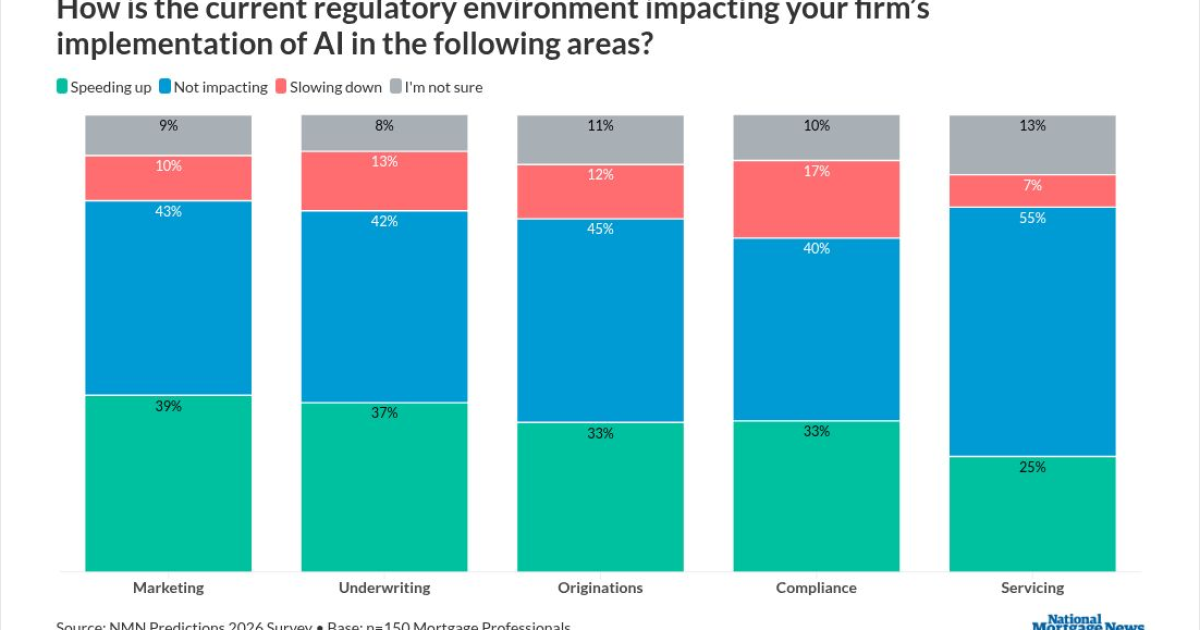
Artificial intelligence is finally stepping into the mortgage underwriting spotlight, with 57% of mortgage professionals predicting it will drive the most transformative industry shift in 2026. Thanks to major advancements in language models and workflow automation, AI is now capable of navigating the messy, document-heavy realities that have long slowed underwriting. From faster preapprovals to improved credit analysis and real‑time income verification, AI is streamlining processes while allowing underwriters to focus on true risk management. As regulatory winds shift and grassroots pressure builds within lending teams, the industry is entering a pivotal era where AI‑powered underwriting becomes not just an advantage — but an expectation.
Portland’s top 20 office towers have lost an unprecedented 70% of their value since 2019—plunging from $3 billion to under $1 billion—triggering tax revenue shortfalls, budget crises, and a surge in appeals as the city grapples with its biggest commercial real estate reset in modern history.
South Florida’s luxury real estate market just raised the bar again — this time with a $1 million virtual reality system that lets buyers walk through Dolce & Gabbana’s upcoming Miami tower long before construction wraps. Real estate master’s students were given an immersive look inside the project, discovering how VR is transforming high‑end development, influencing buyer psychology, and shaping the future skills today’s professionals need.
Long Island’s commercial real estate scene is kicking off 2026 with a surge of activity—industrial leases in Medford, neighborhood retail trades in Bohemia, Pizza Hut’s new DELCO expansion in Centereach, mixed‑use acquisitions in Melville, and major investor interest in bank‑leased and franchise-backed properties. From warehouses to restaurant rebrands, these deals highlight a region evolving fast and offering fresh opportunities for agents, investors, and professionals looking to stay ahead in the market.