The AI Tipping Point: How Artificial Intelligence Is Rewriting the Real Estate Playbook
Artificial intelligence is no longer a futuristic perk for tech‑savvy agents — it has become a defining force reshaping the entire real estate landscape. From AI‑powered listing creation to lightning‑fast virtual staging, the industry has entered an era where adopting AI isn’t just smart. It’s survival.
This in‑depth story is inspired by Real Estate News’ feature, “The Ten: Real estate faces an AI tipping point,” which highlights the profound shift occurring within the industry. To explore the full original reporting, visit RealEstateNews.com.
From Cautious Beginnings to a Full‑Blown AI Surge
Before ChatGPT became a household name, tech giants like Google were quietly developing image‑generating AI tools — but with heavy caution. That caution opened the door for a more daring player: OpenAI. Within two months of release, ChatGPT skyrocketed to 100 million users, becoming the fastest‑adopted app in digital history.
The real estate world quickly joined the race. Brokerages adopted AI initiatives, startups flooded the market and tech partnerships exploded as companies searched for ways to leverage generative AI responsibly — and competitively.
Real Estate’s New Reality: Better Experiences, Higher Stakes
A few years ago, early AI listing tools required heavy editing to remove hallucinations. Today, AI‑generated content is more accurate, nuanced and visually impressive than ever. Agents and consumers can redecorate rooms in seconds, create walkthroughs instantly and stage homes virtually with ease.
But with increased power comes increased risk. As WIRED revealed in its “AI slop era” investigation, some tools can produce misleading upgrades or digitally altered features that simply don’t exist. Leaders now weigh innovation against legal obligations, listing integrity and fair housing regulations.
Click to explore the biggest AI risks
• Misleading virtual upgrades
• Biased or inaccurate recommendations
• Data integrity issues
• Regulatory conflict in fair housing and advertising laws
• Over‑reliance leading to skill degradation
Adoption Isn’t Optional Anymore
A recent survey shows that 46% of agents still don’t use AI, and 17% don’t plan to adopt it soon. According to strategist Matt Britton, that hesitation could become a career‑changing misstep. He warns that what agents do in the next few months may define their next decade.
The next leap? Approachable automation. Agents can now build custom GPTs that assist with lead nurturing, onboarding, training and 24/7 client engagement — without complex tech skills.
What Agents Can Automate Today
• Lead qualification and follow‑up
• Email and marketing campaigns
• Training new team members
• Customer service and FAQs
• Property research and market analysis
What This Means for Today’s Professionals
Whether you’re in real estate, mortgage lending, insurance, finance, healthcare or another licensed field, embracing AI is now a strategic advantage. The technology is becoming foundational — much like the internet in the early 2000s.
For professionals seeking to expand skills or stay competitive, Cameron Academy provides modern, flexible licensing and continuing education across Florida and all 50 states. Our programs help professionals stay informed, compliant and prepared for an AI‑accelerated economy.
A Future Defined by Humans and Machines — Together
Real estate will always be a people‑first business. AI won’t replace empathy, negotiation skills or intuition — but it will enhance them.
As Matt Britton noted: “You do not need to be an expert to do something great. You just have to figure out the most important problems you want to solve.”
With AI reshaping the real estate world month by month, now is the moment for professionals to adapt and lead — not chase from behind.
For deeper reporting, visit RealEstateNews.com and explore their full feature on AI’s impact on real estate.
More Articles
Getting licensed or staying ahead in your career can be a journey—but it doesn’t have to be overwhelming. Grab your favorite coffee or tea, take a moment to relax, and browse through our articles. Whether you’re just starting out or renewing your expertise, we’ve got tips, insights, and advice to keep you moving forward. Here’s to your success—one sip and one step at a time!
Despite billions poured into proptech and a decade of flashy digital upgrades, the real estate experience remains largely unchanged. Apps made processes smoother, but not more transparent — because the industry’s core structures, data control and power dynamics stayed the same. True disruption will come from platforms that shift information and control to consumers, not just digitize outdated systems.
Early 2026 is delivering a clear message: commercial real estate is entering a recalibration phase. Construction is softening, pending home sales just saw a sharp drop, consumer sentiment is inching upward but remains fragile, and capital markets are tightening as major CRE sectors face rising distress. From data centers powering ahead to CMBS foreclosures climbing and office-to-residential conversions gaining momentum, professionals across real estate, mortgage, insurance, and finance need to stay sharp as the industry shifts.
Discover the real estate roles earning the biggest paychecks in 2026. From investment consultants to commercial leasing managers, this breakdown highlights the salaries, responsibilities, and career paths offering the strongest financial potential in today’s evolving market—perfect for newcomers and seasoned professionals mapping their next big move.
Montana is taking major steps to remove outdated licensing barriers and strengthen its workforce. Governor Greg Gianforte has created a new Licensing Reform Task Force aimed at modernizing regulations, speeding up approvals, and helping more professionals enter high‑demand fields like construction and healthcare. With licensing numbers doubling over the past decade and rural communities facing critical shortages, the state is pushing for faster, more efficient pathways to work. The task force begins meeting in February and will deliver its full reform report by September 2026 — a move that could influence licensing modernization efforts nationwide.
Artificial intelligence has officially moved from novelty to necessity in the real estate world. According to new industry data, 97% of brokerage leaders say their agents now rely on AI tools for everything from listing descriptions to full-scale marketing campaigns. As adoption skyrockets, so do concerns over training, accuracy, and compliance — especially among smaller firms. The message is clear: for today’s real estate professionals, AI literacy isn’t optional anymore.
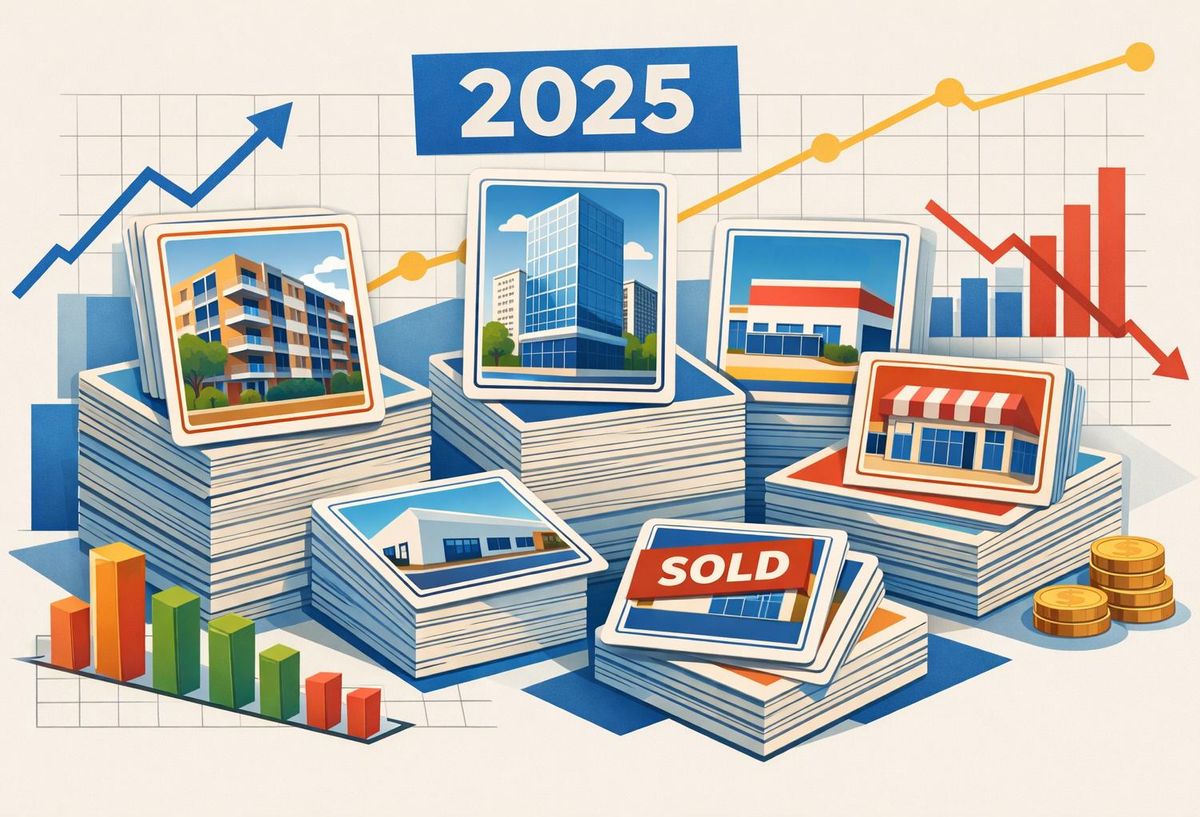
Commercial real estate roared back to life in 2025, with more than $255B pouring into multifamily, industrial, office and retail assets. Major investors moved fast on falling interest rates, improving bond yields and rising confidence across sectors. Multifamily dominated with over $115B in deals, industrial surged under private equity leadership, office saw renewed activity from owner-users and retail proved surprisingly resilient. For today’s real estate and finance professionals, the message is clear: opportunity favors those who stay informed and ready to act.