The AI Tipping Point: How Artificial Intelligence Is Rewriting the Real Estate Playbook
Artificial intelligence is no longer a futuristic perk for tech‑savvy agents — it has become a defining force reshaping the entire real estate landscape. From AI‑powered listing creation to lightning‑fast virtual staging, the industry has entered an era where adopting AI isn’t just smart. It’s survival.
This in‑depth story is inspired by Real Estate News’ feature, “The Ten: Real estate faces an AI tipping point,” which highlights the profound shift occurring within the industry. To explore the full original reporting, visit RealEstateNews.com.
From Cautious Beginnings to a Full‑Blown AI Surge
Before ChatGPT became a household name, tech giants like Google were quietly developing image‑generating AI tools — but with heavy caution. That caution opened the door for a more daring player: OpenAI. Within two months of release, ChatGPT skyrocketed to 100 million users, becoming the fastest‑adopted app in digital history.
The real estate world quickly joined the race. Brokerages adopted AI initiatives, startups flooded the market and tech partnerships exploded as companies searched for ways to leverage generative AI responsibly — and competitively.
Real Estate’s New Reality: Better Experiences, Higher Stakes
A few years ago, early AI listing tools required heavy editing to remove hallucinations. Today, AI‑generated content is more accurate, nuanced and visually impressive than ever. Agents and consumers can redecorate rooms in seconds, create walkthroughs instantly and stage homes virtually with ease.
But with increased power comes increased risk. As WIRED revealed in its “AI slop era” investigation, some tools can produce misleading upgrades or digitally altered features that simply don’t exist. Leaders now weigh innovation against legal obligations, listing integrity and fair housing regulations.
Click to explore the biggest AI risks
• Misleading virtual upgrades
• Biased or inaccurate recommendations
• Data integrity issues
• Regulatory conflict in fair housing and advertising laws
• Over‑reliance leading to skill degradation
Adoption Isn’t Optional Anymore
A recent survey shows that 46% of agents still don’t use AI, and 17% don’t plan to adopt it soon. According to strategist Matt Britton, that hesitation could become a career‑changing misstep. He warns that what agents do in the next few months may define their next decade.
The next leap? Approachable automation. Agents can now build custom GPTs that assist with lead nurturing, onboarding, training and 24/7 client engagement — without complex tech skills.
What Agents Can Automate Today
• Lead qualification and follow‑up
• Email and marketing campaigns
• Training new team members
• Customer service and FAQs
• Property research and market analysis
What This Means for Today’s Professionals
Whether you’re in real estate, mortgage lending, insurance, finance, healthcare or another licensed field, embracing AI is now a strategic advantage. The technology is becoming foundational — much like the internet in the early 2000s.
For professionals seeking to expand skills or stay competitive, Cameron Academy provides modern, flexible licensing and continuing education across Florida and all 50 states. Our programs help professionals stay informed, compliant and prepared for an AI‑accelerated economy.
A Future Defined by Humans and Machines — Together
Real estate will always be a people‑first business. AI won’t replace empathy, negotiation skills or intuition — but it will enhance them.
As Matt Britton noted: “You do not need to be an expert to do something great. You just have to figure out the most important problems you want to solve.”
With AI reshaping the real estate world month by month, now is the moment for professionals to adapt and lead — not chase from behind.
For deeper reporting, visit RealEstateNews.com and explore their full feature on AI’s impact on real estate.
More Articles
Getting licensed or staying ahead in your career can be a journey—but it doesn’t have to be overwhelming. Grab your favorite coffee or tea, take a moment to relax, and browse through our articles. Whether you’re just starting out or renewing your expertise, we’ve got tips, insights, and advice to keep you moving forward. Here’s to your success—one sip and one step at a time!
In 2026, financial advisors are no longer just experimenting with AI — they’re relying on it. Once confined to back-office duties, AI now supports meeting prep, portfolio analysis, and even early-stage financial planning. Advisors say the tech is strengthening client relationships by freeing them from administrative overload, though entry-level roles like paraplanners may feel the squeeze as automation accelerates.
Cybercriminals are weaponizing AI to launch highly convincing email scams and system breaches across the mortgage industry, overwhelming lenders and servicers whose cybersecurity measures can’t keep up. With major companies already hit and regulation lagging behind, experts warn the sector—now considered critical infrastructure—must rapidly upgrade protections, collaborate on threat intelligence, and improve AI governance before the risks escalate further.
Escrow payments are quietly surging across the country as property taxes and insurance premiums spike—pushing many homeowners toward delinquencies and even foreclosure. New data from Cotality shows the sharpest increases hitting the South and Midwest, with Florida among the hardest‑hit states. Even with fixed mortgage rates, rising escrow requirements are driving monthly payments higher and threatening affordability heading into 2026.
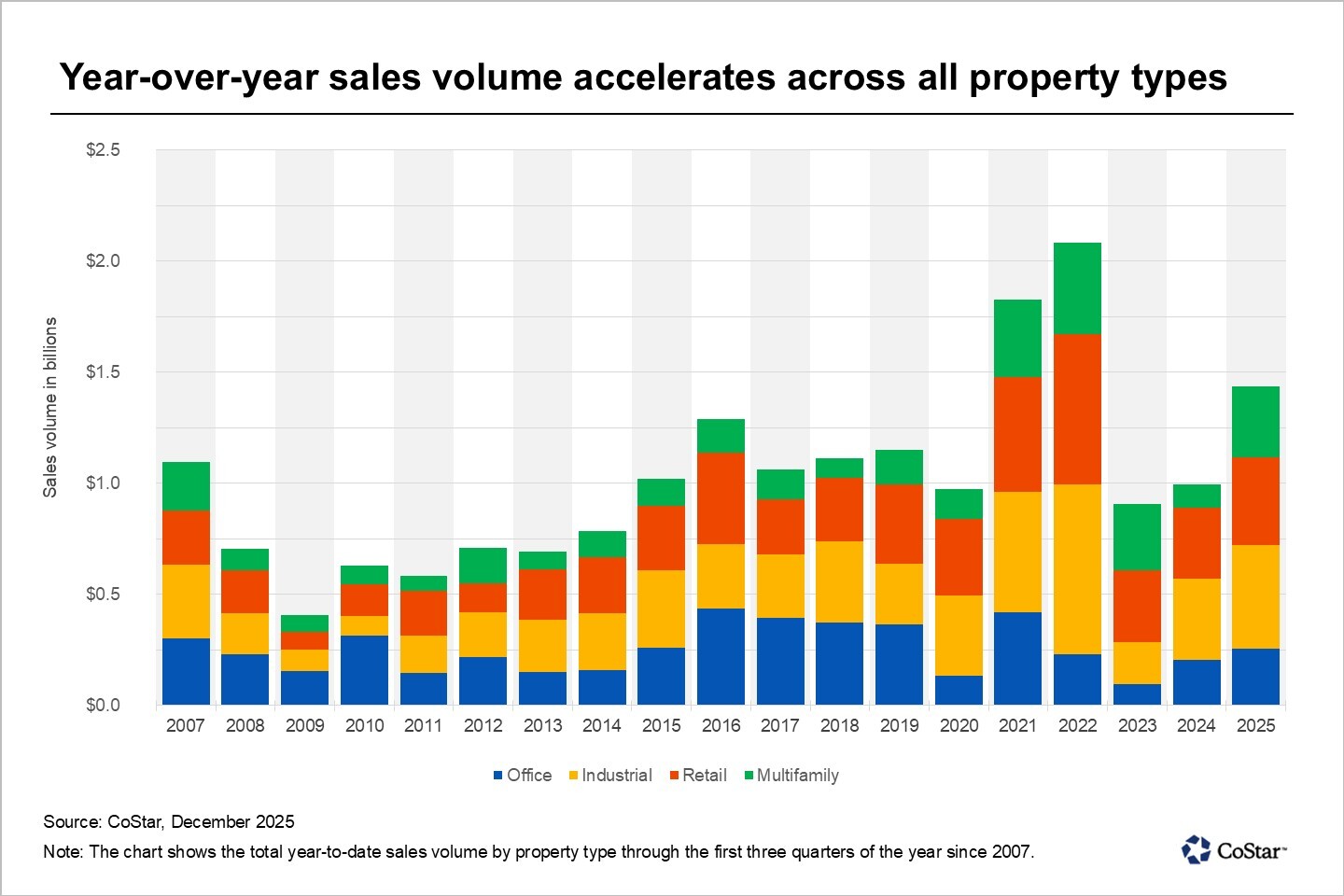
Milwaukee entered 2025 with renewed momentum, posting its strongest commercial real estate sales volume in three years. After a period of uncertainty and high capital costs, investors are returning with a sharper focus on quality assets, realistic pricing, and reliable cash flow. Activity is increasing across industrial, office, multifamily, and retail sectors, signaling a broad-based recovery fueled by stabilizing interest rates and improved market confidence.
As 2026 approaches, the title insurance industry is navigating a complex mix of market recovery, rising fraud threats, and sweeping regulatory changes. Industry leaders say the path forward centers on smarter technology, leaner operations, and stronger support for title agents. With AI-driven workflows, enhanced fraud prevention, and new compliance demands—including FinCEN’s expanded Geographic Targeting Orders—companies like Stewart and First American are reshaping how title work gets done. For real estate and mortgage professionals, the year ahead promises more automation, heightened standards, and major opportunities for those who stay ahead of the curve.
The real estate industry is undergoing a major transformation in 2025 as advancements in AI, proptech, blockchain, and data intelligence redefine how properties are marketed, valued, financed, and experienced. From instant digital valuations and immersive virtual tours to tokenized investments and predictive analytics, technology is reshaping every stage of the real estate lifecycle. Professionals who embrace these innovations—while maintaining the human expertise clients still rely on—will lead the next era of the industry.