In a world where financial transactions are evolving at breakneck speed, Decentralised Finance (DeFi) emerges as a beacon of transformation, promising to revolutionize how we interact with money. Gone are the days when traditional banks held the reins. Today, DeFi stands at the forefront, offering instant, transparent transactions without the constraints of conventional banking systems.
By embracing DeFi and the blockchain revolution, individuals can seize control of their financial futures. This new paradigm opens doors to innovative investment opportunities and fosters a more inclusive global economy. As highlighted in the original article from the London Daily News, the impact of DeFi is monumental, reshaping the very fabric of the financial world.
Understanding Blockchain Technology in Finance
Blockchain technology is at the heart of this transformation, providing a decentralized, secure, and transparent framework for transactions. Unlike traditional systems, blockchain’s distributed ledger records transactions across multiple computers, ensuring no single entity has control. This decentralization enhances security and fosters trust, as altering any entry requires consensus.
Enhances security through cryptography, minimizing fraud risk
Facilitates faster transactions for near-instant cross-border payments
The Purpose of DeFi Applications
In this new financial ecosystem, DeFi leverages blockchain technology to offer decentralized financial services. DeFi promotes a peer-to-peer (P2P) approach, eliminating the need for traditional gatekeepers. Services such as lending, borrowing, and investing become more transparent and user-controlled, as explored in the future of blockchain in finance.
How Does DeFi Work?
DeFi’s foundation in blockchain technology, particularly Ethereum, enables decentralization. Smart contracts, which are self-executing contracts, automate financial processes, removing the need for intermediaries and promoting accessibility, security, and transparency.
Reshaping the Future of Finance
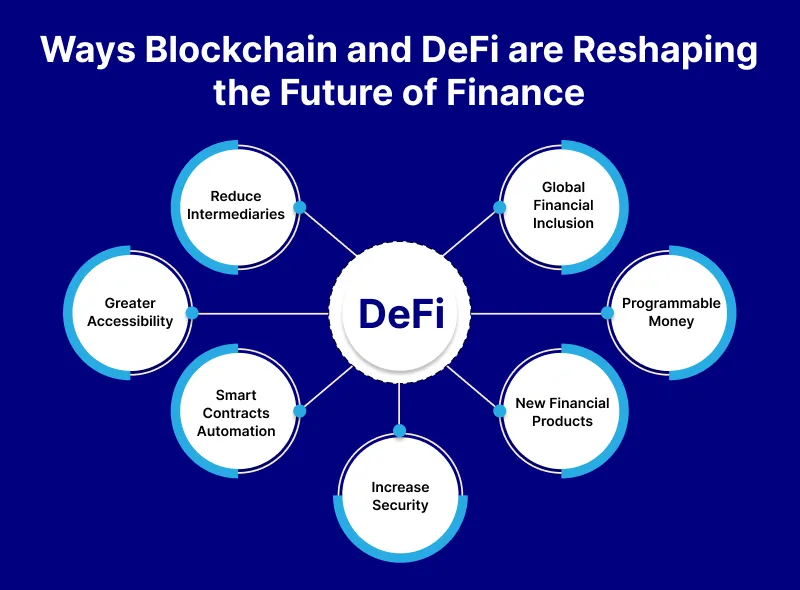
The transformative power of DeFi lies in its ability to address the challenges of conventional financial systems. By minimizing the need for traditional intermediaries, DeFi streamlines transactions, reducing costs and enhancing efficiency. Platforms like Aave exemplify this by allowing borrowers to connect directly with lenders, bypassing banks.
Greater Accessibility
DeFi platforms break down barriers, offering financial services to anyone with an internet connection. This inclusivity is vital in regions with limited access to traditional banking.
Smart Contracts Automation
Smart contracts automate processes, reducing human error and ensuring prompt, transparent transactions.
Increase Security
With its immutable nature, blockchain technology enhances security, making data tampering difficult. Platforms like Uniswap ensure safe, open transactions, reducing fraud risks.
New Financial Products
DeFi introduces innovative financial products, offering more flexibility and alternatives than traditional finance.
DeFi’s potential for global financial inclusion is immense, offering services to underbanked populations worldwide. By eliminating intermediaries and leveraging smartphones, people in rural areas gain access to financial opportunities previously unavailable.
As we navigate this blockchain revolution, investing in DeFi solutions becomes not only feasible but essential. Embracing DeFi unlocks unprecedented opportunities, reshaping the future of finance.
More Articles
Getting licensed or staying ahead in your career can be a journey—but it doesn’t have to be overwhelming. Grab your favorite coffee or tea, take a moment to relax, and browse through our articles. Whether you’re just starting out or renewing your expertise, we’ve got tips, insights, and advice to keep you moving forward. Here’s to your success—one sip and one step at a time!
Florida families are feeling the squeeze as everyday costs, insurance premiums, and homeownership barriers continue to climb. House District 102 candidate Jayden D’Onofrio is calling for a broader, more unified affordability strategy—one that tackles the state’s insurance crisis, supports first‑time homebuyers, and restores real competition in the market. His message centers on transparency, practical solutions, and keeping Florida livable for the professionals, workers, and families who power its economy.
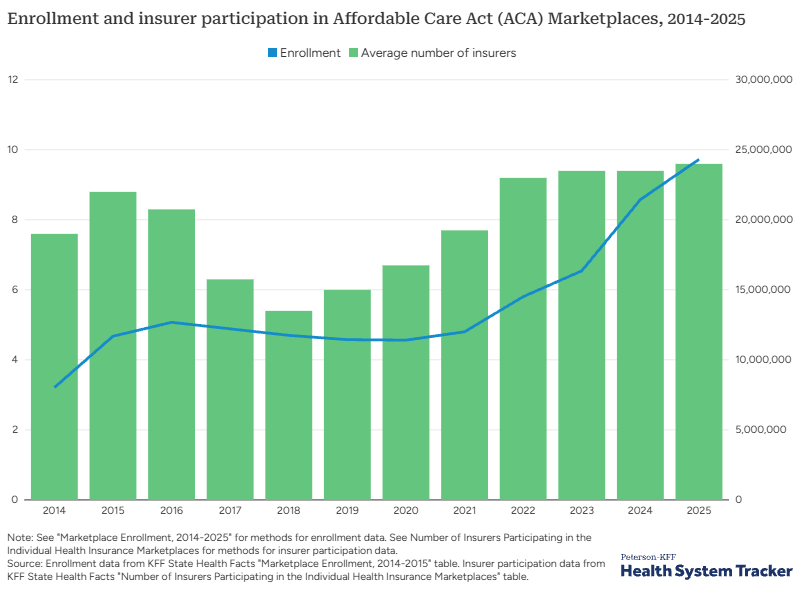
A decade of dramatic change is reshaping America’s health insurance markets. Employer group plans are becoming increasingly dominated by a few powerful insurers, while the ACA individual marketplace is experiencing record‑breaking competition and enrollment. Self‑funded plans are surging, small‑group premiums are driving employers to new coverage models, and major policy shifts in 2025 could redefine affordability for millions. This data‑driven Peterson‑KFF analysis breaks down the trends every insurance, finance, and business professional needs to understand as the industry enters a transformative new era.
Sarasota County is inching closer to approving Winchester Ranch, a massive 8,999‑home community planned for more than 3,100 acres in North Port. With a 7‑1 vote from the Planning Commission and a final decision expected in early 2026, the project could become one of Southwest Florida’s largest developments in decades—bringing new housing, commercial space, and industry while raising fresh questions about growth, the environment, and the region’s rapidly evolving real estate market.
Lument Finance Trust has closed a major $663.8 million commercial real estate CLO, marking one of the standout CRE finance deals of 2025. The transaction, LMNT 2025-FL3, features a strong reinvestment period, non‑recourse and non‑mark‑to‑market financing, and a diversified pool of 32 loans tied to 49 properties nationwide. With J.P. Morgan leading the structuring and more than $585 million placed in investment‑grade securities, the deal highlights renewed stability in transitional CRE debt—making it a development real estate and finance professionals will want to watch closely.
Walmart has partnered with Alquist 3D to roll out the nation’s first large‑scale wave of 3D‑printed commercial buildings, signaling a major shift in how future retail and industrial spaces will be constructed. After completing an 8,000‑square‑foot 3D‑printed expansion in Tennessee—the largest of its kind—the company is moving forward with over a dozen new projects nationwide, accelerating a tech‑driven transformation in commercial real estate.
Citizens Property Insurance Corp. is recommending statewide rate reductions for 2026—the first proposed decrease in more than a decade. Most Citizens policyholders could see an average 11.5% drop, reflecting recent insurance‑market reforms that have stabilized Florida’s turbulent property sector. With hundreds of thousands of policies moving back to private insurers and state‑backed Citizens shrinking to record‑low enrollment, real estate and insurance professionals should prepare for how lower premiums may influence affordability, buyer confidence, and market activity heading into 2026.