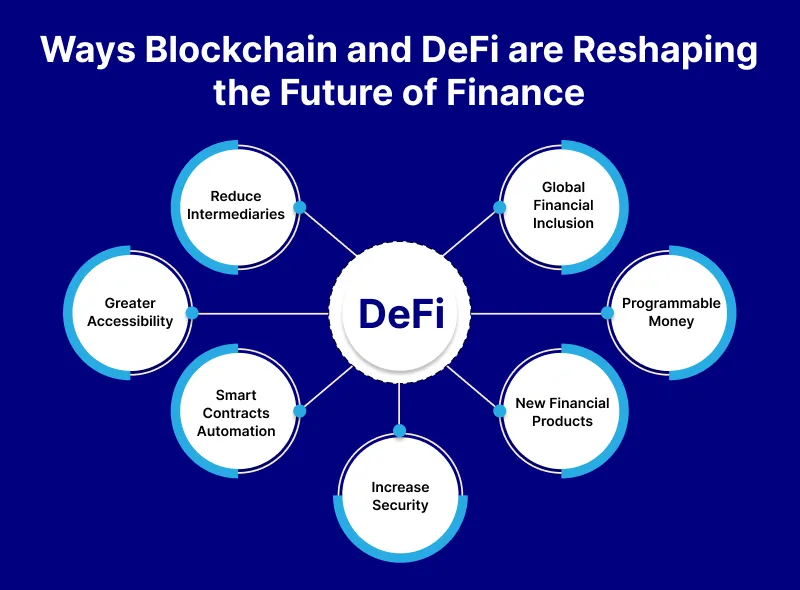
In a world where financial transactions are evolving at breakneck speed, Decentralised Finance (DeFi) emerges as a beacon of transformation, promising to revolutionize how we interact with money. Gone are the days when traditional banks held the reins. Today, DeFi stands at the forefront, offering instant, transparent transactions without the constraints of conventional banking systems.
By embracing DeFi and the blockchain revolution, individuals can seize control of their financial futures. This new paradigm opens doors to innovative investment opportunities and fosters a more inclusive global economy. As highlighted in the original article from the London Daily News, the impact of DeFi is monumental, reshaping the very fabric of the financial world.
Understanding Blockchain Technology in Finance
Blockchain technology is at the heart of this transformation, providing a decentralized, secure, and transparent framework for transactions. Unlike traditional systems, blockchain’s distributed ledger records transactions across multiple computers, ensuring no single entity has control. This decentralization enhances security and fosters trust, as altering any entry requires consensus.
Enhances security through cryptography, minimizing fraud risk
Facilitates faster transactions for near-instant cross-border payments
The Purpose of DeFi Applications
In this new financial ecosystem, DeFi leverages blockchain technology to offer decentralized financial services. DeFi promotes a peer-to-peer (P2P) approach, eliminating the need for traditional gatekeepers. Services such as lending, borrowing, and investing become more transparent and user-controlled, as explored in the future of blockchain in finance.
How Does DeFi Work?
DeFi’s foundation in blockchain technology, particularly Ethereum, enables decentralization. Smart contracts, which are self-executing contracts, automate financial processes, removing the need for intermediaries and promoting accessibility, security, and transparency.
Reshaping the Future of Finance
The transformative power of DeFi lies in its ability to address the challenges of conventional financial systems. By minimizing the need for traditional intermediaries, DeFi streamlines transactions, reducing costs and enhancing efficiency. Platforms like Aave exemplify this by allowing borrowers to connect directly with lenders, bypassing banks.
Greater Accessibility
DeFi platforms break down barriers, offering financial services to anyone with an internet connection. This inclusivity is vital in regions with limited access to traditional banking.
Smart Contracts Automation
Smart contracts automate processes, reducing human error and ensuring prompt, transparent transactions.
Increase Security
With its immutable nature, blockchain technology enhances security, making data tampering difficult. Platforms like Uniswap ensure safe, open transactions, reducing fraud risks.
New Financial Products
DeFi introduces innovative financial products, offering more flexibility and alternatives than traditional finance.
DeFi’s potential for global financial inclusion is immense, offering services to underbanked populations worldwide. By eliminating intermediaries and leveraging smartphones, people in rural areas gain access to financial opportunities previously unavailable.
As we navigate this blockchain revolution, investing in DeFi solutions becomes not only feasible but essential. Embracing DeFi unlocks unprecedented opportunities, reshaping the future of finance.
More Articles
Getting licensed or staying ahead in your career can be a journey—but it doesn’t have to be overwhelming. Grab your favorite coffee or tea, take a moment to relax, and browse through our articles. Whether you’re just starting out or renewing your expertise, we’ve got tips, insights, and advice to keep you moving forward. Here’s to your success—one sip and one step at a time!
In the bustling real estate market of Washington, D.C., aspiring agents are seeking the best education to jumpstart their careers. With its mix of historic charm and modern vibrancy, the capital city offers a unique landscape for real estate professionals. But where does one begin? The answer lies in choosing the right real estate school.
The Trump administration issued a memo late Monday night ordering a temporary freeze on funding for a wide array of federal programs, sending shockwaves through federal agencies and various organizations reliant on government support.
Despite the ongoing macroeconomic volatility and policy uncertainty that have clouded the global economic outlook, there are avenues for growth for those who can adeptly navigate these complexities.
In North Carolina, where real estate agents are known as brokers, requires a rigorous 75-hour prelicensing education. This can be pursued online or in person through state-approved schools.
The Series 63 exam can be retaken an unlimited number of times, provided you adhere to the waiting periods set by the North American Securities Administrators Association (NASAA). After an initial failure, a 30-day waiting period is required before you can retake the exam. If you fail a second time, another 30-day wait is necessary. Upon failing three times or more, a longer waiting period of 180 days is enforced.
The U.S. Court of Appeals for the Fifth Circuit has dismissed the appeal by the Consumer Financial Protection Bureau (CFPB) regarding the vacated amendments to its Unfair, Deceptive, or Abusive Acts and Practices (UDAAP) Examination Manual. This decision, made on May 1, aligns with the CFPB’s newly outlined supervision and enforcement priorities for 2025, marking a pivotal shift in the Bureau's regulatory approach.