In the heart of America’s industrial north, a battle for racial justice unfolded in the classrooms of Detroit, Michigan. This struggle, chronicled in Michelle Adams’s compelling new book, “The Containment: Detroit, the Supreme Court, and the Battle for Racial Justice in the North,” reveals the complex web of policies and practices that thwarted efforts to integrate the city’s schools.
Despite Michigan’s early prohibition of segregation in public education, Detroit’s schools remained starkly divided along racial lines, even twenty years after the landmark Brown v. Board of Education decision. Adams’s book explores how this segregation was not the result of explicit laws but rather a byproduct of the city’s neighborhood school model, where racial boundaries were drawn by longstanding policies of containment.
These containment strategies included racially restrictive covenants, redlining, and segregated public housing, which confined Black residents to certain areas, perpetuating a cycle of educational inequity. As Adams eloquently argues, these policies were not just about housing but were deeply intertwined with the educational opportunities available to Black children.
The book also delves into the legal battle initiated by the N.A.A.C.P. in 1970, aiming to desegregate Detroit’s schools. This lawsuit brought together unlikely allies, including the Citizens Committee for Better Education (C.C.B.E.), which initially opposed the N.A.A.C.P.’s efforts. However, as the case progressed, the C.C.B.E. shifted its stance, arguing that the burden of integration should not fall solely on Detroit’s white residents who couldn’t afford to move to the suburbs.
Adams’s narrative captures the complexity of this struggle, highlighting how issues of class and race intersected in the fight for civil rights. Her work draws comparisons to J. Anthony Lukas’s celebrated “Common Ground”, which examined similar themes in Boston.
This poignant examination of Detroit’s history is not just a story of the past but a reflection on the ongoing challenges of racial integration in American schools today. The book’s insights resonate with current debates over educational equity and civil rights, making it a crucial read for understanding the persistent divides in U.S. society.
For those interested in exploring this topic further, the original article by Jeffrey Toobin in The New York Times provides a detailed review of Adams’s work, capturing the essence of this significant historical account.
More Articles
Getting licensed or staying ahead in your career can be a journey—but it doesn’t have to be overwhelming. Grab your favorite coffee or tea, take a moment to relax, and browse through our articles. Whether you’re just starting out or renewing your expertise, we’ve got tips, insights, and advice to keep you moving forward. Here’s to your success—one sip and one step at a time!
Despite billions poured into proptech and a decade of flashy digital upgrades, the real estate experience remains largely unchanged. Apps made processes smoother, but not more transparent — because the industry’s core structures, data control and power dynamics stayed the same. True disruption will come from platforms that shift information and control to consumers, not just digitize outdated systems.
Early 2026 is delivering a clear message: commercial real estate is entering a recalibration phase. Construction is softening, pending home sales just saw a sharp drop, consumer sentiment is inching upward but remains fragile, and capital markets are tightening as major CRE sectors face rising distress. From data centers powering ahead to CMBS foreclosures climbing and office-to-residential conversions gaining momentum, professionals across real estate, mortgage, insurance, and finance need to stay sharp as the industry shifts.
Discover the real estate roles earning the biggest paychecks in 2026. From investment consultants to commercial leasing managers, this breakdown highlights the salaries, responsibilities, and career paths offering the strongest financial potential in today’s evolving market—perfect for newcomers and seasoned professionals mapping their next big move.
Montana is taking major steps to remove outdated licensing barriers and strengthen its workforce. Governor Greg Gianforte has created a new Licensing Reform Task Force aimed at modernizing regulations, speeding up approvals, and helping more professionals enter high‑demand fields like construction and healthcare. With licensing numbers doubling over the past decade and rural communities facing critical shortages, the state is pushing for faster, more efficient pathways to work. The task force begins meeting in February and will deliver its full reform report by September 2026 — a move that could influence licensing modernization efforts nationwide.
Artificial intelligence has officially moved from novelty to necessity in the real estate world. According to new industry data, 97% of brokerage leaders say their agents now rely on AI tools for everything from listing descriptions to full-scale marketing campaigns. As adoption skyrockets, so do concerns over training, accuracy, and compliance — especially among smaller firms. The message is clear: for today’s real estate professionals, AI literacy isn’t optional anymore.
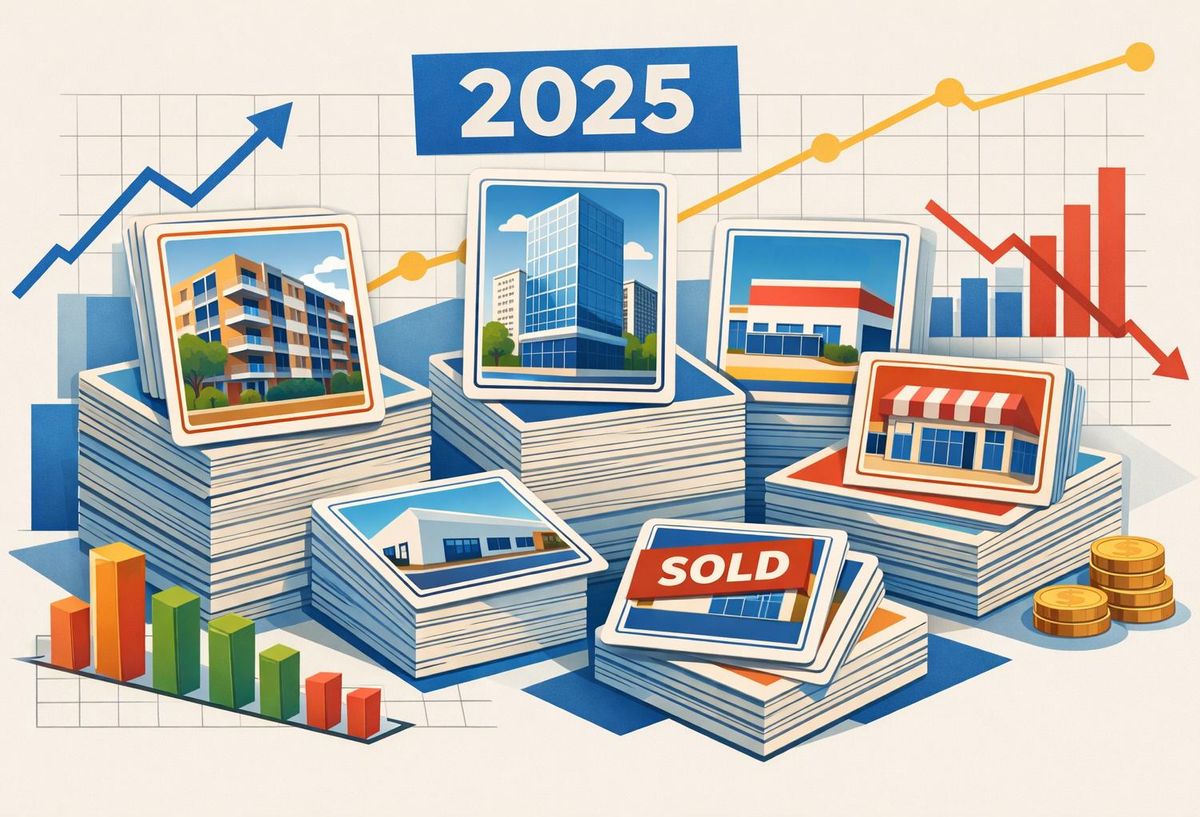
Commercial real estate roared back to life in 2025, with more than $255B pouring into multifamily, industrial, office and retail assets. Major investors moved fast on falling interest rates, improving bond yields and rising confidence across sectors. Multifamily dominated with over $115B in deals, industrial surged under private equity leadership, office saw renewed activity from owner-users and retail proved surprisingly resilient. For today’s real estate and finance professionals, the message is clear: opportunity favors those who stay informed and ready to act.