The Fed Eyes Major Mortgage Rule Changes: What It Means for Banks, Borrowers, and the Future of Home Lending
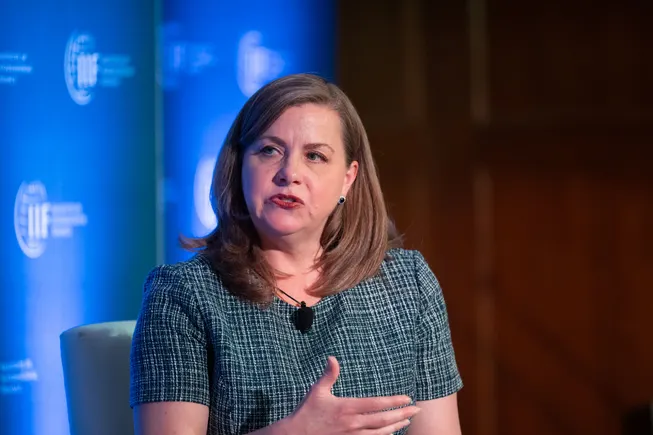
The mortgage landscape in the United States may be on the verge of another major transformation. After years of watching banks lose ground to nonbank lenders, the Federal Reserve is signaling that it’s ready to step in and rebalance the playing field. According to comments from Vice Chair for Supervision Michelle Bowman, the Fed is preparing proposals designed to bring mortgage activity back into the banking sector — and the implications could be significant for professionals across real estate, lending, finance, and beyond.
In her address at the American Bankers Association conference in Orlando, Florida, Bowman highlighted a dramatic shift: banks, once dominant in mortgage origination, now hold a much smaller share of the market. In 2008, banks originated about 60% of all mortgages. By 2023, that number had fallen to 35%. The decline in servicing is even more dramatic — dropping from 95% to 45% over the same period.
Bowman described the trend as “concerning,” pointing to regulatory capital requirements as a major factor that pushed banks away from mortgage activity and opened the door for nonbank expansion.
The Fed’s Proposed Shifts
To reverse the trend, the Fed is considering two key changes:
Removing the rule requiring banks to deduct mortgage servicing assets from regulatory capital — while keeping the 250% risk weight.
Rethinking capital requirements for mortgage loans by using loan‑to‑value ratios to determine risk, instead of applying a uniform risk weight.
These adjustments would make mortgage servicing more attractive to banks and better align risk measurement with real‑world lending conditions.
Why Banks Still Matter in the Mortgage Market
Mortgage originations don’t just generate revenue — they build enduring customer relationships. Bowman emphasized that borrowers who come to banks for mortgages often return for other financial products, strengthening long‑term stability.
Nonbanks, despite rapid growth, operate in a regulatory environment that has not kept pace with their expansion. According to Bowman, this creates vulnerabilities that banks are better equipped to avoid thanks to stronger capital and resolution frameworks.
Industry Reaction
The Mortgage Bankers Association welcomed Bowman’s remarks, calling them “an important step forward” in correcting an overly strict capital framework. The organization emphasized that better‑calibrated rules would allow banks to serve more creditworthy borrowers while maintaining safety and soundness.
What This Means for Professionals — And Why It Matters
For real estate professionals, mortgage brokers, and financial specialists, a shift in the mortgage ecosystem could reshape how buyers access financing. If banks return to a stronger role, the balance between traditional lenders and nonbanks may change, potentially affecting loan products, rates, and lending processes.
For those building or expanding careers in mortgage lending or real estate, this moment highlights just how dynamic the industry can be. Regulatory environments evolve — and professionals who stay informed stay ahead.
That’s why education matters. At Cameron Academy, we equip aspiring and current mortgage and real estate professionals with the tools, training, and insight they need to navigate a constantly shifting landscape.
Because when the industry changes, opportunity follows.
More Articles
Getting licensed or staying ahead in your career can be a journey—but it doesn’t have to be overwhelming. Grab your favorite coffee or tea, take a moment to relax, and browse through our articles. Whether you’re just starting out or renewing your expertise, we’ve got tips, insights, and advice to keep you moving forward. Here’s to your success—one sip and one step at a time!
A new national survey shows that while most real estate agents now use AI for everyday tasks like writing listing descriptions and social posts, many remain uneasy trusting the technology with higher‑stakes responsibilities. Agents report major time savings and better communication thanks to AI, but lingering concerns about accuracy, compliance and data interpretation reveal a growing skills gap. The industry’s next big need: stronger AI tools, clearer standards and hands‑on training — a gap education providers like Cameron Academy are poised to fill.
Florida homeowners and real estate professionals are being crushed by skyrocketing insurance premiums, shrinking coverage, and a claims system stacked against consumers. While residents face the highest insurance costs in the nation, meaningful reform bills are being ignored in Tallahassee, leaving families, businesses, and the entire real estate market exposed.
Artificial intelligence is exposing the real estate industry's biggest weakness: fragmented, inconsistent data scattered across disconnected systems. Unlike finance and e‑commerce, real estate never built a unified digital foundation—and now AI can’t function without one. As companies scramble to standardize information, organizations like OSCRE are pushing shared data models that could transform everything from leasing to property management. The result may be the industry’s most collaborative era yet, where clean, interoperable data becomes the key to unlocking AI’s full power.
Off‑market networks, rising small‑investor buying, regulatory shifts, and intensifying portal competition are reshaping how homes are found and sold. With inventory tight and traditional listings declining, agents who understand investor behavior, private deal flow, and evolving rules are gaining a major edge in today’s fast‑changing housing landscape.
Despite state leaders celebrating stabilization, Florida homeowners continue to face some of the highest insurance premiums in the country. Local experts say rates have stopped skyrocketing but have settled at levels that feel permanently elevated—especially for older or coastal homes. With insurers still avoiding high‑risk areas and demanding costly home upgrades, many Floridians are questioning whether this expensive reality is here to stay.
California is pushing a landmark proposal that would force insurers to offer coverage to homeowners who meet state‑approved wildfire‑mitigation standards. The new SB 1076, known as the Insurance Coverage for Fire‑Safe Homes Act, aims to stabilize the state’s distressed insurance market by guaranteeing coverage for fire‑hardened homes starting in 2028—backed by strict penalties for insurers who refuse. As supporters rally and critics warn of market strain, the bill could reshape real estate, insurance, and lending practices across wildfire‑prone regions.