“`html

The Federal Reserve’s recent decision to cut its benchmark interest rate by half a percentage point has sent ripples through the housing market, offering a glimmer of hope for homebuyers. This unexpected move, described by Bill Banfield, chief business officer at Rocket Companies, as giving “a little extra,” comes at a time when mortgage rates have already seen a significant decline over the past year.

According to Bankrate’s national survey of large lenders, mortgage rates have fallen from 8.01 percent in October 2023 to 6.20 percent as of September 18. This shift by the Federal Reserve could potentially invigorate the housing market, encouraging both buyers and sellers to engage more actively.

Lisa Sturtevant, chief economist at Bright MLS, notes that declining interest rates are particularly beneficial for homebuyers facing affordability challenges. She anticipates that this reduction in borrowing costs will not only fuel demand but also increase the supply of homes available for sale, thereby stabilizing home prices in various local markets.

The Federal Reserve and the Housing Market

The Federal Reserve’s earlier rate hikes had a cooling effect on the housing market, leading to a sharp drop in home sales while pushing home prices to record highs. Now, with inflation on the decline, the Fed’s policy shift represents a pivotal moment in monetary policy.

Mike Fratantoni, chief economist at the Mortgage Bankers Association, suggests that if mortgage rates remain near current levels, the housing market could experience a stronger-than-usual fall season, with a potential rebound in activity next spring.

How the Fed Affects Mortgage Rates

Although the Federal Reserve does not directly set mortgage rates, its policies significantly influence them. Mortgage rates typically move in tandem with 10-year Treasury yields. The Fed’s actions set the overall tone, impacting how much consumers pay for home loans.

Historically, low mortgage rates have fueled housing booms, as seen in 2020 and 2021. However, when rates surged to levels unseen in two decades, the market slowed dramatically. Despite this, home prices reached unprecedented levels, with the nationwide median existing-home price hitting $422,600 in July, close to the all-time high of $426,900 in June.

Fratantoni points out that elevated mortgage rates and steep home-price growth have significantly reduced affordability. Yet, as rates decline, affordability could improve, potentially drawing more buyers into the market.

Next Steps for Borrowers

  • Shop around for a mortgage: Conducting an online search can help find lenders offering lower rates and competitive fees. Savvy shopping can save thousands of dollars.
  • Be cautious about ARMs: Adjustable-rate mortgages might seem tempting, but they come with the risk of higher future rates. Borrowers should avoid using ARMs as a crutch for affordability.
  • Consider a home equity loan or HELOC: Homeowners can tap into their home equity with a HELOC, which might be more cost-effective than refinancing at higher rates.
“`

More Articles

Getting licensed or staying ahead in your career can be a journey—but it doesn’t have to be overwhelming. Grab your favorite coffee or tea, take a moment to relax, and browse through our articles. Whether you’re just starting out or renewing your expertise, we’ve got tips, insights, and advice to keep you moving forward. Here’s to your success—one sip and one step at a time!

How AI Is Transforming Financial Advisors’ Daily Routines in 2026

In 2026, financial advisors are no longer just experimenting with AI — they’re relying on it. Once confined to back-office duties, AI now supports meeting prep, portfolio analysis, and even early-stage financial planning. Advisors say the tech is strengthening client relationships by freeing them from administrative overload, though entry-level roles like paraplanners may feel the squeeze as automation accelerates.

AI Is Outpacing the Mortgage Industry’s Cyber Defenses as Attacks Surge

Cybercriminals are weaponizing AI to launch highly convincing email scams and system breaches across the mortgage industry, overwhelming lenders and servicers whose cybersecurity measures can’t keep up. With major companies already hit and regulation lagging behind, experts warn the sector—now considered critical infrastructure—must rapidly upgrade protections, collaborate on threat intelligence, and improve AI governance before the risks escalate further.

Hidden Housing Costs May Become 2026’s Most Dangerous Budget Buster

Escrow payments are quietly surging across the country as property taxes and insurance premiums spike—pushing many homeowners toward delinquencies and even foreclosure. New data from Cotality shows the sharpest increases hitting the South and Midwest, with Florida among the hardest‑hit states. Even with fixed mortgage rates, rising escrow requirements are driving monthly payments higher and threatening affordability heading into 2026.

Milwaukee’s Commercial Real Estate Market Is Turning the Corner

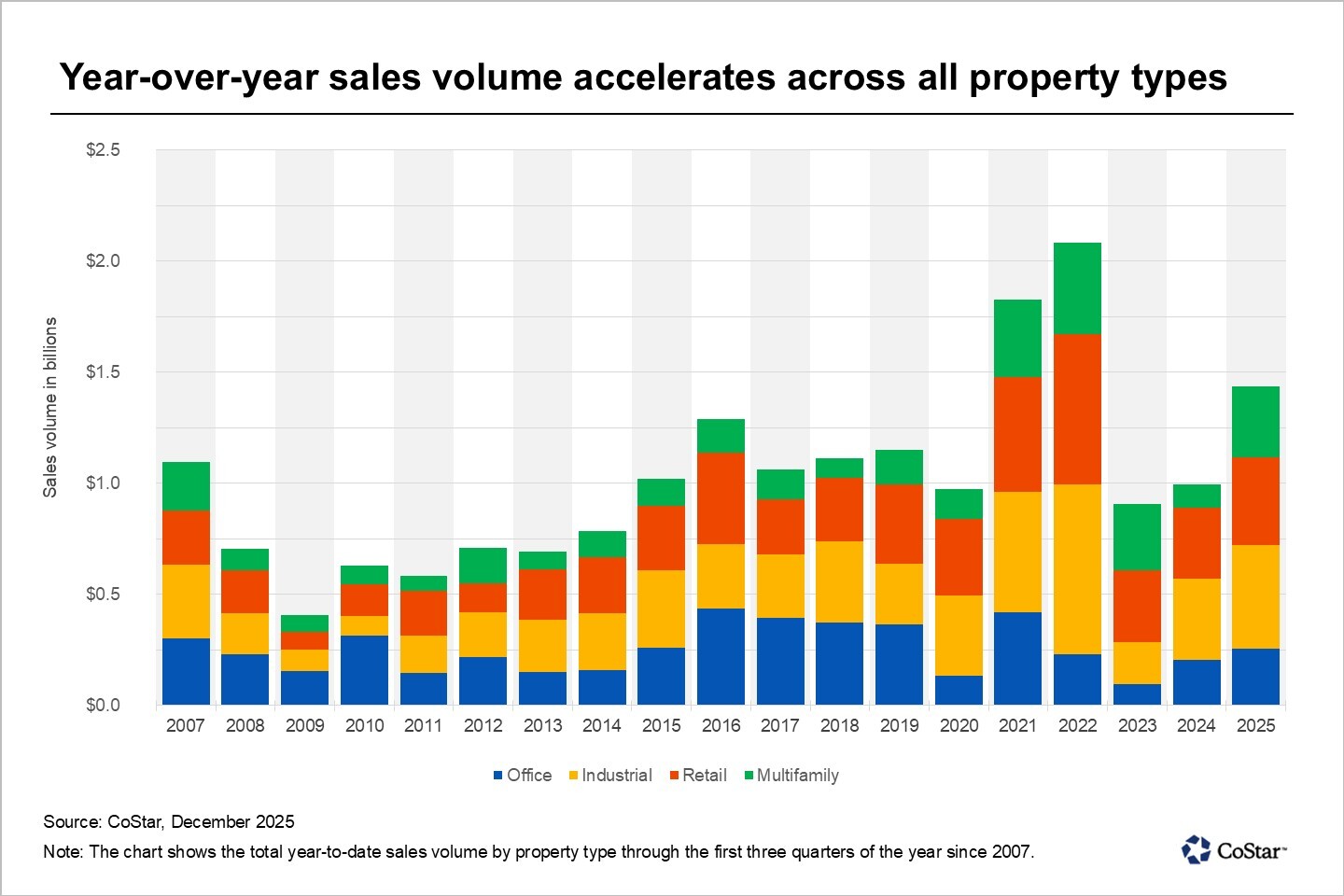
Milwaukee entered 2025 with renewed momentum, posting its strongest commercial real estate sales volume in three years. After a period of uncertainty and high capital costs, investors are returning with a sharper focus on quality assets, realistic pricing, and reliable cash flow. Activity is increasing across industrial, office, multifamily, and retail sectors, signaling a broad-based recovery fueled by stabilizing interest rates and improved market confidence.

Title Insurance Leaders Lean Into Tech, Efficiency, and Resilience for 2026

As 2026 approaches, the title insurance industry is navigating a complex mix of market recovery, rising fraud threats, and sweeping regulatory changes. Industry leaders say the path forward centers on smarter technology, leaner operations, and stronger support for title agents. With AI-driven workflows, enhanced fraud prevention, and new compliance demands—including FinCEN’s expanded Geographic Targeting Orders—companies like Stewart and First American are reshaping how title work gets done. For real estate and mortgage professionals, the year ahead promises more automation, heightened standards, and major opportunities for those who stay ahead of the curve.

Technology and the Future of Real Estate: Innovation Reshaping 2025

The real estate industry is undergoing a major transformation in 2025 as advancements in AI, proptech, blockchain, and data intelligence redefine how properties are marketed, valued, financed, and experienced. From instant digital valuations and immersive virtual tours to tokenized investments and predictive analytics, technology is reshaping every stage of the real estate lifecycle. Professionals who embrace these innovations—while maintaining the human expertise clients still rely on—will lead the next era of the industry.