The Future of AI in Pathology: A Market on the Rise
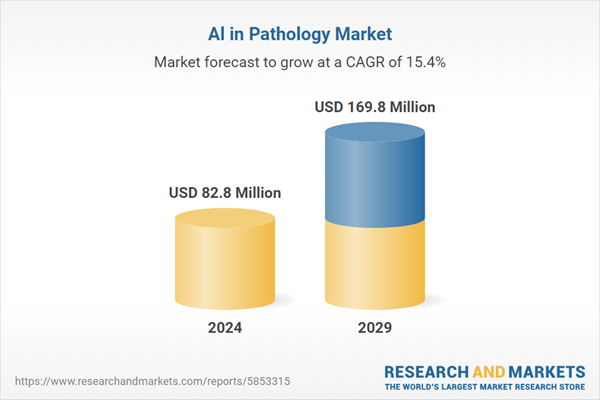
As the dawn of 2025 unfolds, the AI in pathology market is poised for significant growth, with projections estimating a surge from USD 82.8 million in 2024 to USD 169.8 million by 2029. This remarkable growth, at a compound annual rate of 15.4%, underscores the transformative potential of AI technologies in the healthcare sector.
AI in pathology is revolutionizing the field by enhancing the analysis of clinical data, genomic information, and disease progression. These advancements are not only streamlining personalized treatment plans but also optimizing healthcare resource allocation. AI models, employing advanced algorithms and machine learning, are empowering pathologists to extract and analyze critical information with unprecedented precision.
Key Market Segments and Growth Drivers
The drug discovery segment emerged as a dominant force in 2023, driven by the urgent need for efficient and cost-effective drug development. AI’s ability to accelerate the drug discovery process through automated data analytics and rapid identification of potential drugs is a game-changer. The advancements in imaging technologies and AI’s role in toxicology testing further bolster this segment’s growth.
Meanwhile, the pharmaceutical and biopharmaceutical companies sector is anticipated to experience the fastest growth. These companies are increasingly collaborating with AI providers, investing heavily in AI tools to maintain a competitive edge in drug development and innovation. AI’s capacity to analyze large datasets, identify patterns, and predict treatment responses is pivotal in reducing time and costs, thereby expediting innovation.
Regional Insights and Market Leaders
In 2023, North America claimed the largest market share, propelled by its high adoption of AI technologies and substantial investments in research and development. The region’s advanced healthcare infrastructure and extensive patient data pool further contribute to its leadership position. Companies like Koninklijke Philips N.V. have made significant investments in R&D, underscoring the region’s commitment to technological advancement.
The market’s competitive landscape features key players such as Koninklijke Philips N.V., F. Hoffmann-La Roche Ltd, and Hologic, Inc., among others. These companies are at the forefront of innovation, continuously evolving their product offerings and strategies to stay ahead in this rapidly advancing field.
Challenges and Opportunities
While the AI in pathology market is burgeoning, it faces challenges such as the high cost of digital pathology systems and the scarcity of AI expertise. However, opportunities abound in the growing demand for personalized medicine and the integration of multi-omics data for predictive analytics.
As the world embraces the potential of AI in healthcare, the pathology market stands as a testament to the transformative power of technology. For more detailed insights, the full report is available at Research and Markets.
More Articles
Getting licensed or staying ahead in your career can be a journey—but it doesn’t have to be overwhelming. Grab your favorite coffee or tea, take a moment to relax, and browse through our articles. Whether you’re just starting out or renewing your expertise, we’ve got tips, insights, and advice to keep you moving forward. Here’s to your success—one sip and one step at a time!
Flood insurance premiums across Florida are climbing fast, with more than 80% of NFIP policyholders seeing annual increases under FEMA’s Risk Rating 2.0. Some counties now face hikes exceeding $3,500 per year, adding pressure in a state where homeowners insurance already averages nearly $11,000 annually. As risk-based pricing takes hold and climate impacts intensify, Florida homeowners — and the real estate pros who advise them — must prepare for continued premium growth and major county‑to‑county disparities.
As insurers step into 2026, the property and casualty market shows its first signs of real stability after several turbulent years. Q4 results reveal disciplined underwriting, cooling rate hikes, and steady premium growth across major carriers. Commercial lines show selective momentum, personal lines begin to level out, and AI-driven efficiency becomes the industry’s new engine for profitability. With catastrophe losses moderating and tech adoption accelerating, professionals across insurance, real estate, and finance can expect a pivotal year—and an ideal moment to sharpen their skills through continuing education.
A new CBRE survey shows that most U.S. commercial real estate investors expect to increase their property purchases in 2026, signaling renewed confidence and market stabilization. Dallas remains the nation’s top target for the fifth straight year, followed by high‑growth metros like Atlanta, San Francisco, Miami, Charlotte, Raleigh‑Durham, Nashville, Tampa, Seattle, and New York City. These cities continue to draw strong investor interest due to population growth, business expansion, and robust development activity.
Florida Insurance Commissioner Michael Yaworsky says the state's turbulent property insurance market is finally calming, with Florida posting the lowest rate increases in the nation last year. Yet rising home replacement costs mean many homeowners won’t see relief in their premiums just yet. With Citizens Insurance shrinking, new legislative priorities emerging, and long‑term reforms taking hold, Florida’s real estate and insurance professionals are entering 2026 with cautious optimism and a clearer picture of what’s ahead.
A new CBRE survey shows investor optimism surging as 95% plan to buy more or the same amount of commercial real estate in 2026, with over half increasing their capital allocation. Stabilizing values, improving fundamentals, and expected relief in debt costs are driving renewed confidence, putting markets like Dallas, Atlanta, and Tampa in the spotlight as multifamily and industrial assets lead demand.
Artificial intelligence has moved from industry buzzword to essential mortgage‑lending tool, reshaping how loan officers work, communicate and compete. From smarter lead targeting to rapid content creation and CRM‑powered automation, AI is now the dividing line between lenders who scale efficiently and those stuck in manual workflows. This article breaks down why AI adoption is no longer optional, how top lenders are using it and what mortgage professionals must do now to stay competitive.