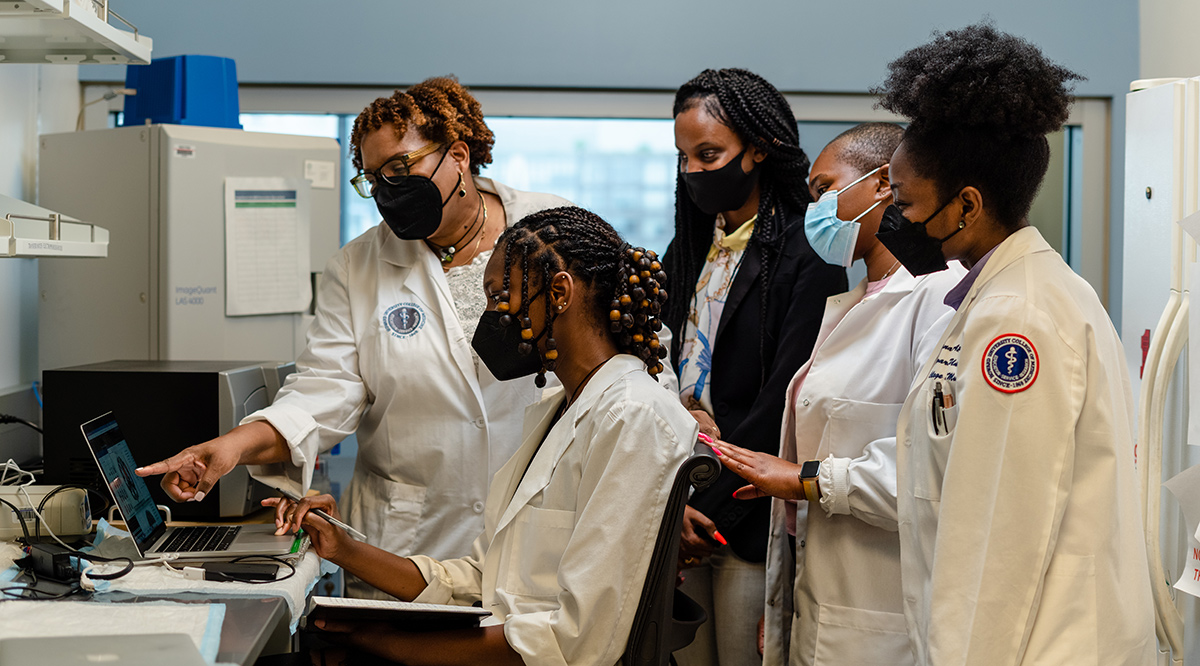
In the rapidly advancing realm of personalized medicine, where treatments are tailored to individual genetic and lifestyle profiles, a critical question looms: who will truly benefit from these innovations? While personalized medicine has made significant strides since the introduction of BRCA1/2 genetic screenings in the 1990s, disparities in access continue to cast a long shadow over these medical breakthroughs.
The Association of American Medical Colleges (AAMC) reports that while breast cancer mortality has decreased, Black women still face a 40% higher death rate compared to their White counterparts. This inequity is partly due to the fact that Black women are less frequently offered genetic screenings that could potentially save their lives.
Bridging the Gap
Efforts to rectify these disparities are underway. Initiatives like the Chan Zuckerberg Initiative’s Accelerate Precision Health program aim to expand research at historically Black colleges and universities (HBCUs). These programs focus on increasing the representation of diverse genetic profiles in medical research.
Moreover, the NIH’s All of Us research program is building one of the largest and most diverse health databases in the world. This initiative seeks to understand how various factors such as environment and socioeconomic status influence health, with the ultimate goal of making precision medicine accessible to all communities.
Challenges and Responsibilities
Despite these promising efforts, systemic barriers remain. The lack of diverse representation in genetic studies, high costs of genetic testing, and limited outreach to marginalized communities hinder the equitable distribution of personalized medicine’s benefits. As the field continues to evolve, the urgency to address these challenges grows.
Rick Kittles, PhD, of Morehouse School of Medicine, emphasizes that academic medical centers must commit to resolving inequities within their communities. This includes fostering trust and building relationships with underrepresented groups to ensure that the advancements in personalized medicine are inclusive and beneficial to all.
As personalized medicine continues to develop, the question remains: will it be a beacon of hope for all, or a gateway to new health disparities?
More Articles
Getting licensed or staying ahead in your career can be a journey—but it doesn’t have to be overwhelming. Grab your favorite coffee or tea, take a moment to relax, and browse through our articles. Whether you’re just starting out or renewing your expertise, we’ve got tips, insights, and advice to keep you moving forward. Here’s to your success—one sip and one step at a time!
Artificial intelligence has shifted from a novelty to a defining force in real estate, transforming everything from listing creation to virtual staging while raising new legal and ethical risks. As AI adoption accelerates, experts warn that the agents who embrace automation and new tools now will gain a major competitive edge, while those who delay could fall behind in a rapidly evolving industry.
As AI and automation reshape the workforce, one form of career protection remains as powerful as ever: earning a state license. From real estate to trades to finance, licensed professionals stay in high demand because their work requires proven competence, accountability and human judgment—qualities technology can enhance but never replace. With trade enrollment surging, investor interest growing and licensing on the rise across the country, credentials have become a reliable path to stability, mobility and long-term earning potential.
A new wave of AI platforms is redefining how real estate agents identify buyer intent, spark conversations, and nurture relationships. From conversational home search engines to predictive opportunity alerts and relationship‑intelligence systems, these tools are helping agents connect sooner and smarter—reshaping daily workflows as the 2026 market approaches.
Texas money is riding hard into San Francisco, snapping up distressed downtown buildings at prices not seen in decades. From Union Square to California Street, major players like Lone Star Funds are betting big on the city’s rebound, signaling that the market may have finally hit bottom and that a new wave of opportunity is taking shape for savvy real estate professionals nationwide.
The 2025 holiday season is expected to break the $1 trillion sales mark, but economists say the milestone masks deeper consumer caution, income‑driven spending gaps, and weakening unit sales. Urban Land Magazine’s latest analysis shows how these mixed signals are shaping a selective, uneven landscape for U.S. commercial real estate heading into 2026—where strong locations thrive, weaker assets struggle, and affluent shoppers continue to dictate market performance.
As 2025 ends, the housing market is inching toward balance with slower price growth, rising inventory, and steadier mortgage rates. Experts predict modest 1% to 2% home‑price growth in 2026—not a crash, but a calmer, more predictable market shaped by regional differences. With the Fed easing rates and inventory climbing in key cities, 2026 may become the most buyer‑friendly year in recent memory, especially for those prepared to act when the right home appears.