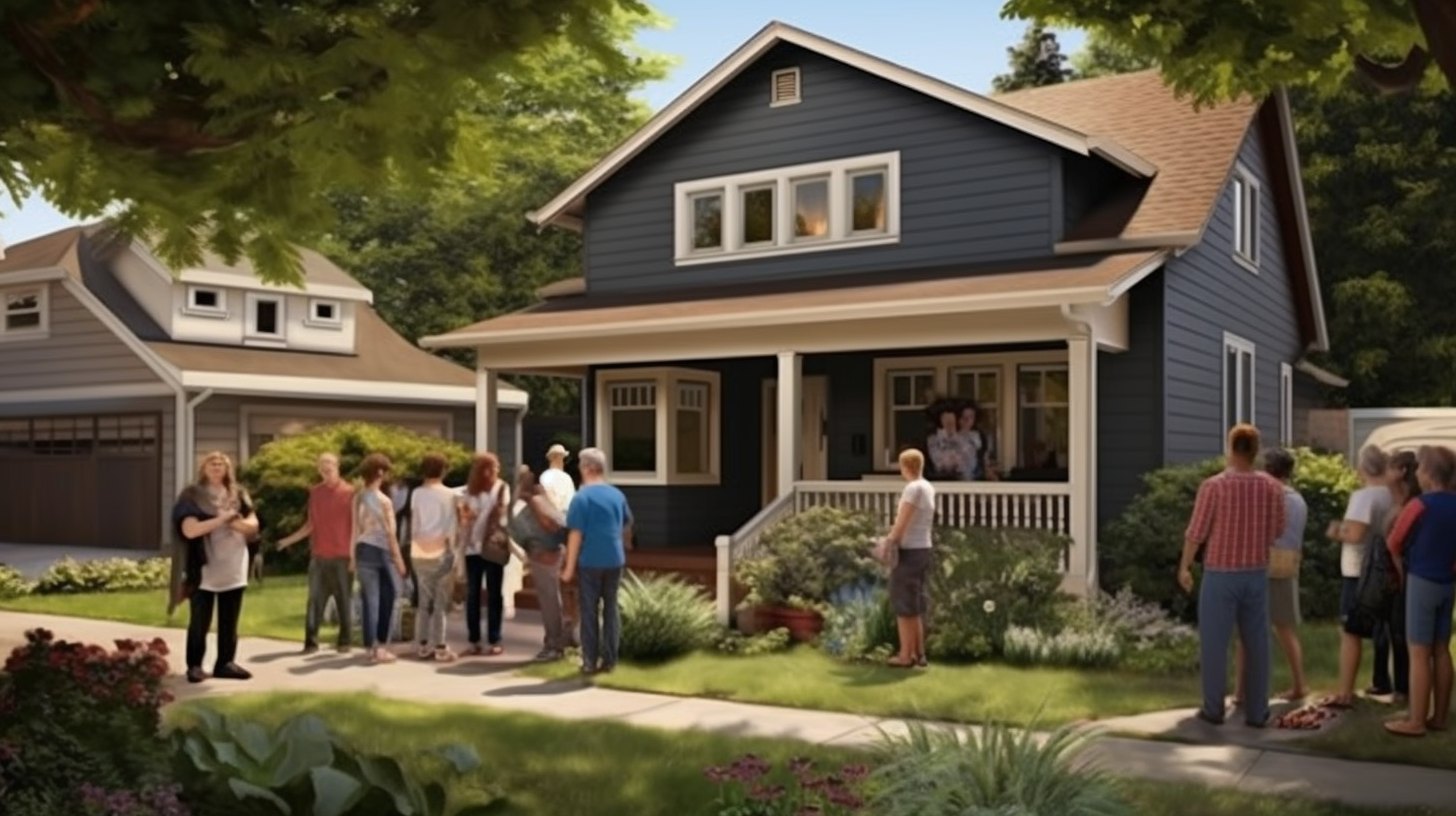
As we stand on the brink of a new decade, the housing market in 10 years promises to be a landscape shaped by technological innovation, demographic shifts, and evolving economic factors. By 2034, the real estate sector will likely have undergone significant transformations, presenting both challenges and opportunities for homeowners, investors, and industry professionals alike.
This in-depth exploration will delve into the potential future of the US housing market, examining key trends, predictions, and factors that may influence its trajectory over the next decade.
1. Demographic Shifts and Their Impact on Housing Demand
The composition of the US population is expected to undergo substantial changes by 2034, which will inevitably affect housing demand and preferences. According to the US Census Bureau’s 2017 National Population Projections, by 2030, all baby boomers will be older than 65, comprising 21% of the population. This aging demographic will have significant implications for the housing market:
a) Increased demand for age-friendly housing
As the population ages, there will likely be a growing need for homes that cater to older adults, featuring single-story layouts, wider doorways, and other accessibility features.
b) Downsizing trends
Many retirees may opt to downsize, potentially increasing the supply of larger family homes in suburban areas while boosting demand for smaller, more manageable properties.
c) Multi-generational living
The rise of multi-generational households could lead to increased demand for homes that can accommodate extended families, with features like in-law suites or separate living spaces.
Simultaneously, millennials and Gen Z will continue to shape the housing market as they enter their prime homebuying years. Their preferences for urban living, sustainability, and technology-integrated homes may drive development in city centers and influence home design trends.
2. Technological Advancements in Real Estate
The rapid pace of technological innovation is set to revolutionize various aspects of the housing market by 2034:
a) Virtual and augmented reality
House hunting may become predominantly virtual, with immersive 3D tours allowing potential buyers to explore properties from anywhere in the world.
b) Artificial intelligence and machine learning
AI-powered algorithms could revolutionize property valuation, mortgage approval processes, and predictive maintenance for homes.
c) Smart home technology
The integration of Internet of Things (IoT) devices and artificial intelligence in homes is likely to become standard, offering enhanced energy efficiency, security, and convenience.
d) 3D printing and modular construction
These technologies may significantly reduce construction times and costs, potentially addressing housing shortages in high-demand areas.
3. Climate Change and Sustainable Housing
As climate change concerns intensify, the housing market in 2034 is likely to place a greater emphasis on sustainability and resilience:
a) Energy-efficient homes
Expect a surge in demand for properties with high energy efficiency ratings, incorporating features like solar panels, advanced insulation, and smart energy management systems.
b) Resilient construction
In areas prone to natural disasters, there may be increased focus on building homes that can withstand extreme weather events.
c) Urban planning
Cities may prioritize mixed-use developments and transit-oriented communities to reduce carbon footprints and improve livability.
d) Green building materials
The use of sustainable, eco-friendly materials in construction is likely to become more prevalent, driven by both consumer demand and potential regulatory requirements.
4. Evolving Work Patterns and Their Impact on Housing
The COVID-19 pandemic accelerated the trend towards remote work, and this shift is likely to have lasting effects on the housing market by 2034:
a) Home office spaces
Dedicated work areas within homes may become a standard feature, influencing home design and buyer preferences.
b) Suburban and rural revival
With less need to commute daily, some workers may opt for larger homes in suburban or rural areas, potentially reversing the trend of urbanization.
c) Flexible living spaces
Homes that can easily adapt to changing needs (e.g., convertible spaces that can serve as offices, gyms, or guest rooms) may become increasingly popular.
5. Economic Factors and Housing Affordability
The affordability of housing remains a critical issue, and several economic factors could shape the market by 2034:
a) Interest rates
The trajectory of interest rates over the next decade will significantly impact housing affordability and mortgage markets.
b) Income inequality
If current trends continue, income inequality could further exacerbate housing affordability issues in desirable areas.
c) Government policies
Future housing policies, including zoning laws, tax incentives, and affordable housing initiatives, will play a crucial role in shaping the market.
d) Alternative financing models
New approaches to homeownership, such as rent-to-own schemes or shared equity models, may gain traction to address affordability concerns.
6. The Rise of Build-to-Rent and Institutional Investors
The rental market is likely to evolve significantly by 2034, with potential implications for both renters and homeowners:
a) Build-to-rent communities
Purpose-built rental communities, offering amenities and professional management, may become more prevalent, particularly in suburban areas.
b) Institutional investors
Large-scale investors may continue to play a significant role in the single-family rental market, potentially influencing housing supply and rental rates.
c) Short-term rentals
The future of platforms like Airbnb and their impact on local housing markets remains to be seen, with the potential for increased regulation or integration into the broader housing ecosystem.
7. Urban Development and Redevelopment
Cities are likely to undergo significant changes by 2034, driven by population growth, changing preferences, and sustainability concerns:
a) Densification
Many cities may focus on increasing density through infill development and the redevelopment of underutilized urban areas.
b) Adaptive reuse
The conversion of commercial and industrial buildings into residential spaces may accelerate, particularly if remote work trends lead to reduced demand for office space.
c) 15-minute cities
Urban planning concepts that prioritize walkability and access to essential services within a 15-minute radius may gain traction, influencing development patterns.
8. Regional Shifts and Migration Patterns
Changing climate conditions, economic opportunities, and lifestyle preferences may lead to significant regional shifts in housing demand by 2034:
a) Climate migration
Areas facing increased risks from climate change (e.g., coastal regions vulnerable to sea-level rise) may see population declines, while more resilient regions could experience growth.
b) Economic hubs
The emergence of new economic centers, particularly in technology and innovation sectors, could drive housing demand in unexpected areas.
c) Quality of life factors
Regions offering a high quality of life, including access to nature, cultural amenities, and good healthcare, may see increased housing demand.
9. The Evolution of Real Estate Services
The real estate industry itself is likely to undergo significant changes by 2034, potentially altering how properties are bought, sold, and managed:
a) AI-powered agents
Artificial intelligence may take on a larger role in the home buying and selling process, potentially reducing the need for human intermediaries in some transactions.
b) Blockchain and property transactions
The use of blockchain technology could streamline property transactions, making them faster, more transparent, and potentially reducing fraud.
c) Data-driven decision making
Advanced analytics and big data will likely play an increasingly important role in investment decisions, property management, and urban planning.
10. Challenges and Opportunities in the 2034 Housing Market
As we look ahead to the US housing market in 2034, several key challenges and opportunities emerge:
Challenges:
- Addressing housing affordability and supply shortages in high-demand areas
- Balancing the need for density with desires for space and privacy
- Adapting existing housing stock to meet changing demographic needs and sustainability requirements
- Navigating potential disruptions from climate change and technological advancements
Opportunities:
- Leveraging technology to create more efficient, sustainable, and user-friendly housing solutions
- Developing innovative financing and ownership models to increase access to homeownership
- Reimagining urban spaces to create more livable, sustainable communities
- Harnessing data and AI to optimize real estate investment and management strategies
The US housing market in 10 years is poised for significant transformation, driven by a complex interplay of demographic, technological, economic, and environmental factors. By 2034, we may see a housing landscape that is more diverse, technologically advanced, and responsive to the needs of an evolving population. From smart homes that anticipate our needs to communities designed for sustainability and resilience, the future of housing holds both exciting possibilities and formidable challenges.
As circumstances shift, adaptability and forward-thinking will be key. Homeowners, investors, policymakers, and industry professionals must remain attuned to emerging trends and be prepared to innovate in response to new realities. While the exact contours of the 2034 housing market remain to be seen, one thing is certain: the coming decade promises to be a period of significant change and opportunity in American real estate.