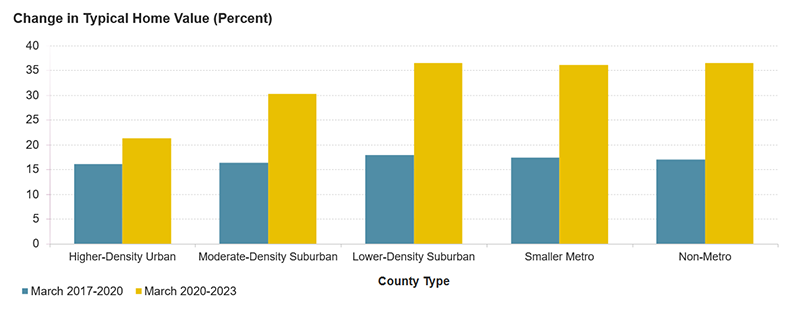
 The disparity in growth is further highlighted by the fact that typical home values in 31 percent of non-metro counties surged by at least 40 percent following the pandemic. By comparison, only 18 percent of urban counties experienced growth beyond this threshold. Such disproportionate growth has intensified affordability issues, particularly in non-metro regions where the average home-value-to-income ratio has escalated from 2.5 to 3.9, approaching levels previously seen in urban counties before the pandemic.
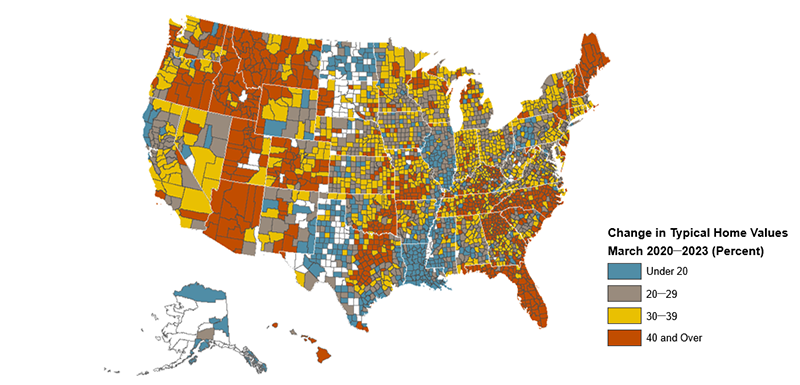 The rapid increase in home prices has significantly strained affordability in areas that were once considered more cost-effective. Rising interest rates have further compounded these affordability challenges, making homeownership an increasingly elusive goal for many. Whether these trends will persist depends on several factors, including ongoing remote work dynamics, regional affordability differences, and the capacity of housing supplies to meet new demand.

Top Five Online Real Estate Schools in California for 2025
In the ever-evolving landscape of real estate education, aspiring agents in California have a plethora of options to kickstart their careers.

Getting licensed or staying ahead in your career can be a journey—but it doesn’t have to be overwhelming. Grab your favorite coffee or tea, take a moment to relax, and browse through our articles. Whether you’re just starting out or renewing your expertise, we’ve got tips, insights, and advice to keep you moving forward. Here’s to your success—one sip and one step at a time!
In the ever-evolving landscape of real estate education, aspiring agents in California have a plethora of options to kickstart their careers.
Pre-licensed therapists are equipped with modern educational practices and are often fueled by a passion for learning.
The CE Shop emerges as the top pick, celebrated for its intuitive user dashboard and a 5-day free trial. Their offerings include a pass guarantee and the Exam Prep Edge with top-tier packages.
AI stands out as both a beacon of innovation and a harbinger of change. With a compound annual growth rate (CAGR) of 35.9%, the sector is poised to reshape industries across the globe. From autonomous vehicles to smart home devices, AI is weaving itself into the fabric of daily life.
In the bustling world of real estate, where every edge counts, the Drive With NAR podcast emerges as a beacon for REALTORS® seeking to navigate the ever-evolving landscape.
In a comprehensive study published in Nature, researchers delve into the intricacies of what determines the perceived value for money among cruise passengers. This exploration is crucial as it directly impacts cruisers' decisions when choosing their next voyage.