The COVID-19 pandemic has dramatically reshaped the housing market landscape, resulting in an unprecedented surge in home prices throughout the United States. This surge was driven by record-low interest rates, a limited housing supply, and millennials entering their prime homebuying years. According to data from Zillow, typical home values skyrocketed by 36 percent, climbing from $244,000 in March 2020 to $332,000 by March 2023.
However, this growth was anything but uniform. A compelling new paper titled “The Geography of Pandemic-Era Home Price Trends and the Implications for Affordability” from the Harvard Joint Center for Housing Studies reveals that rural and low-density areas experienced the most significant price increases. The shift toward remote work allowed families to explore housing options beyond high-cost urban centers, leading to a migration trend towards more affordable, less populated regions.
In particular, low-density suburbs of large cities, smaller markets, and rural areas witnessed a notable 36 percent increase in home prices, mirroring the national trend. In contrast, urban and moderate-density suburbs within large metropolitan areas—those with populations exceeding one million—saw more modest increases of 30 percent and 21 percent, respectively. This represents a marked departure from pre-pandemic patterns when price growth was more evenly spread across different regions.
Rural Areas: A Case of Dramatic Growth
The disparity in growth is further highlighted by the fact that typical home values in 31 percent of non-metro counties surged by at least 40 percent following the pandemic. By comparison, only 18 percent of urban counties experienced growth beyond this threshold. Such disproportionate growth has intensified affordability issues, particularly in non-metro regions where the average home-value-to-income ratio has escalated from 2.5 to 3.9, approaching levels previously seen in urban counties before the pandemic.
Affordability Challenges Intensify
The rapid increase in home prices has significantly strained affordability in areas that were once considered more cost-effective. Rising interest rates have further compounded these affordability challenges, making homeownership an increasingly elusive goal for many. Whether these trends will persist depends on several factors, including ongoing remote work dynamics, regional affordability differences, and the capacity of housing supplies to meet new demand.
The original article on this topic can be found here.
More Articles
Getting licensed or staying ahead in your career can be a journey—but it doesn’t have to be overwhelming. Grab your favorite coffee or tea, take a moment to relax, and browse through our articles. Whether you’re just starting out or renewing your expertise, we’ve got tips, insights, and advice to keep you moving forward. Here’s to your success—one sip and one step at a time!
Artificial intelligence is accelerating across the real estate industry, bringing new productivity platforms, smarter MLS systems, cleaner data tools, and AI‑powered consumer guidance. From United Real Estate’s BullseyeAI assistant to Zillow’s integration with Google NotebookLM and major MLS restructures, technology is rapidly reshaping how agents research properties, communicate with clients, and manage daily workflows. For future and current professionals, understanding these tools isn’t optional—it's becoming the new foundation for a competitive real estate career.
A sweeping Treasury Department rule has activated the first nationwide anti–money laundering requirements for residential real estate, forcing professionals involved in closings and settlements to report certain non‑financed property transfers. The move closes long‑standing loopholes that allowed criminals, corrupt officials, and foreign adversaries to hide illicit funds in U.S. housing. Backed by recent federal court decisions, the rule positions the U.S. as a global leader in financial transparency—and signals that commercial real estate may be next. For today’s real estate professionals, staying compliant is becoming just as essential as understanding the market itself.
United Real Estate has introduced BullseyeAI, a fully integrated AI platform designed to help agents cut overhead, automate daily tasks, and reclaim valuable time. Powered by a proprietary large‑language‑model system, BullseyeAI blends dashboards, navigation, voice commands, and automated assistants into one intelligent workspace. With AI agents like Sofie and Rosie managing client nurturing, recruiting workflows, marketing, data handling, and more, the platform marks a major leap toward faster, smarter productivity for real estate professionals.
Boynton Beach residents are reeling after a new city ordinance began issuing fines to homeowners for parking on their own property—unless the vehicle sits on an official driveway. The rule bans parking on grass or unpaved areas, shocking families who’ve parked the same way for years. With fines starting at 25 dollars per car and rising if unpaid, many residents say the sudden crackdown is unfair and financially burdensome, sparking a heated debate over property rights and local government authority.
From AI assistants like United’s BullseyeAI to MLS upgrades rolling out across the country, real estate professionals are entering a new tech‑driven era. This week’s highlights include smarter productivity tools, unified MLS systems, enhanced data access, and even AI‑powered buyer education through Zillow’s new NotebookLM partnership. Whether you’re a seasoned broker or preparing for your license exam, these innovations show how rapidly the industry is evolving—and why staying informed is becoming essential for success.
Artificial intelligence is rapidly moving from a helpful tool to a central force inside real estate transactions, MLS systems, and agent workflows. As AI reshapes everything from listing photos to data distribution, MLSs, regulators, and brokerages are racing to set clear rules that protect consumers and reduce legal risks. With new laws, updated agreements, and rising debates over who should regulate AI, the industry is confronting a defining moment—one that every current and future real estate professional must understand.

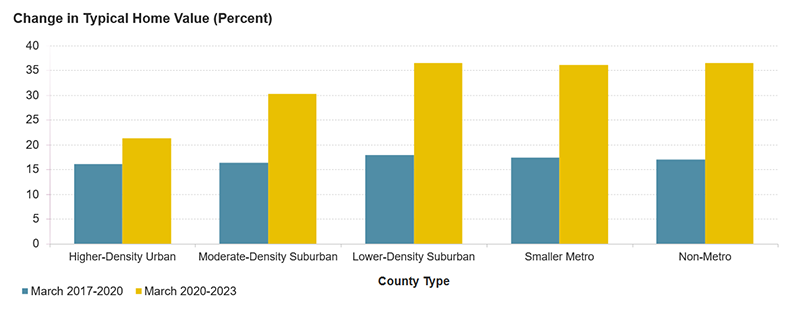 The disparity in growth is further highlighted by the fact that typical home values in 31 percent of non-metro counties surged by at least 40 percent following the pandemic. By comparison, only 18 percent of urban counties experienced growth beyond this threshold. Such disproportionate growth has intensified affordability issues, particularly in non-metro regions where the average home-value-to-income ratio has escalated from 2.5 to 3.9, approaching levels previously seen in urban counties before the pandemic.
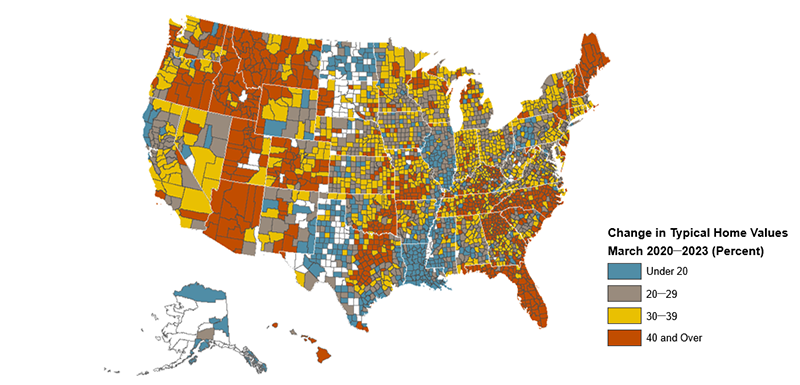 The rapid increase in home prices has significantly strained affordability in areas that were once considered more cost-effective. Rising interest rates have further compounded these affordability challenges, making homeownership an increasingly elusive goal for many. Whether these trends will persist depends on several factors, including ongoing remote work dynamics, regional affordability differences, and the capacity of housing supplies to meet new demand.