The convergence of Artificial Intelligence (AI) and the Internet of Things (IoT) is driving a digital transformation within the real estate market, redefining traditional practices and client interactions. As technological advancements continue, they are revolutionizing how properties are bought, sold, and managed, fostering increased efficiency and improved living standards. The synergy between AI and IoT offers enhanced convenience and creates more sustainable and personalized living environments.
Critical Concepts of AI and IoT in Real Estate
At its essence, AI equips machines with the ability to simulate human intelligence, enabling adaptability and decision-making based on experiential learning and new data inputs. Conversely, IoT connects physical devices and sensors to the internet, promoting data exchange and communication. These technological innovations arm homeowners, developers, agents, and property managers with the capability to make informed decisions driven by real-time data analytics.
Picture a property capable of foreseeing maintenance needs before they manifest, optimizing energy consumption, or facilitating seamless communication between residents and management—this is the vision behind AI and IoT in real estate. These interconnected technologies are reshaping homeownership and property management for the 21st century.
The Role of Smart Homes
Smart homes represent the pinnacle of technological advancement in real estate, manifesting the integration of AI and IoT to create environments catering to inhabitants’ needs. These homes utilize a suite of connected devices and systems that communicate with each other, empowering residents to monitor and control various aspects of their living spaces globally.
AI-driven Home Assistants
Devices like Amazon’s Alexa or Google Home serve as personal companions, managing household tasks through voice commands. These systems control integrated smart home setups, handle schedules, and dispense reminders, all while progressively taking on more complex tasks by learning user preferences.
Integrated IoT Devices
These devices form the backbone of smart homes, seamlessly linking lighting, security systems, and more. Such integration means homeowners can personalize their living experience through a unified platform, bypassing the need for multiple controls.
Internet of Things (IoT) in Smart Living
The IoT has emerged as a groundbreaking force in business, healthcare, and now smart living, integrating tech into daily activities. IoT allows homeowners to manage environments in real-time via interconnected devices and systems, enhancing convenience, comfort, energy efficiency, and security.
Smart Home Devices and Automation
IoT dramatically alters our interaction with living spaces. Smart devices—connected HVAC, lighting, surveillance systems—enable environment control from any location and learn user behaviors over time for automation that boosts comfort and efficiency.
Energy Management and Sustainability
IoT is fundamental in managing home and building energy. Smart meters and connected devices provide real-time energy use data, helping identify consumption patterns and encourage renewable energy integration, aligning usage with household needs.
Smart Locks and Surveillance Systems
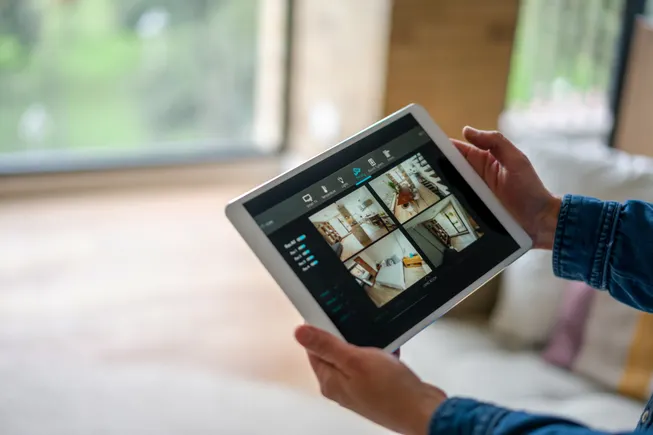
IoT smart locks and surveillance systems enhance home security and convenience. Homeowners can remotely manage property access, while connected video surveillance systems provide real-time home updates accessible from smartphones.
Applications of IoT and AI in Real Estate
AI significantly redefines the real estate landscape. By utilizing big data, predictive analytics, and machine learning, AI streamlines processes, uncovers new insights, and improves decision-making, enhancing efficiency, accuracy, and outcomes for buyers and sellers alike.
Financing the Future
IoT is revolutionizing real estate finance by enhancing data collection and analysis. IoT devices in properties generate real-time operational data, enabling more informed property valuations, risk assessments, and investment strategies.
Virtual Tours and 3D Modeling
AI applications in virtual tours and 3D modeling add new dimensions to property display. Prospective buyers can explore properties via immersive virtual reality from home, improving engagement and accelerating sales.
Simplifying Taxes
AI tax chatbots simplify the complex real estate taxation process, leveraging algorithms and analytics to assess property values, identify tax breaks, and ensure compliance, minimizing human error and streamlining tax preparations.
The merger of AI and IoT is undoubtedly transforming real estate and smart living. As technology evolves, the real estate sector must adopt these tools to optimize property management, streamline transactions, and enhance residents’ quality of life. The future of real estate is promising, with smarter homes and communities leading the way to more sustainable, secure, and engaged living environments.
For more insights, visit the original article here.