As the Urban Land Institute’s European conference commenced in Milan, Italy, on June 12, former Portuguese Prime Minister José Manuel Durȃo Barroso took center stage. In a compelling address, he underscored the pervasive influence of geopolitics on the contemporary real estate landscape. His insights, reported by Urban Land Magazine, highlighted the increasing relevance of global tensions in shaping strategic decisions within the industry.
Durȃo Barroso articulated a stark view of the current geopolitical climate, describing it as “polarized, fragmented, very volatile… unpredictable and dangerous.” He emphasized that these dynamics are not mere background noise but critical factors that must be integrated into the decision-making processes of businesses and economies alike.
The former European Commission president’s remarks resonated with many real estate leaders, as the industry grapples with the implications of political instability. The Global Outlook Emerging Trends in Real Estate 2024 report released in March highlighted similar concerns, with political instability, including the upcoming U.S. presidential election, flagged as a pivotal consideration.
Geopolitical Tensions and Economic Impact
Barroso noted that the industry has weathered numerous challenges since the 2007-2008 Global Financial Crisis. However, he pointed out that the world has irrevocably changed following Russia’s invasion of Ukraine in February 2022. This conflict has not only reshaped geopolitical alliances but has also had profound economic repercussions, notably in terms of inflation and energy prices.
“Many found we were so dependent on Russian supplies of gas,” Barroso remarked, “and Europe has adapted remarkably in a very short period, but with some costs.” He highlighted a shift towards protectionist policies and a renewed focus on national resilience, challenging Europe’s traditionally open trade stance.
The Role of Technology
Beyond geopolitical tensions, Barroso urged European leaders to capitalize on the burgeoning opportunities presented by technological advancements, especially in artificial intelligence. He warned that Europe is “lagging behind” the U.S. and China in AI investments and competitiveness. “AI is able to solve problems that we could not solve as humans, and it’s going to change everything,” he asserted, emphasizing the need for Europe to bolster its competitive edge.
As the conference unfolded, the insights shared by Durȃo Barroso and others painted a complex picture of the challenges and opportunities facing the real estate sector. The interplay of geopolitical instability, economic pressures, and technological innovation will undoubtedly shape the industry’s trajectory in the years to come.
For a deeper dive into these discussions, readers can explore the full article on Urban Land Magazine.
More Articles
Getting licensed or staying ahead in your career can be a journey—but it doesn’t have to be overwhelming. Grab your favorite coffee or tea, take a moment to relax, and browse through our articles. Whether you’re just starting out or renewing your expertise, we’ve got tips, insights, and advice to keep you moving forward. Here’s to your success—one sip and one step at a time!
Palm Beach protests erupted as intensified immigration enforcement reached the heart of Trump’s hometown, while millions in Florida brace for rising health care costs as key subsidies near expiration. At the same time, state regulators boldly declare the long‑running property insurance crisis “over,” leaving homeowners and industry professionals questioning whether true stability has finally returned.
As 2025 comes to a close, the real estate industry is shifting from uncertainty to strategic expansion. According to DWS’s Year-End 2025 Outlook, property values are stabilizing after years of repricing, capital is concentrating on high-quality assets, and Sunbelt markets—especially Florida—continue to outperform. With technology enhancing rather than replacing professional expertise, 2026 is shaping up to reward professionals who stay informed, skilled, and strategically positioned for the next cycle.
Texas capital is pouring into San Francisco’s long‑struggling commercial real estate market, with Lone Star investors buying up discounted Union Square buildings and signaling what many experts believe is the city’s market bottom. As office activity and confidence begin to return, buyers from across the country are joining the rush, turning SF’s post‑pandemic slump into one of the nation’s hottest bargain opportunities.
With 2026 HousingWire Tech100 nominations closing on December 19, the housing tech sector is accelerating at full speed. AI‑powered data platforms, digital closing breakthroughs, embedded insurance growth, and next‑generation servicing automation are reshaping real estate, mortgage, insurance, and finance. From ATTOM’s AI‑ready property intelligence to Hapi Homes’ Martha Stewart design revival, Obie’s nationwide expansion, Outamation’s servicing automation, and ServiceLink’s next‑level borrower scheduling, this year’s standout innovators are defining the future of the housing economy.
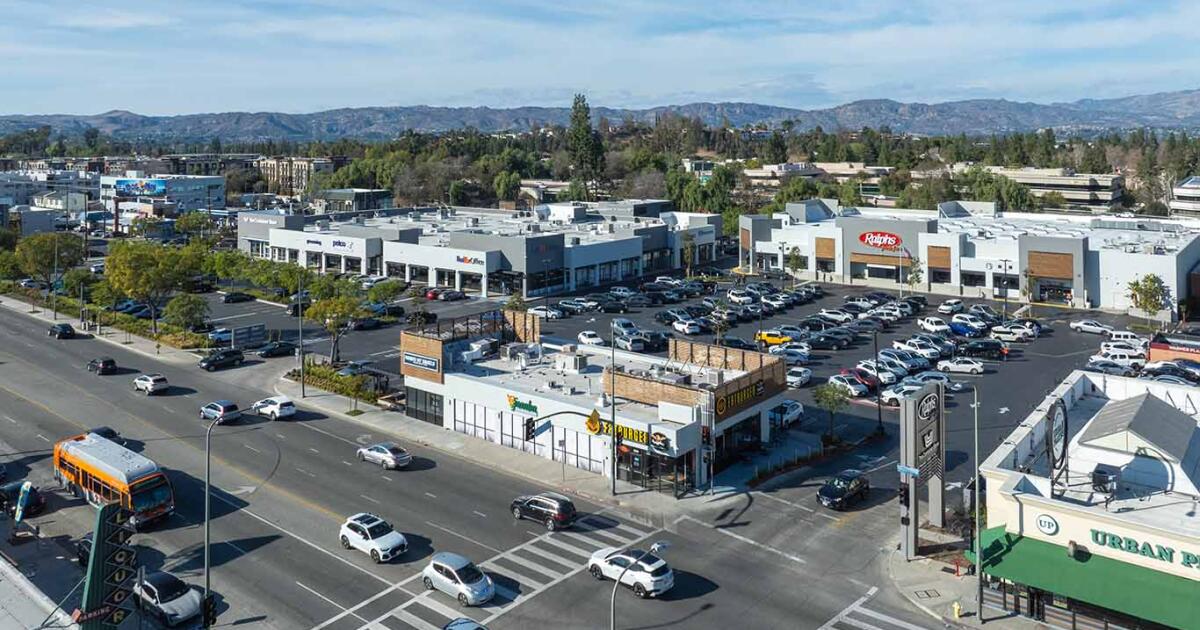
Space Investment Partners has acquired the 123,402‑square‑foot Topanga Gateway retail center in Woodland Hills for $64 million, marking another significant move in the firm’s expanding grocery‑anchored investment strategy. Located at a high‑visibility intersection and 97% occupied at the time of sale, the property strengthens the company’s push toward $500 million to $1 billion in retail acquisitions for 2026, underscoring continued investor confidence in necessity‑based retail assets.
After the Federal Reserve’s final 2025 rate cut on December 10, mortgage markets are recalibrating, giving buyers and homeowners a glimmer of relief. Rates remain lower than earlier in the year, with 30-year fixed loans at 6.12% and refinances dipping as well. This shift may spark renewed activity for buyers, refinancers, and real estate professionals heading into 2026.