The Invisible Backbone Transforming Real Estate: Why Connectivity Is Now a Market Differentiator
At PropTech Connect Europe 2025, one truth rang louder than ever: connectivity is no longer just a building feature — it’s the foundation of real estate innovation. From investors demanding clearer sustainability metrics to tenants expecting seamless digital experiences, the entire industry now depends on one critical layer: the network behind the walls.
Governments are funding high-speed national fiber rollouts, yet the responsibility falls on developers and property owners to extend that connectivity indoors. The vision for smarter, cleaner, more efficient buildings already exists — the question is whether the foundation is strong enough to support it.
Goodbye Copper. Hello Capacity.
For decades, copper wiring formed the digital skeleton of buildings — but it was designed for a very different era. Today’s real estate ecosystem thrives on data-heavy operations, automation, intelligent sensors, and AI-driven systems. Fiber networks replace bulky switches and outdated cables with a cleaner, faster, and dramatically more efficient backbone.
The result? Better tenant retention, higher satisfaction, premium rental potential, and stronger long-term valuation. Connectivity is no longer hidden infrastructure — it’s a competitive advantage.
The Essential Nutrients in Real Estate’s High-Fiber Diet
1. Sustainability You Can Measure
Frameworks like BREEAM reward measurable sustainability — and fiber contributes across multiple categories. With fewer active components and lower power needs, fiber networks cut energy consumption by up to 40%, reduce heat output, and require significantly less physical material. Independent studies show these networks not only elevate sustainability scores but also reduce operational emissions — a win for ESG commitments and long-term costs.
2. No More Silos — Build an Open Stack
Smart buildings thrive when systems communicate: lighting, HVAC, access control, automation, sensors, and ESG dashboards. Fiber’s virtually unlimited bandwidth supports Wi-Fi 7, IoT systems, and next-generation building automation. This creates unified, scalable environments that grow with technology instead of collapsing under it.
3. From Expense to Asset
Fiber connectivity isn’t just a technical improvement — it’s a financial strategy. By reducing cabling by up to 70% and lowering reliance on energy-consuming network rooms, fiber frees valuable square footage and reduces lifetime operational costs. With lifespans of 50+ years, a fiber backbone becomes a long-term asset that future-proofs the property.
PropTech Connect Takeaway
As highlighted at PropTech Connect Europe 2025, digital infrastructure is now core to real estate value. Whether the goal is sustainability, improved tenant experience, or long-term flexibility, fiber is the new foundation.
Real estate’s competitive edge no longer lies in location alone — it lives in the intelligence and efficiency of the building itself. And that intelligence starts with connectivity.
If you’re a real estate professional — or someone pursuing or upgrading your license through a trusted education provider like Cameron Academy — this shift matters. Understanding the technology behind modern properties positions you ahead in an industry where digital readiness increasingly defines leadership.
Getting licensed or staying ahead in your career can be a journey—but it doesn’t have to be overwhelming. Grab your favorite coffee or tea, take a moment to relax, and browse through our articles. Whether you’re just starting out or renewing your expertise, we’ve got tips, insights, and advice to keep you moving forward. Here’s to your success—one sip and one step at a time!
In 2026, financial advisors are no longer just experimenting with AI — they’re relying on it. Once confined to back-office duties, AI now supports meeting prep, portfolio analysis, and even early-stage financial planning. Advisors say the tech is strengthening client relationships by freeing them from administrative overload, though entry-level roles like paraplanners may feel the squeeze as automation accelerates.
Cybercriminals are weaponizing AI to launch highly convincing email scams and system breaches across the mortgage industry, overwhelming lenders and servicers whose cybersecurity measures can’t keep up. With major companies already hit and regulation lagging behind, experts warn the sector—now considered critical infrastructure—must rapidly upgrade protections, collaborate on threat intelligence, and improve AI governance before the risks escalate further.
Escrow payments are quietly surging across the country as property taxes and insurance premiums spike—pushing many homeowners toward delinquencies and even foreclosure. New data from Cotality shows the sharpest increases hitting the South and Midwest, with Florida among the hardest‑hit states. Even with fixed mortgage rates, rising escrow requirements are driving monthly payments higher and threatening affordability heading into 2026.
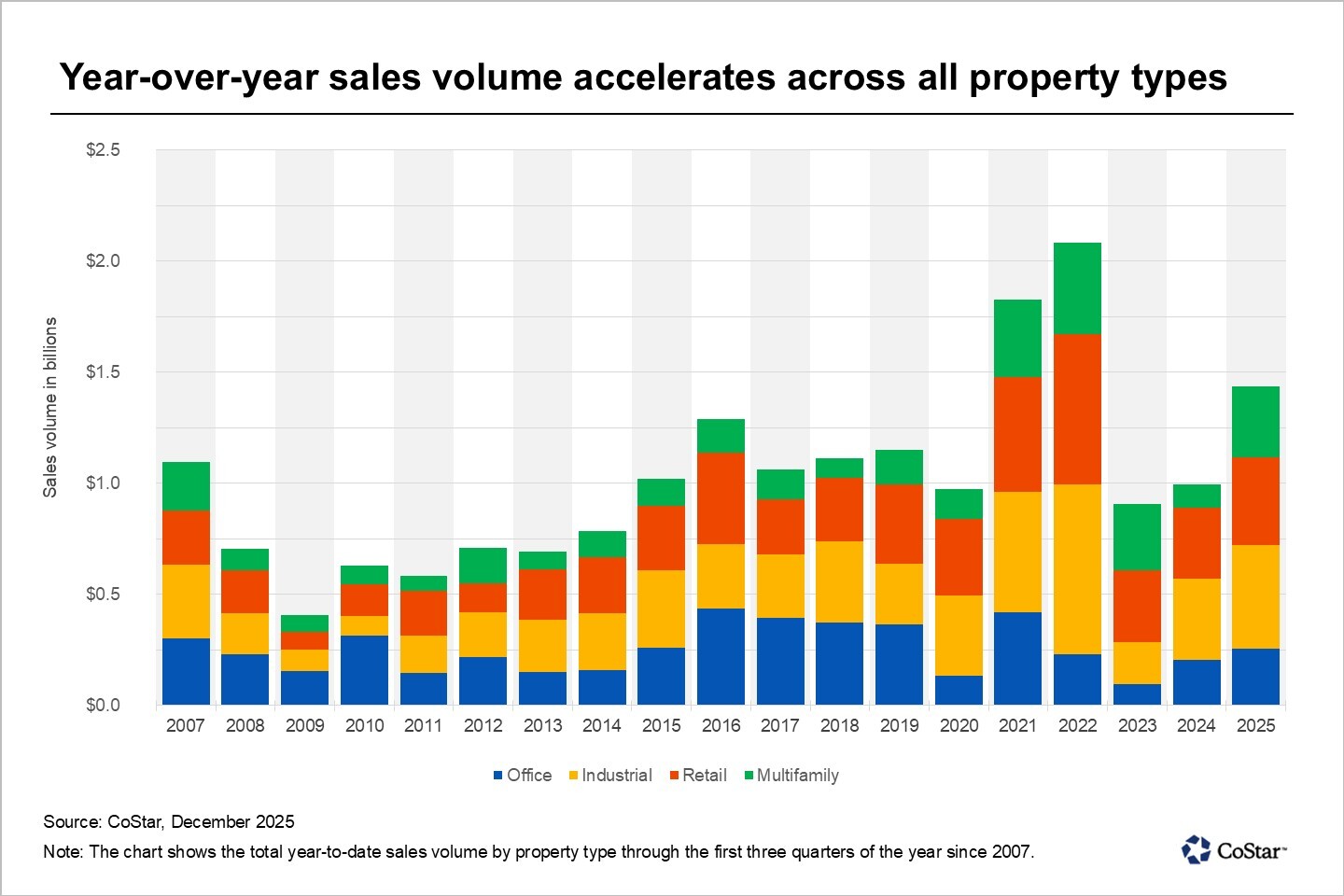
Milwaukee entered 2025 with renewed momentum, posting its strongest commercial real estate sales volume in three years. After a period of uncertainty and high capital costs, investors are returning with a sharper focus on quality assets, realistic pricing, and reliable cash flow. Activity is increasing across industrial, office, multifamily, and retail sectors, signaling a broad-based recovery fueled by stabilizing interest rates and improved market confidence.
As 2026 approaches, the title insurance industry is navigating a complex mix of market recovery, rising fraud threats, and sweeping regulatory changes. Industry leaders say the path forward centers on smarter technology, leaner operations, and stronger support for title agents. With AI-driven workflows, enhanced fraud prevention, and new compliance demands—including FinCEN’s expanded Geographic Targeting Orders—companies like Stewart and First American are reshaping how title work gets done. For real estate and mortgage professionals, the year ahead promises more automation, heightened standards, and major opportunities for those who stay ahead of the curve.
The real estate industry is undergoing a major transformation in 2025 as advancements in AI, proptech, blockchain, and data intelligence redefine how properties are marketed, valued, financed, and experienced. From instant digital valuations and immersive virtual tours to tokenized investments and predictive analytics, technology is reshaping every stage of the real estate lifecycle. Professionals who embrace these innovations—while maintaining the human expertise clients still rely on—will lead the next era of the industry.