The Invisible Backbone Transforming Real Estate: Why Connectivity Is Now a Market Differentiator
At PropTech Connect Europe 2025, one truth rang louder than ever: connectivity is no longer just a building feature — it’s the foundation of real estate innovation. From investors demanding clearer sustainability metrics to tenants expecting seamless digital experiences, the entire industry now depends on one critical layer: the network behind the walls.
Governments are funding high-speed national fiber rollouts, yet the responsibility falls on developers and property owners to extend that connectivity indoors. The vision for smarter, cleaner, more efficient buildings already exists — the question is whether the foundation is strong enough to support it.
Goodbye Copper. Hello Capacity.
For decades, copper wiring formed the digital skeleton of buildings — but it was designed for a very different era. Today’s real estate ecosystem thrives on data-heavy operations, automation, intelligent sensors, and AI-driven systems. Fiber networks replace bulky switches and outdated cables with a cleaner, faster, and dramatically more efficient backbone.
The result? Better tenant retention, higher satisfaction, premium rental potential, and stronger long-term valuation. Connectivity is no longer hidden infrastructure — it’s a competitive advantage.
The Essential Nutrients in Real Estate’s High-Fiber Diet
1. Sustainability You Can Measure
Frameworks like BREEAM reward measurable sustainability — and fiber contributes across multiple categories. With fewer active components and lower power needs, fiber networks cut energy consumption by up to 40%, reduce heat output, and require significantly less physical material. Independent studies show these networks not only elevate sustainability scores but also reduce operational emissions — a win for ESG commitments and long-term costs.
2. No More Silos — Build an Open Stack
Smart buildings thrive when systems communicate: lighting, HVAC, access control, automation, sensors, and ESG dashboards. Fiber’s virtually unlimited bandwidth supports Wi-Fi 7, IoT systems, and next-generation building automation. This creates unified, scalable environments that grow with technology instead of collapsing under it.
3. From Expense to Asset
Fiber connectivity isn’t just a technical improvement — it’s a financial strategy. By reducing cabling by up to 70% and lowering reliance on energy-consuming network rooms, fiber frees valuable square footage and reduces lifetime operational costs. With lifespans of 50+ years, a fiber backbone becomes a long-term asset that future-proofs the property.
PropTech Connect Takeaway
As highlighted at PropTech Connect Europe 2025, digital infrastructure is now core to real estate value. Whether the goal is sustainability, improved tenant experience, or long-term flexibility, fiber is the new foundation.
Real estate’s competitive edge no longer lies in location alone — it lives in the intelligence and efficiency of the building itself. And that intelligence starts with connectivity.
If you’re a real estate professional — or someone pursuing or upgrading your license through a trusted education provider like Cameron Academy — this shift matters. Understanding the technology behind modern properties positions you ahead in an industry where digital readiness increasingly defines leadership.
Getting licensed or staying ahead in your career can be a journey—but it doesn’t have to be overwhelming. Grab your favorite coffee or tea, take a moment to relax, and browse through our articles. Whether you’re just starting out or renewing your expertise, we’ve got tips, insights, and advice to keep you moving forward. Here’s to your success—one sip and one step at a time!
After years of sharp increases and shrinking coverage options, Florida’s home insurance market is showing its strongest signs of recovery yet. Multiple insurers are proposing significant premium cuts for 2026 — some in the double digits — as storm‑loss data improves and private carriers re‑enter the state. Citizens Insurance is also seeking its first broad rate reduction in a decade, potentially lowering costs for millions of homeowners. This shift could boost affordability and confidence across Florida’s real estate and mortgage markets heading into the new year.
An AI company that began in a bedroom is now shaking the foundations of the lending industry. Salient, led by CEO Ari Malik, has skyrocketed to a $500 million valuation by fixing one of finance’s messiest problems: debt servicing. With zero customer churn, 100% pilot-to-contract conversions, and AI agents reportedly 30 times more compliant than humans, Salient is redefining how lenders manage loans. Its rapid rise highlights a new era where trust, regulation‑ready AI, and deep industry understanding are becoming essential for professionals across real estate, mortgage, finance, and insurance.
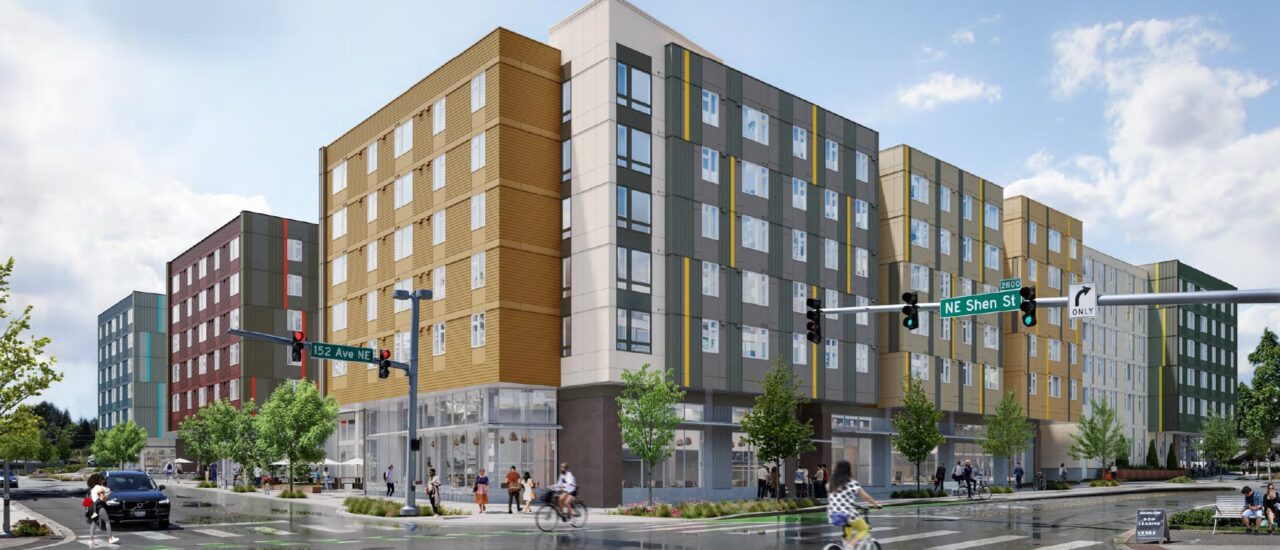
Redmond, Washington is tackling its housing crisis with Prisma, a six‑story, transit‑oriented development built on discounted surplus land from Sound Transit. The project will deliver 328 deeply affordable units—most reserved for households earning 50 percent of AMI or less, including families and people with disabilities. Enabled by a rare cross‑sector funding partnership, Prisma showcases how cities can combine transit investment, public resources, and private support to create long‑term, equitable housing solutions.
Citizens Property Insurance Corp. is recommending rate decreases for millions of Florida homeowners in 2026, marking the first potential premium drop in over a decade. If approved by state regulators, personal-line policies would fall an average of 2.6%, with some homeowners seeing reductions up to 11.5%. The shift reflects growing market stability driven by recent insurance reforms and increased private‑sector participation, though not all counties will benefit equally.
Despite alarming headlines, experts say AI isn’t the true driver behind Wall Street job cuts. Major banks like JPMorgan and Goldman Sachs are trimming staff, but economists point to post‑pandemic overhiring and economic uncertainty—not robots—as the real cause. While banks are investing heavily in AI tools, actual AI‑driven layoffs remain minimal. Instead, AI is slowing new hiring, reshaping roles, and pushing professionals across finance, real estate, and other industries to upskill rather than fear replacement.
Artificial intelligence is reshaping the real estate industry in 2025, powering a new surge of growth and maturity in the proptech sector. AI tools once considered experimental—such as predictive analytics, automated valuations, and digital transaction platforms—are now becoming essential to real estate, mortgage, insurance, and finance workflows. With rising investor confidence and widespread professional adoption, AI‑driven proptech is transforming how the industry operates and what skills modern professionals need to stay competitive.