In the ever-evolving world of real estate, the Law of Three emerges as a pivotal strategy for enhancing marketing and branding efforts. This principle, which traces its roots back to the communication theories of Aristotle, posits that limiting choices to three can significantly streamline decision-making processes. This concept is not only a cornerstone in sales strategy but also a tool for refining branding and marketing initiatives.
As reported by Inman, the Law of Three is especially relevant during the spring selling season, a time when marketing tactics are under the spotlight. The principle is lauded for its ability to create patterns that are easy for consumers to grasp, remember, and act upon. By focusing on three alternatives or niches, real estate professionals can sharpen their focus, thereby making their branding, marketing, and negotiations more effective.
The Psychological Basis of the Law of Three
Psychologically, three is the smallest number that creates a pattern, providing just enough information to avoid overwhelming consumers. This concept has been utilized by companies like Apple, which simplifies its product offerings to help consumers make informed decisions quickly. For instance, when Apple released its latest MacBook Air, it presented options in a “three across” by “three down” layout, making it easier for customers to choose the right model.
Applying the Law in Real Estate
Real estate agents can harness this strategy by identifying specific niches they serve and articulating a clear value proposition. The simplicity of the Law of Three can also be applied to buyer showings, as recommended by Daniel Ariely in his book Predictably Irrational. By showing three houses, two in excellent condition and one needing work, agents can facilitate quicker decision-making for buyers.
Moreover, during negotiations, offering clients three alternatives can empower them to make confident decisions. A script might include options such as making an offer at asking price, offering over asking, or walking away, thus placing the decision-making power back in the hands of the clients.
Limitations and Considerations
While the Law of Three is a potent tool, it is not universally applicable. Over-reliance on this pattern can render marketing efforts formulaic. Therefore, creating variety in advertising is crucial to maintaining effectiveness.
As Bernice Ross, a seasoned real estate trainer, suggests, implementing the Law of Three can provide a competitive edge in connecting with clients and closing deals. By narrowing focus to one to three niches and aligning marketing materials accordingly, real estate professionals can leverage this powerful approach to achieve success.
Getting licensed or staying ahead in your career can be a journey—but it doesn’t have to be overwhelming. Grab your favorite coffee or tea, take a moment to relax, and browse through our articles. Whether you’re just starting out or renewing your expertise, we’ve got tips, insights, and advice to keep you moving forward. Here’s to your success—one sip and one step at a time!
Florida families are feeling the squeeze as everyday costs, insurance premiums, and homeownership barriers continue to climb. House District 102 candidate Jayden D’Onofrio is calling for a broader, more unified affordability strategy—one that tackles the state’s insurance crisis, supports first‑time homebuyers, and restores real competition in the market. His message centers on transparency, practical solutions, and keeping Florida livable for the professionals, workers, and families who power its economy.
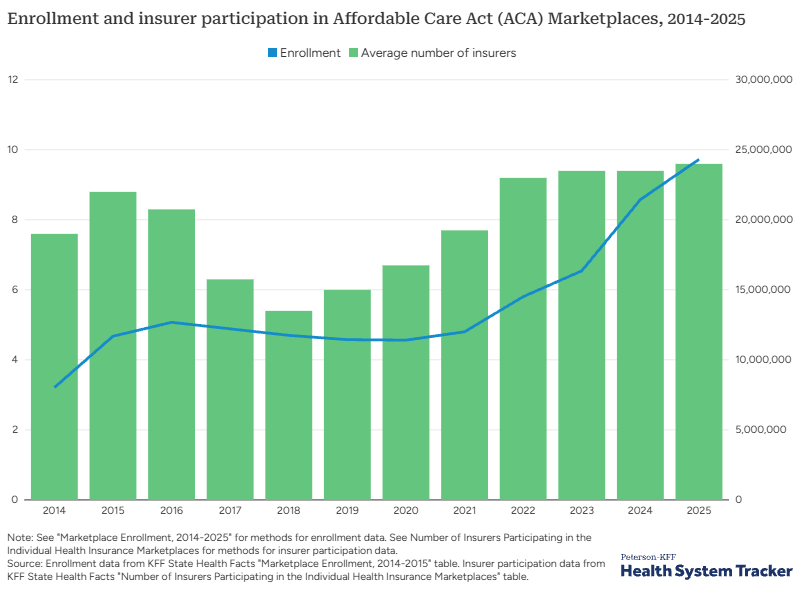
A decade of dramatic change is reshaping America’s health insurance markets. Employer group plans are becoming increasingly dominated by a few powerful insurers, while the ACA individual marketplace is experiencing record‑breaking competition and enrollment. Self‑funded plans are surging, small‑group premiums are driving employers to new coverage models, and major policy shifts in 2025 could redefine affordability for millions. This data‑driven Peterson‑KFF analysis breaks down the trends every insurance, finance, and business professional needs to understand as the industry enters a transformative new era.
Sarasota County is inching closer to approving Winchester Ranch, a massive 8,999‑home community planned for more than 3,100 acres in North Port. With a 7‑1 vote from the Planning Commission and a final decision expected in early 2026, the project could become one of Southwest Florida’s largest developments in decades—bringing new housing, commercial space, and industry while raising fresh questions about growth, the environment, and the region’s rapidly evolving real estate market.
Lument Finance Trust has closed a major $663.8 million commercial real estate CLO, marking one of the standout CRE finance deals of 2025. The transaction, LMNT 2025-FL3, features a strong reinvestment period, non‑recourse and non‑mark‑to‑market financing, and a diversified pool of 32 loans tied to 49 properties nationwide. With J.P. Morgan leading the structuring and more than $585 million placed in investment‑grade securities, the deal highlights renewed stability in transitional CRE debt—making it a development real estate and finance professionals will want to watch closely.
Walmart has partnered with Alquist 3D to roll out the nation’s first large‑scale wave of 3D‑printed commercial buildings, signaling a major shift in how future retail and industrial spaces will be constructed. After completing an 8,000‑square‑foot 3D‑printed expansion in Tennessee—the largest of its kind—the company is moving forward with over a dozen new projects nationwide, accelerating a tech‑driven transformation in commercial real estate.
Citizens Property Insurance Corp. is recommending statewide rate reductions for 2026—the first proposed decrease in more than a decade. Most Citizens policyholders could see an average 11.5% drop, reflecting recent insurance‑market reforms that have stabilized Florida’s turbulent property sector. With hundreds of thousands of policies moving back to private insurers and state‑backed Citizens shrinking to record‑low enrollment, real estate and insurance professionals should prepare for how lower premiums may influence affordability, buyer confidence, and market activity heading into 2026.