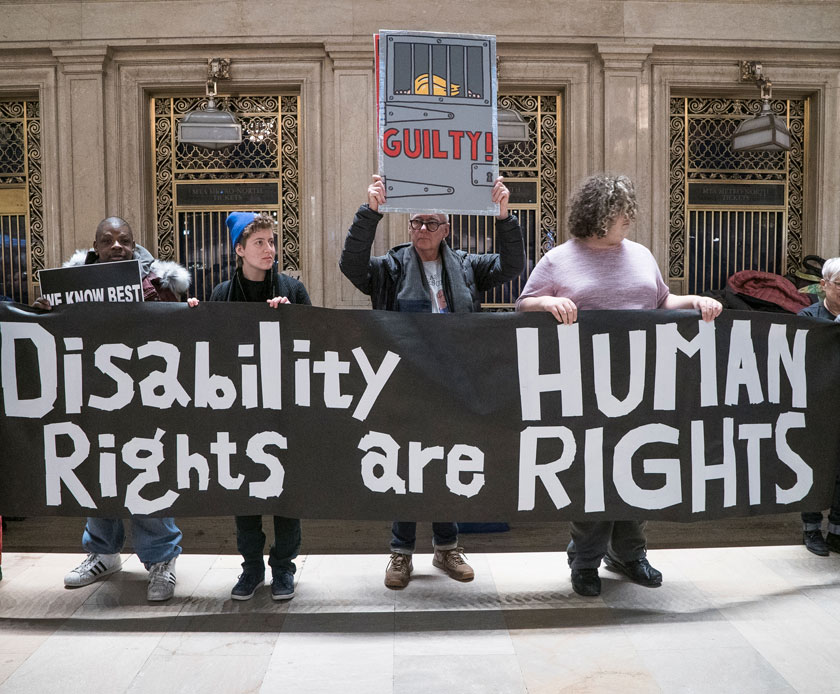
In a detailed analysis by the Center for American Progress, the potential impacts of the Heritage Foundation’s Project 2025 on disabled individuals have been laid bare. This sweeping policy agenda threatens to dismantle essential protections and services for the disability community, which comprises at least 28.7 percent of the U.S. population.
Elimination of Rights for Disabled Students
Project 2025 proposes structural changes that would severely impact disabled students. By moving the Office of Special Education and Rehabilitative Services to the Department of Health and Human Services, coordination of resources and knowledge would become challenging, undermining the promise of an equitable education for disabled students.
Major Cuts to Health Coverage
The project threatens to convert Medicaid funding into block grants, limiting states’ ability to provide essential home- and community-based services. Moreover, repealing Medicare’s ability to negotiate drug prices could lead to increased costs for millions of Americans.
Barriers to Employment
By eliminating key data collection and constraining the Equal Employment Opportunity Commission’s enforcement capabilities, Project 2025 could strip away critical protections for disabled workers. The plan also aims to eliminate the Office of Federal Contract Compliance Programs, further reducing oversight.
Restriction of Social Benefits
The automation of the U.S. Department of Veterans Affairs claims process and increased work requirements for SNAP could make it more difficult for disabled individuals to access needed benefits. This could result in significant hardship for those relying on these essential services.
Reduced Enforcement of the ADA
Project 2025’s proposal to discontinue disparate impact regulations would weaken the federal government’s ability to enforce civil rights protections under the ADA, potentially perpetuating discrimination in various sectors.
Conclusion
The Center for American Progress warns that Project 2025 could severely hinder disabled individuals’ ability to live independently and participate in their communities. The report underscores the necessity of maintaining and strengthening protections and services for this vulnerable population.
For more details on the implications of Project 2025, visit the original article.
Image credit: Getty/Sandy Huffaker
More Articles
Getting licensed or staying ahead in your career can be a journey—but it doesn’t have to be overwhelming. Grab your favorite coffee or tea, take a moment to relax, and browse through our articles. Whether you’re just starting out or renewing your expertise, we’ve got tips, insights, and advice to keep you moving forward. Here’s to your success—one sip and one step at a time!
With each passing year, the threat of wildfires looms larger, fueled by the relentless march of climate change. AI technologies are emerging as game-changers in wildfire detection and management, providing real-time identification and valuable insights.
Eden Housing's proposal is part of a broader initiative to redevelop the underutilized land surrounding the Eastmont Town Center, a hub for shopping and social services in East Oakland.
In the heart of California, a state renowned for its innovation and economic prowess, a housing crisis looms large. The demand for housing far exceeds the supply, leading to skyrocketing costs and a severe affordability gap.
The housing market in 2024 continues to be a battleground, with sellers maintaining the upper hand due to persistently low inventory levels. Despite a slight dip in mortgage rates, which have decreased to 7.09% from their peak, they remain high enough to deter potential buyers.
The ongoing struggles in commercial real estate underscore the need for banks to adapt and innovate in response to evolving market conditions. As the sector navigates these challenges, the focus remains on strategic maneuvers and legislative considerations that will shape its future trajectory.
The current housing landscape is bleak for many. In most American counties, even a modest one-bedroom apartment is out of reach for minimum-wage workers. The situation is exacerbated by the increasing influence of large financial firms in the housing market, leaving working families to compete in an unfair bidding war.