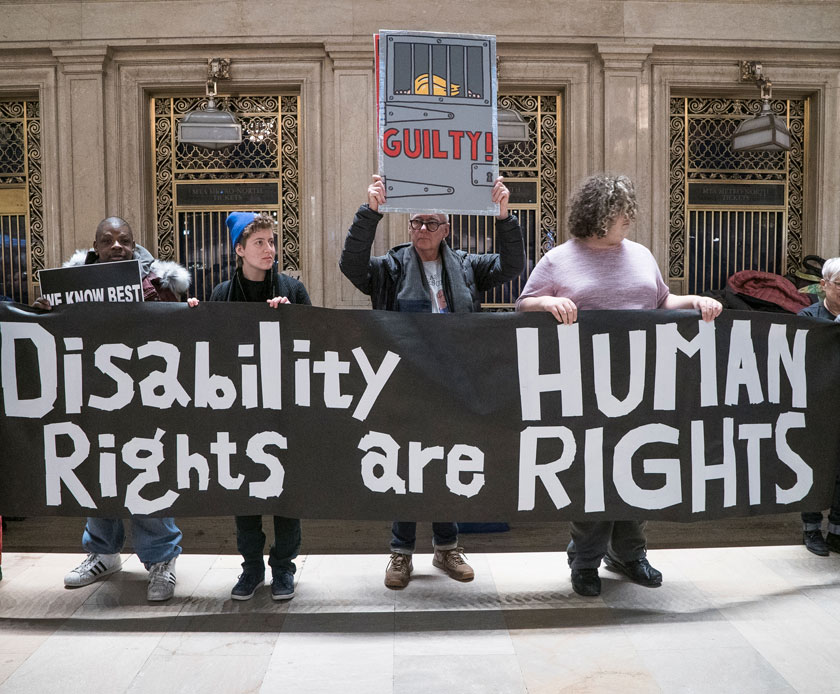
In a detailed analysis by the Center for American Progress, the potential impacts of the Heritage Foundation’s Project 2025 on disabled individuals have been laid bare. This sweeping policy agenda threatens to dismantle essential protections and services for the disability community, which comprises at least 28.7 percent of the U.S. population.
Elimination of Rights for Disabled Students
Project 2025 proposes structural changes that would severely impact disabled students. By moving the Office of Special Education and Rehabilitative Services to the Department of Health and Human Services, coordination of resources and knowledge would become challenging, undermining the promise of an equitable education for disabled students.
Major Cuts to Health Coverage
The project threatens to convert Medicaid funding into block grants, limiting states’ ability to provide essential home- and community-based services. Moreover, repealing Medicare’s ability to negotiate drug prices could lead to increased costs for millions of Americans.
Barriers to Employment
By eliminating key data collection and constraining the Equal Employment Opportunity Commission’s enforcement capabilities, Project 2025 could strip away critical protections for disabled workers. The plan also aims to eliminate the Office of Federal Contract Compliance Programs, further reducing oversight.
Restriction of Social Benefits
The automation of the U.S. Department of Veterans Affairs claims process and increased work requirements for SNAP could make it more difficult for disabled individuals to access needed benefits. This could result in significant hardship for those relying on these essential services.
Reduced Enforcement of the ADA
Project 2025’s proposal to discontinue disparate impact regulations would weaken the federal government’s ability to enforce civil rights protections under the ADA, potentially perpetuating discrimination in various sectors.
Conclusion
The Center for American Progress warns that Project 2025 could severely hinder disabled individuals’ ability to live independently and participate in their communities. The report underscores the necessity of maintaining and strengthening protections and services for this vulnerable population.
For more details on the implications of Project 2025, visit the original article.
Image credit: Getty/Sandy Huffaker
More Articles
Getting licensed or staying ahead in your career can be a journey—but it doesn’t have to be overwhelming. Grab your favorite coffee or tea, take a moment to relax, and browse through our articles. Whether you’re just starting out or renewing your expertise, we’ve got tips, insights, and advice to keep you moving forward. Here’s to your success—one sip and one step at a time!
The latest MBA survey shows overall mortgage applications dipping 1.4% during the holiday week, even as purchase activity rose on a seasonally adjusted basis. Refinances cooled despite lower rates, which averaged 6.32% for a 30‑year fixed. Rising ARMs and shifting buyer behavior highlight a market still trying to stabilize amid softening economic indicators.
October delivered the first year‑over‑year slowdown in commercial real estate deals in nearly two years, signaling a growing disconnect between buyers and sellers as elevated rates and policy uncertainty reshape pricing expectations. While multifamily cooled and office assets traded at steep discounts, hotels and adaptive‑reuse projects stood out as rare bright spots. For professionals across real estate, mortgage, and finance, the shifting landscape underscores the need for sharper analysis and continued education heading into 2026.
The US workers’ compensation market is bracing for a pivotal year in 2026 as medical inflation, rising claim complexity, and tightening state regulations push costs higher for insurers and employers. With cumulative trauma injuries increasing and states expanding presumption laws—especially for first responders and healthcare workers—underwriting strategies are being forced to evolve. At the same time, technology like predictive analytics and workplace wearables is reshaping loss prevention, while more organizations turn to captives and hybrid programs to manage volatility.
Over the past 25 years, Florida Realtors has transformed from a simple support desk into one of the most influential tech ecosystems in real estate. Through member‑driven tools like Tech Helpline, Form Simplicity and the new Sabal Sign platform, the association has built a stable, fully integrated system used by agents across the U.S. and Canada. Free from outside investors and focused entirely on member needs, Florida Realtors has quietly become a tech powerhouse—proving that long-term vision, not venture capital, is what truly drives innovation in the industry.
Massachusetts is poised for a major shift in home‑sale transparency as Gov. Maura Healey pushes for mandatory flood disclosures — a change that could impact buyers, sellers, and real estate professionals statewide. With worsening climate conditions and growing flood damage in communities like Winthrop and Salem, the proposal aims to ensure buyers understand a property’s true risk before they commit. The move has wide support from insurers and municipalities, while the real estate industry remains split over its potential impact on the state’s long‑standing “buyer beware” culture.
Florida’s long‑troubled property insurance market is finally showing early signs of recovery. Thanks to recent legislative reforms that reduced litigation and attracted new insurers, some homeowners are even seeing their premiums drop. These improvements are boosting consumer confidence and creating new opportunities for real estate, mortgage, and insurance professionals across the state.