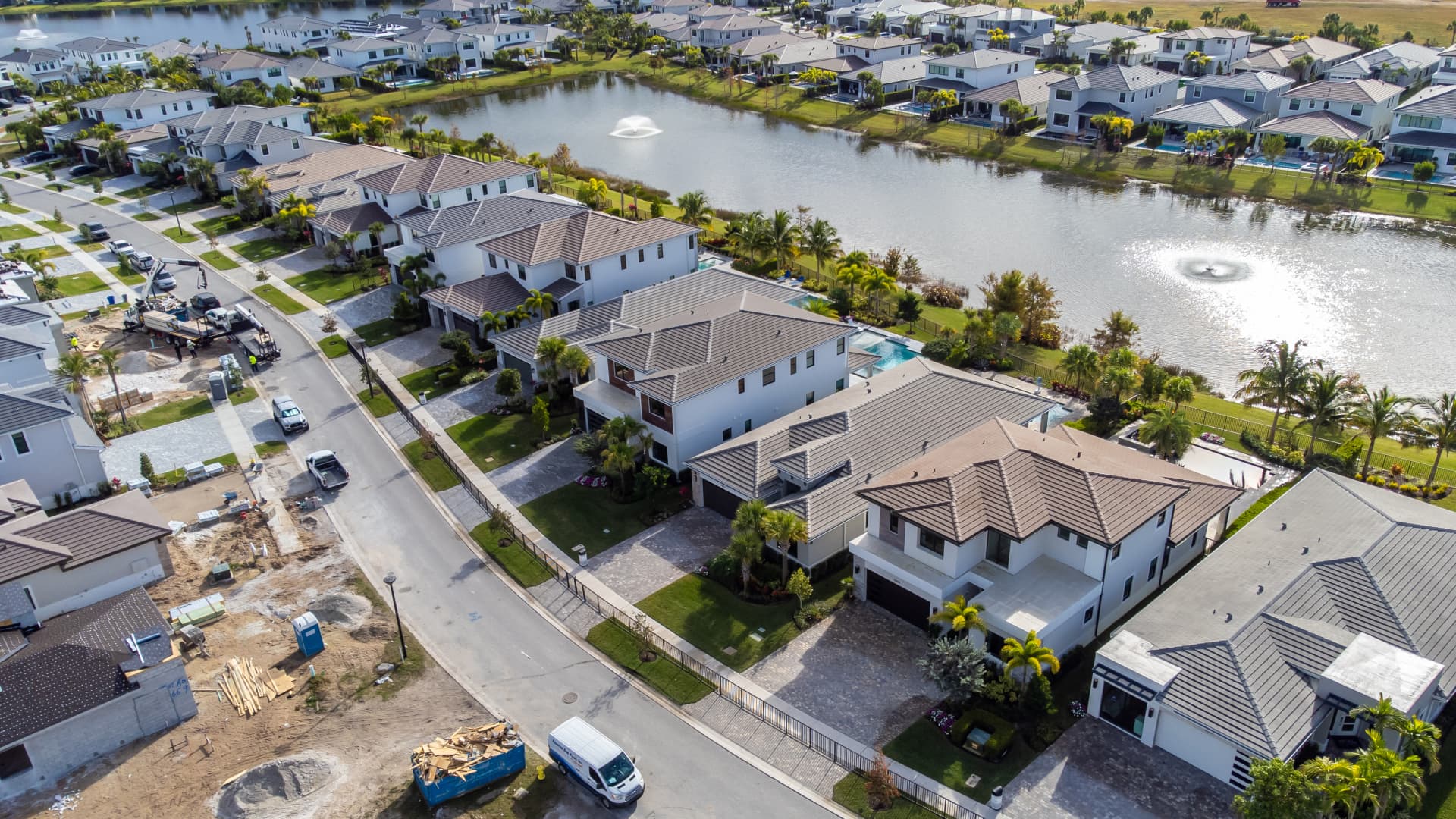
In an era marked by high mortgage rates and soaring home prices, the quest for affordable housing has become a driving force reshaping migration trends across the United States. As prospective homeowners grapple with these financial challenges, many are choosing to relocate to more affordable metropolitan areas that promise a balance of lower housing costs and burgeoning job opportunities.
A recent analysis by Zillow, leveraging data from United Van Lines, reveals a significant shift in interstate migration patterns. Last year, individuals often moved to regions where housing markets were less competitive, and new home construction was keeping pace with demand. On average, homes in these new metros were approximately $7,500 cheaper than those in the areas people left behind.
Migration Trends Driven by Affordability
Orphe Divounguy, a senior economist at Zillow, emphasizes the pivotal role of affordability in shaping these migration patterns. “Housing affordability has always mattered…and you’re seeing it across the country,” he notes, highlighting how this factor is influencing where people choose to live.
Jessica Lautz, deputy chief economist at the National Association of Realtors, points to a strong migration flow into states like Florida, North Carolina, South Carolina, Tennessee, and Texas. These regions are increasingly popular due to their combination of affordable housing options and robust job markets.
Charlotte, North Carolina
Providence, Rhode Island
Indianapolis, Indiana
Orlando, Florida
Raleigh, North Carolina
These cities, among others, have become magnets for movers seeking not only affordable living but also substantial employment opportunities. For instance, Charlotte and Raleigh have emerged as tech and financial hubs, attracting workers from more expensive metro areas like New York City.
Economic and Job Factors
The appeal of these Southern and Midwestern cities lies not only in their affordability but also in their dynamic job markets. As Divounguy notes, these areas are “markets where jobs are being created rapidly,” providing a dual incentive for relocation—affordable housing and employment prospects.
As the real estate market continues to face a low supply of active listings, builders are stepping in to fill the gap, but only in areas where it is financially viable for both buyers and builders. This has led to a rise in the popularity of these relatively more affordable markets.
Conclusion
As the landscape of American housing continues to evolve, the influence of affordability on migration trends becomes increasingly evident. With states like Florida and the Carolinas leading the charge, the search for affordable housing coupled with promising job markets is set to redefine where and how Americans choose to live.
More Articles
Getting licensed or staying ahead in your career can be a journey—but it doesn’t have to be overwhelming. Grab your favorite coffee or tea, take a moment to relax, and browse through our articles. Whether you’re just starting out or renewing your expertise, we’ve got tips, insights, and advice to keep you moving forward. Here’s to your success—one sip and one step at a time!
Commercial real estate is entering its most transformative era yet. In 2026, success hinges on mastering predictive analytics, smart‑building automation, and sustainability tech—tools that now determine everything from ROI forecasting to tenant retention. As PropTech evolves into an interconnected ecosystem of AI, automation, and ESG‑driven systems, CRE professionals who embrace this shift will lead the next generation of market innovation, while those who rely on traditional instincts risk being left behind.
Florida lawmakers are pushing major reforms that could dramatically change life for more than 800,000 mobile home park residents. New bills would force park owners to justify rent increases, expand relocation assistance, strengthen tenant rights, and add penalties for reducing amenities without lowering rent. With many residents facing steep price jumps on fixed incomes, the proposed laws mark one of the state’s biggest moves toward accountability and transparency in decades — and real estate professionals will need to stay informed as the changes progress.
Refinance activity exploded for a second straight week as mortgage rates briefly dipped to their lowest levels since late 2024. Homeowners rushed to lock in savings, pushing refinance applications to nearly triple last year’s volume. But the momentum may be short‑lived. Early this week, rates spiked again as markets reacted to new tariff concerns and global uncertainty, erasing much of the recent progress. Both refinance and purchase demand remain strong, but volatility continues to challenge borrowers and professionals across the real estate and mortgage sectors.
The real estate industry has officially entered its AI era, with agents across the country adopting advanced tools that streamline workflow, boost productivity, and transform daily operations. According to a new HousingWire report, tasks that once took hours now take minutes, agents are seeing up to 40 percent productivity growth, and unified AI platforms are helping brokerages deliver faster, smarter, and more personalized marketing than ever before.
Hawai‘i enters 2026 with a mix of strength and vulnerability. Construction is booming with billions in federal and military projects, yet tourism—the backbone of the local economy—is slowing at a difficult moment. Real estate shows early signs of revival as mortgage rates fall, while health care, small business, and banking navigate shifting federal funding and economic uncertainty. For professionals across real estate, finance, construction, and other licensed industries, Hawai‘i offers a clear preview of the economic pressures and emerging opportunities taking shape nationwide.
Florida’s property insurance market is stabilizing after years of turmoil, but lawmakers say the job isn’t done. New proposals target profit‑sharing oversight, premium transparency, and a statewide claim‑free discount program—offering potential relief for homeowners and key insights for real estate and mortgage professionals navigating the shifting landscape.