The AI Honeymoon in Real Estate Is Officially Over

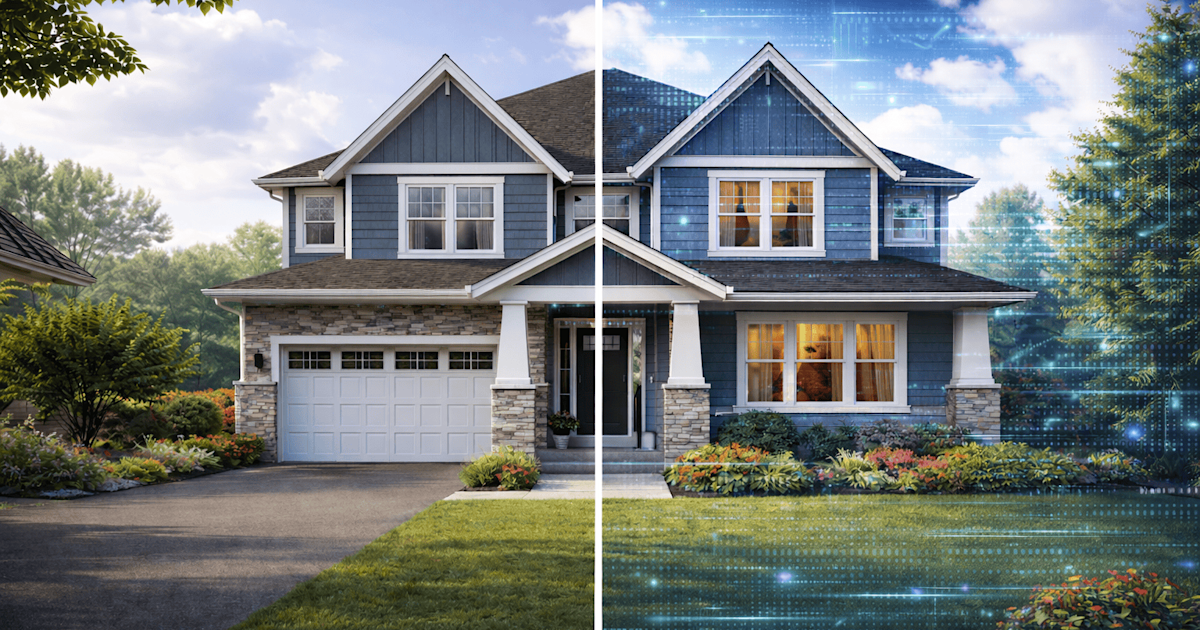
Ai and smart home illustration

After years of excitement and experimentation, the residential real estate industry is waking up to a new reality: AI isn’t a novelty anymore — it’s the infrastructure running quietly beneath nearly everything agents create and consumers see. But with that evolution comes growing tension around trust, authenticity, and what it really means to be a licensed professional in an AI‑saturated world.

AI Is Everywhere — And That’s the Problem

Agents today rely on generative AI for nearly everything: listing descriptions, social posts, email campaigns, photo enhancements, even full property presentations. What was once a powerful add‑on has become the expectation.

This explosion of content has introduced a notorious new term inside real estate circles: AI slop — repetitive, uncanny, overly polished material that all starts to look the same.

Pritesh Damani, CTO of The Real Brokerage, doesn’t see it as a downside.

“I don’t consider it slop — I consider it better content.”

To Damani, the volume is the point. Scale matters more than originality, and AI brings scale the way machinery transformed the industrial revolution.

Authenticity Takes Center Stage

But not everyone is convinced that more content means better outcomes. Holly Mabery, Chief Brokerage Officer at eXp Realty, compares the AI surge to the infamous Milli Vanilli lip‑sync scandal — polished on the surface, but potentially hollow underneath.

“What is real and what is not? At the core of everything, it has to be you.”

Mabery’s concern isn’t about productivity — it’s about trust. If an agent’s voice, visuals, and persona are AI‑generated, consumers may start doubting the human expertise they’re paying for. In response, eXp has already added AI disclosure clauses to its listing agreements and has begun training agents to properly identify what’s real and what’s virtually enhanced.

When AI Crosses Into Legal Territory

AI‑generated marketing is one thing. AI‑generated legal guidance is another.

Consumer Policy Center research fellow Wendy Gilch warns that consumers are increasingly turning to AI for guidance on contracts, negotiations, inspections, and even underwriting decisions — areas that can carry enormous financial risk if handled incorrectly.

“If you’re blindly using it to make big decisions, that’s really dangerous.”

Because real estate law varies dramatically across states, incorrectly interpreted AI advice could lead to costly outcomes — and that risk is growing fast.

The New Question: What Are Agents Being Paid For?

With AI drafting CMAs, generating pricing suggestions, writing marketing, and filtering leads, consumers may begin asking a difficult question: “If AI is doing the work, why are agents earning full commissions?”

Gilch believes the industry must address this perception now — before consumers and regulators force the conversation.

How Professionals Can Stay Ahead — And Why Education Matters

The rapid rise of AI doesn’t diminish the value of licensed professionals — it multiplies the importance of training, ethics, and clear communication. Real estate agents, mortgage professionals, insurance advisors, and others must articulate what AI does and what only a qualified human can provide.

This is exactly why professional schools like Cameron Academy are experiencing a rise in students seeking continuing education. As technology evolves, staying licensed isn’t enough — staying informed is essential.

Cameron Academy’s mission is to prepare professionals not just to pass exams, but to excel in a rapidly shifting industry landscape. AI is rewriting the rules — and education is the key to staying ahead of them.

More Articles

Getting licensed or staying ahead in your career can be a journey—but it doesn’t have to be overwhelming. Grab your favorite coffee or tea, take a moment to relax, and browse through our articles. Whether you’re just starting out or renewing your expertise, we’ve got tips, insights, and advice to keep you moving forward. Here’s to your success—one sip and one step at a time!

Florida’s Insurance Wake‑Up Call: Why Reading Your Policy Matters More Than You Think

Many Floridians are discovering after major hurricanes that what they assumed was covered by their insurance simply isn’t. With more than 100,000 claims denied or closed without payment and widespread confusion over gaps like flood versus hurricane coverage, experts warn that the fine print can hit harder than the storm itself. As premiums rise and policies grow more complex, understanding what’s actually protected has become essential for homeowners and real estate professionals alike.

The Strongest October Housing Market in 3 Years: What Zillow’s New Report Means for Today’s Pros

A new report from Zillow shows the U.S. just experienced its strongest October housing market since 2021, with inventory rising, affordability improving, and both new listings and pending sales up 5% year-over-year. Nineteen major markets now favor buyers—nine more than last year—as mortgage rates ease, inventory rebounds, and home values level off. For real estate professionals, especially in Florida, these shifts signal a market gaining momentum heading into 2025 and beyond.

Top Commercial Real Estate Issues to Watch in 2026

Commercial real estate is heading into 2026 with major shifts in policy, technology, investment flows, and market fundamentals. From tightening capital sources and AI-driven decision-making to nationwide housing shortages and a looming wave of maturing debt, professionals across real estate, finance, insurance, and development must adapt quickly. These trends will shape opportunities, risks, and required skills in the year ahead—making strategic education and licensing upgrades more important than ever.

Wall Street on Edge After Cyberattack Exposes Sensitive Real Estate and Mortgage Data

A major cyberattack on real‑estate data giant SitusAMC has triggered emergency responses across Wall Street, exposing sensitive loan records and legal documents tied to major banks like JPMorgan and Citigroup. While operations have been restored, the breach highlights critical weaknesses in third‑party vendors that support the nation’s real‑estate and mortgage infrastructure. Federal investigators and financial institutions are now racing to assess the fallout as experts warn of long‑term risks to the digital systems underpinning multi‑trillion‑dollar lending markets.

Australia’s Commercial Real Estate Market Is Transforming — What Professionals Need to Know Now

Australia’s commercial real estate sector is undergoing a major long‑term shift driven by hybrid work, booming logistics demand, sustainability priorities and evolving global capital flows. With the market projected to grow from USD 11.96 billion in 2024 to USD 21.03 billion by 2033, the biggest opportunities are emerging in industrial assets, ESG‑certified buildings, flexible workspaces and adaptive reuse projects. These trends echo changes developing in the U.S.—including Florida—making Australia a valuable case study for professionals watching the future of commercial real estate.

How Chat‑Based AI Is Revolutionizing Real Estate Listing Photos

A new wave of chat‑driven AI tools is transforming how agents market properties by letting them edit listing photos simply by describing what they want changed. From removing clutter to adjusting lighting or staging entire rooms, professionals can now showcase a unit’s full potential long before it’s camera‑ready. This technology boosts efficiency for property managers, enhances buyer engagement through interactive visuals, and underscores the importance of transparency as AI becomes a core part of real estate marketing.