The Mortgage Industry’s AI Transformation: How Automation Is Rewriting the Lending Playbook
Artificial intelligence is no longer a trendy buzzword—it has officially become one of the most powerful forces reshaping financial operations. A 2024 Bain & Co. study found that generative AI has boosted productivity by an average of 20%. Meanwhile, every financial organization surveyed by the Institute of International Finance is investing in AI tools, with over half increasing their budgets by more than 25%.
Mortgage lending is emerging as one of AI’s boldest frontiers. From eliminating repetitive tasks to accelerating loan closings, new automations are creating a faster, more accurate, and more enjoyable lending environment for both professionals and clients.
The End of Manual Data Entry? We’re Getting Very Close.
Lenders have always wrestled with bottlenecks created by slow, error‑prone paperwork. But modern AI-powered document extraction now pulls essential income, asset, and property data directly from client uploads. Work that once took hours can now be done in minutes—boosting accuracy and freeing teams from tedious tasks.
Income verification, bank statement review, and document classification are increasingly handled by advanced extraction systems that cut risk, shorten timelines, and dramatically speed up loan readiness. The result? Happier borrowers, faster closings, fewer headaches.
Generative AI: The Underwriter’s New Best Friend
One of today’s most exciting advancements is automated borrower narratives. With a single click, AI can now create a complete underwriting‑ready summary—criteria, risk elements, borrower background and more—traditionally assembled manually.
The result is faster underwriting, fewer delays, and a far more efficient path from application to approval.
Chatbots, POS Automation, and the Next‑Gen Borrower Journey
Modern AI chat tools guide both clients and mortgage professionals through key questions in real time—boosting accuracy, reducing stress, and simplifying complex situations. Enhanced point‑of‑sale platforms allow borrowers to compare rates, explore products, and complete applications within minutes.
Combine these advances with end-to-end workflow automation and some institutions now issue preapprovals in just 20 minutes—and close loans in under a week.
Predictive Analytics: The New Lens for Market Growth
AI isn’t just about speed—it’s about insight. Predictive analytics help lenders understand borrower behavior, highlight new opportunities, and strengthen portfolio strategies. For example, AI can automatically identify refinance opportunities through real‑time LTV analysis—pinpointing high‑value prospects instantly.
Why This Matters for Mortgage and Real Estate Professionals
Professionals who understand how to leverage AI strategically will gain a powerful competitive edge. These tools help originators, brokers, and lending teams close loans faster, reach more clients, and deliver a noticeably smoother experience.
For anyone building a career in mortgage lending or real estate, staying ahead of these breakthroughs is essential. Cameron Academy proudly supports both new and experienced professionals, offering modern training that evolves alongside today’s industry—because the future belongs to those who understand both technology and client relationships.
Getting licensed or staying ahead in your career can be a journey—but it doesn’t have to be overwhelming. Grab your favorite coffee or tea, take a moment to relax, and browse through our articles. Whether you’re just starting out or renewing your expertise, we’ve got tips, insights, and advice to keep you moving forward. Here’s to your success—one sip and one step at a time!
Florida families are feeling the squeeze as everyday costs, insurance premiums, and homeownership barriers continue to climb. House District 102 candidate Jayden D’Onofrio is calling for a broader, more unified affordability strategy—one that tackles the state’s insurance crisis, supports first‑time homebuyers, and restores real competition in the market. His message centers on transparency, practical solutions, and keeping Florida livable for the professionals, workers, and families who power its economy.
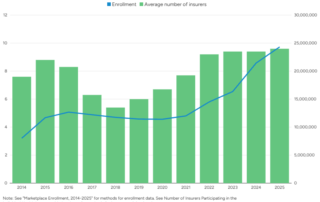
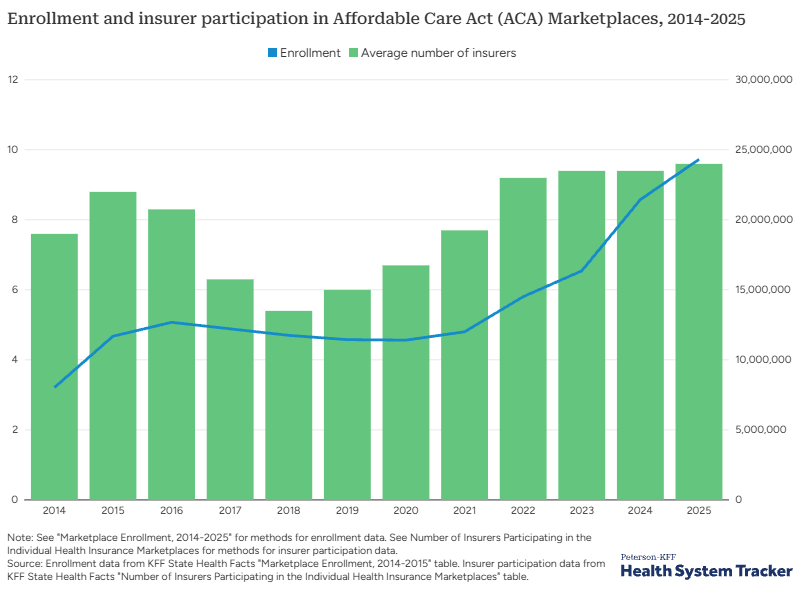
A decade of dramatic change is reshaping America’s health insurance markets. Employer group plans are becoming increasingly dominated by a few powerful insurers, while the ACA individual marketplace is experiencing record‑breaking competition and enrollment. Self‑funded plans are surging, small‑group premiums are driving employers to new coverage models, and major policy shifts in 2025 could redefine affordability for millions. This data‑driven Peterson‑KFF analysis breaks down the trends every insurance, finance, and business professional needs to understand as the industry enters a transformative new era.
Sarasota County is inching closer to approving Winchester Ranch, a massive 8,999‑home community planned for more than 3,100 acres in North Port. With a 7‑1 vote from the Planning Commission and a final decision expected in early 2026, the project could become one of Southwest Florida’s largest developments in decades—bringing new housing, commercial space, and industry while raising fresh questions about growth, the environment, and the region’s rapidly evolving real estate market.
Lument Finance Trust has closed a major $663.8 million commercial real estate CLO, marking one of the standout CRE finance deals of 2025. The transaction, LMNT 2025-FL3, features a strong reinvestment period, non‑recourse and non‑mark‑to‑market financing, and a diversified pool of 32 loans tied to 49 properties nationwide. With J.P. Morgan leading the structuring and more than $585 million placed in investment‑grade securities, the deal highlights renewed stability in transitional CRE debt—making it a development real estate and finance professionals will want to watch closely.
Walmart has partnered with Alquist 3D to roll out the nation’s first large‑scale wave of 3D‑printed commercial buildings, signaling a major shift in how future retail and industrial spaces will be constructed. After completing an 8,000‑square‑foot 3D‑printed expansion in Tennessee—the largest of its kind—the company is moving forward with over a dozen new projects nationwide, accelerating a tech‑driven transformation in commercial real estate.
Citizens Property Insurance Corp. is recommending statewide rate reductions for 2026—the first proposed decrease in more than a decade. Most Citizens policyholders could see an average 11.5% drop, reflecting recent insurance‑market reforms that have stabilized Florida’s turbulent property sector. With hundreds of thousands of policies moving back to private insurers and state‑backed Citizens shrinking to record‑low enrollment, real estate and insurance professionals should prepare for how lower premiums may influence affordability, buyer confidence, and market activity heading into 2026.