The Mortgage Industry’s AI Transformation: How Automation Is Rewriting the Lending Playbook
Artificial intelligence is no longer a trendy buzzword—it has officially become one of the most powerful forces reshaping financial operations. A 2024 Bain & Co. study found that generative AI has boosted productivity by an average of 20%. Meanwhile, every financial organization surveyed by the Institute of International Finance is investing in AI tools, with over half increasing their budgets by more than 25%.
Mortgage lending is emerging as one of AI’s boldest frontiers. From eliminating repetitive tasks to accelerating loan closings, new automations are creating a faster, more accurate, and more enjoyable lending environment for both professionals and clients.
The End of Manual Data Entry? We’re Getting Very Close.
Lenders have always wrestled with bottlenecks created by slow, error‑prone paperwork. But modern AI-powered document extraction now pulls essential income, asset, and property data directly from client uploads. Work that once took hours can now be done in minutes—boosting accuracy and freeing teams from tedious tasks.
Income verification, bank statement review, and document classification are increasingly handled by advanced extraction systems that cut risk, shorten timelines, and dramatically speed up loan readiness. The result? Happier borrowers, faster closings, fewer headaches.
Generative AI: The Underwriter’s New Best Friend
One of today’s most exciting advancements is automated borrower narratives. With a single click, AI can now create a complete underwriting‑ready summary—criteria, risk elements, borrower background and more—traditionally assembled manually.
The result is faster underwriting, fewer delays, and a far more efficient path from application to approval.
Chatbots, POS Automation, and the Next‑Gen Borrower Journey
Modern AI chat tools guide both clients and mortgage professionals through key questions in real time—boosting accuracy, reducing stress, and simplifying complex situations. Enhanced point‑of‑sale platforms allow borrowers to compare rates, explore products, and complete applications within minutes.
Combine these advances with end-to-end workflow automation and some institutions now issue preapprovals in just 20 minutes—and close loans in under a week.
Predictive Analytics: The New Lens for Market Growth
AI isn’t just about speed—it’s about insight. Predictive analytics help lenders understand borrower behavior, highlight new opportunities, and strengthen portfolio strategies. For example, AI can automatically identify refinance opportunities through real‑time LTV analysis—pinpointing high‑value prospects instantly.
Why This Matters for Mortgage and Real Estate Professionals
Professionals who understand how to leverage AI strategically will gain a powerful competitive edge. These tools help originators, brokers, and lending teams close loans faster, reach more clients, and deliver a noticeably smoother experience.
For anyone building a career in mortgage lending or real estate, staying ahead of these breakthroughs is essential. Cameron Academy proudly supports both new and experienced professionals, offering modern training that evolves alongside today’s industry—because the future belongs to those who understand both technology and client relationships.
Getting licensed or staying ahead in your career can be a journey—but it doesn’t have to be overwhelming. Grab your favorite coffee or tea, take a moment to relax, and browse through our articles. Whether you’re just starting out or renewing your expertise, we’ve got tips, insights, and advice to keep you moving forward. Here’s to your success—one sip and one step at a time!
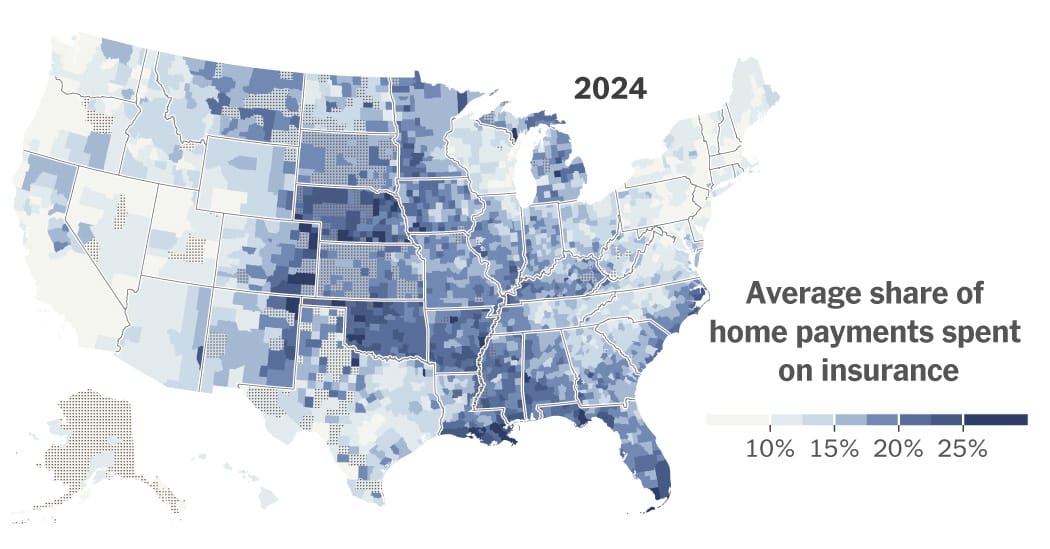
A surge in home insurance premiums is reshaping housing markets across the country, hitting disaster‑prone regions the hardest. From Louisiana to Colorado and California, deals are collapsing, buyers are backing out, and home values are dropping as insurance becomes a central affordability hurdle. New data shows climate‑driven risk repricing and soaring reinsurance costs are stripping tens of thousands of dollars from property values, forcing some homeowners to sell at a loss—or go uninsured altogether.
After years of sluggish activity, the National Association of REALTORS predicts 2026 could mark the long‑awaited rebound for the housing market. With a projected 14% jump in home sales, steadier rates near 6%, and rising buyer activity, NAR economists say momentum is already building. Early signs—like a 31% surge in mortgage applications, continued job growth, and stabilizing prices—suggest a stronger, more confident market ahead, creating fresh opportunities for both seasoned professionals and aspiring agents preparing to enter the field.
A surge of global capital is reshaping real estate heading into 2026, with investors shifting toward hands‑on strategies, cross‑border diversification, and high‑growth asset classes like data centers. Colliers’ 2026 Global Investor Outlook highlights rising confidence, improving liquidity, and a major pivot toward direct investing and value‑add opportunities. From office market rebounds to Asia Pacific’s rapid fundraising growth, the report outlines trends every real estate professional should understand as the industry enters a more dynamic, opportunity‑rich cycle.
Culver City just became the first place in California to legalize six‑story apartment buildings with only one staircase — a simple change that could reshape mid‑rise housing statewide. By freeing up as much as 7% more usable floor space, architects say single‑stair designs allow bigger units, more windows, and the kind of elegant layouts common in New York and Europe. If the city’s six‑year experiment succeeds, it may spark a broader rethinking of U.S. building codes and open the door to more flexible, affordable multifamily development across California.
Stratford homeowners are receiving their 2025 Notices of Assessment Change, marking the town’s first property revaluation since 2019. Officials emphasize that rising assessments do not equal higher tax bills, as a new mill rate won’t be set until spring 2026. Residents can challenge or review their updated valuations through informal hearings hosted by Vision Government Solutions, with appointments available for one week after receiving a notice.
New reporting reveals Florida homeowners now face an average insurance premium of $5,838 per year — nearly triple the national average. With skyrocketing rates, denied claims, and mounting non-renewals, residents are being pushed to tough financial decisions while lawmakers scramble to implement reforms. From retirees skipping coverage to families battling insurers for fair payouts, Florida’s insurance crisis is reshaping both the housing market and the daily lives of homeowners statewide.