On May 18, 2025, the House Budget Committee gave its nod to a significant piece of legislation known as “The One, Big, Beautiful Bill.” This bill, poised for revision by the House Rules Committee, is gearing up for a vote on the House floor. It represents a sweeping continuation and expansion of the 2017 Tax Cuts and Jobs Act, introducing a myriad of new provisions aimed at reshaping the tax landscape for businesses, individuals, and tax-exempt organizations alike.


Business Provisions

The House Bill extends several key business provisions. Notably, the definition of “adjusted taxable income” under section 163(j) will be based on EBITDA from 2025 to 2028, a move that is favorable to taxpayers. The deduction for qualified business income under Section 199A is increased to 23%, and the global intangible low-taxed income (GILTI) provisions are made permanent at a 10.5% rate. Additionally, the base-erosion and anti-abuse tax (BEAT) is set to remain at 10.5% permanently.


Other notable business provisions include the reestablishment of Opportunity Zones for 2027 through 2033, with a focus on rural areas, and the limitation of amortization deductions for sports franchises to 50% of the adjusted tax basis.


Tax-Exempt Provisions

For tax-exempt organizations, the bill proposes an increased excise tax on private university endowments and private foundations. The current 1.4% excise tax on net investment income of private colleges is replaced with a tiered system, with rates reaching as high as 21% for institutions with significant endowments. Private foundations face a similar tiered excise tax system based on asset size.


Individual Provisions

Individuals will see the maximum ordinary income tax rate of 37% made permanent. The standard deduction is increased for various filing statuses from 2025 to 2028. The bill also proposes the permanent repeal of the personal exemption and adjustments to itemized deduction limits.


Additionally, the bill introduces the concept of “MAGA” accounts, tax-exempt trust accounts for U.S. citizens under 18, with a one-time $1,000 federal credit for eligible children born between 2025 and 2028.


For a detailed breakdown of these provisions, refer to the original article on Tax Talks. This comprehensive analysis explores the implications of the bill across various sectors, providing insights into its potential impact on the economic landscape.


More Articles

Getting licensed or staying ahead in your career can be a journey—but it doesn’t have to be overwhelming. Grab your favorite coffee or tea, take a moment to relax, and browse through our articles. Whether you’re just starting out or renewing your expertise, we’ve got tips, insights, and advice to keep you moving forward. Here’s to your success—one sip and one step at a time!

Revolutionizing Real Estate with IoT: A New Era of Smart Homes

The real estate industry is on the brink of a transformation, driven by the integration of the Internet of Things (IoT). This technological advancement is reshaping how buildings operate and enhancing tenant experiences across the globe.

New Orleans as a Beacon of Resilience: The Sixth Triennial

"This framework postulates New Orleans as already living in the future," said Patterson during the exhibition's opening. Lash added, "We want to show New Orleans as a gift and as a scout." The exhibition, featuring 51 artists across 21 venues, highlights how contemporary art can serve as an engine of coping, rather than mere recovery.

By |March 6, 2025|Categories: Art, Article, Culture|Tags: , |0 Comments

Navigating Trump’s Tax Proposals: Key Changes Ahead

As the dust settles on the recent Republican victory in the U.S. presidential election, the tax landscape is poised for significant changes with President-elect Donald Trump set to return to the White House.

By |March 6, 2025|Categories: Article, Tax Policy, U.S. Politics|Tags: , |0 Comments

Multifamily Housing Sector: Modest Growth and Market Predictions for 2025

As we step into 2025, the multifamily housing sector is projected to experience modest growth. Yardi Matrix anticipates a 1.5% increase in rents, driven by positive economic conditions and stable industry fundamentals, particularly in the Northeast and Midwest regions. However, the rent growth forecasts vary across different markets.

Renter Preferences for 2024: Insights from Industry Surveys

Recent surveys have shed light on the preferences and priorities of renters in 2024, emphasizing the dominance of digital marketing and the importance of community inclusiveness.

AI Revolutionizes the Real Estate Market

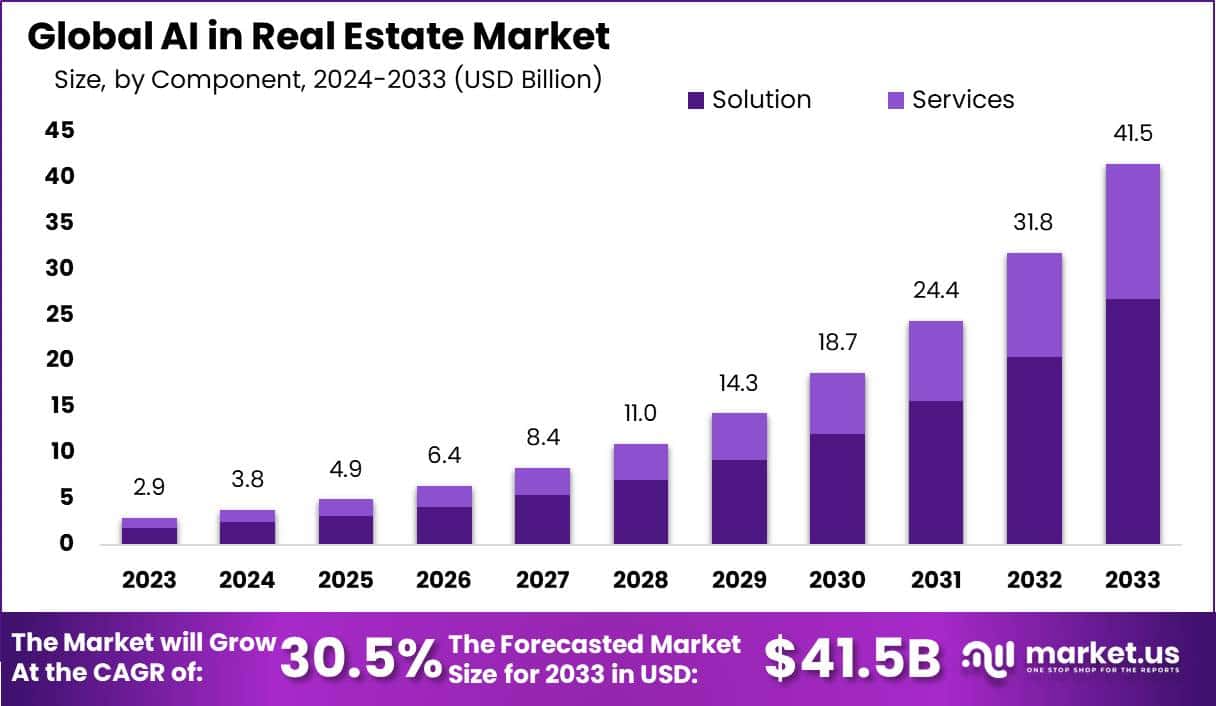
The real estate industry is on the brink of a technological transformation, with Artificial Intelligence (AI) playing a pivotal role. According to a recent report by Market.us, the AI in real estate market is projected to surge from USD 2.9 Billion in 2023 to a staggering USD 41.5 Billion by 2033, growing at an impressive CAGR of 30.5%.