The Outlook for Housing Starts: A Future Defined by Demographics and Demand
The Congressional Budget Office (CBO) has released a comprehensive report on the outlook for housing starts over the next 30 years, highlighting the critical role of population growth and demographic shifts in shaping the future of housing construction in the United States. This analysis, available in full at CBO’s official website, underscores the complex interplay between economic factors and housing demand.
Strong Beginnings and Future Declines
According to the CBO’s projections, housing starts will remain robust through the end of the current decade, driven by the pent-up demand for more living space post-pandemic and the sustained household formation by new immigrants. The report anticipates an average of 1.6 million housing starts per year over the next decade. However, as the 2030s and 2040s approach, a notable decline is expected, with housing starts averaging 1.1 million per year from 2034 to 2043 and 0.8 million per year from 2044 to 2053. This decline is attributed to a slowdown in population growth, an aging demographic, and a return of immigration levels to historical norms.
Key Factors Influencing Housing Starts
The report identifies several factors that could lead to variations in housing starts compared to the projections. Changes in net immigration, for instance, could significantly alter outcomes over the 30-year period. Additionally, financial conditions such as mortgage rates and lending standards play a crucial role in determining the number of housing starts in any given year.
The Demographic Shift
The CBO’s analysis emphasizes the significance of demographic changes in shaping the housing market. As the population ages, the number of deaths rises, slowing the growth of the adult population. By the 2040s, net immigration is projected to contribute almost as much to the demand for new housing as domestic population growth, marking a significant shift from past trends.
Economic Implications
Housing construction is a vital component of the U.S. economy, accounting for over 2% of the gross domestic product (GDP). The CBO projects that the contribution of housing starts to GDP will decline as housing starts decrease in the coming decades. This decline may be partially offset by increased residential improvements, as households choose to upgrade existing homes rather than purchase new ones.
Uncertainty and Future Projections
Despite the detailed projections, the CBO acknowledges significant uncertainty in the forecast of housing starts. Financial and cyclical conditions, demographic factors, and changes in headship rates contribute to this uncertainty. The report also explores alternative scenarios, such as differing rates of net immigration and life expectancy, to illustrate the potential variability in housing starts.
For a deeper dive into the methods used for these projections and the potential implications for the economy, readers can access the full report at CBO’s official website. The analysis provides valuable insights for policymakers, economists, and stakeholders in the housing industry as they navigate the evolving landscape of U.S. housing starts.
More Articles
Getting licensed or staying ahead in your career can be a journey—but it doesn’t have to be overwhelming. Grab your favorite coffee or tea, take a moment to relax, and browse through our articles. Whether you’re just starting out or renewing your expertise, we’ve got tips, insights, and advice to keep you moving forward. Here’s to your success—one sip and one step at a time!
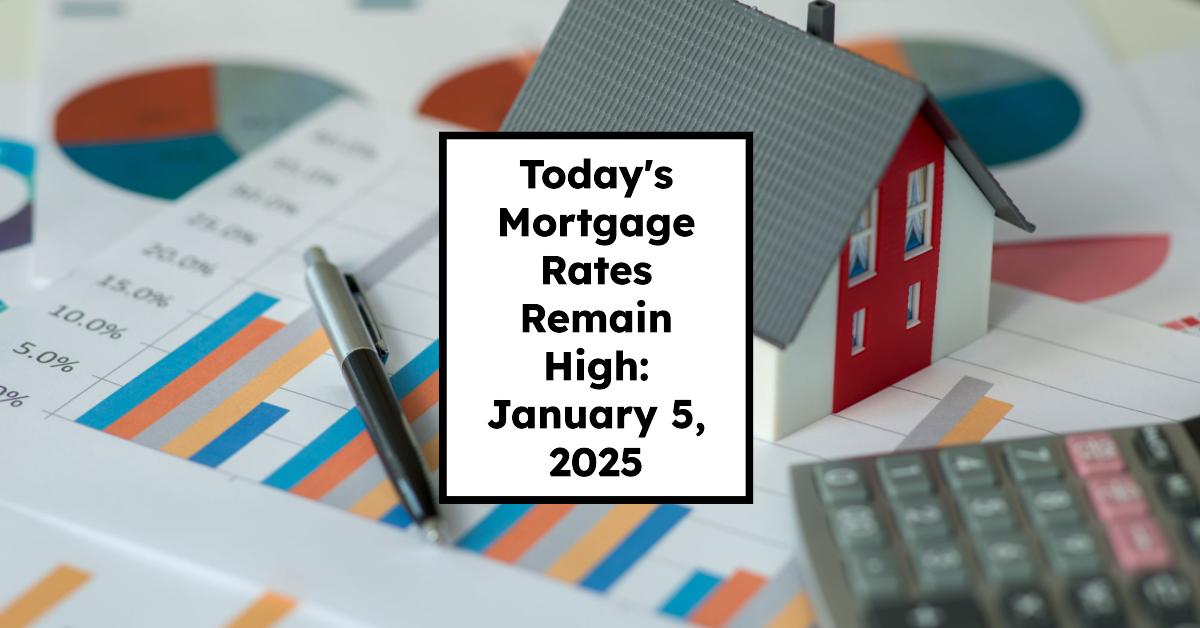
As of January 5, 2025, the average rate for a 30-year fixed mortgage stands at a significant 6.70%. This figure, while daunting, is expected to see a slight decrease to around 6.20% by the end of the year, potentially saving homeowners approximately $66 monthly.
Innoviz Technologies, a prominent Tier-1 supplier known for its high-performance, automotive-grade LiDAR sensors and perception software, has announced groundbreaking advancements set to be unveiled at CES 2025. This development marks a significant collaboration with NVIDIA, integrating Innoviz’s perception software with the NVIDIA DRIVE AGX Orin platform.
As we stand on the precipice of 2025, the landscape of artificial intelligence (AI) in healthcare is poised for transformative change. The past year has been a whirlwind of innovation, setting the stage for what many experts predict will be a breakthrough year for AI. This evolution is not just a whisper of potential but a resounding call to action for the healthcare industry.
The U.S. real estate market is on the brink of a profound transformation as it heads into 2025. This metamorphosis is fueled by a plethora of factors, including economic fluctuations, demographic transitions, and technological breakthroughs.
Gartner Finance, through a survey of 250 CFOs and finance leaders, uncovered that slower top-line growth and talent retention are perceived as the most pressing challenges for enterprise performance by 2025.
The rapid advancement of artificial intelligence (AI) technologies is reshaping the world around us, often without us even realizing it. Whether it's in healthcare, finance, or governance, AI's influence is pervasive. Yet, as we embrace these innovations, we must also grapple with the ethical concerns they bring, such as fairness, bias, security, and resilience.