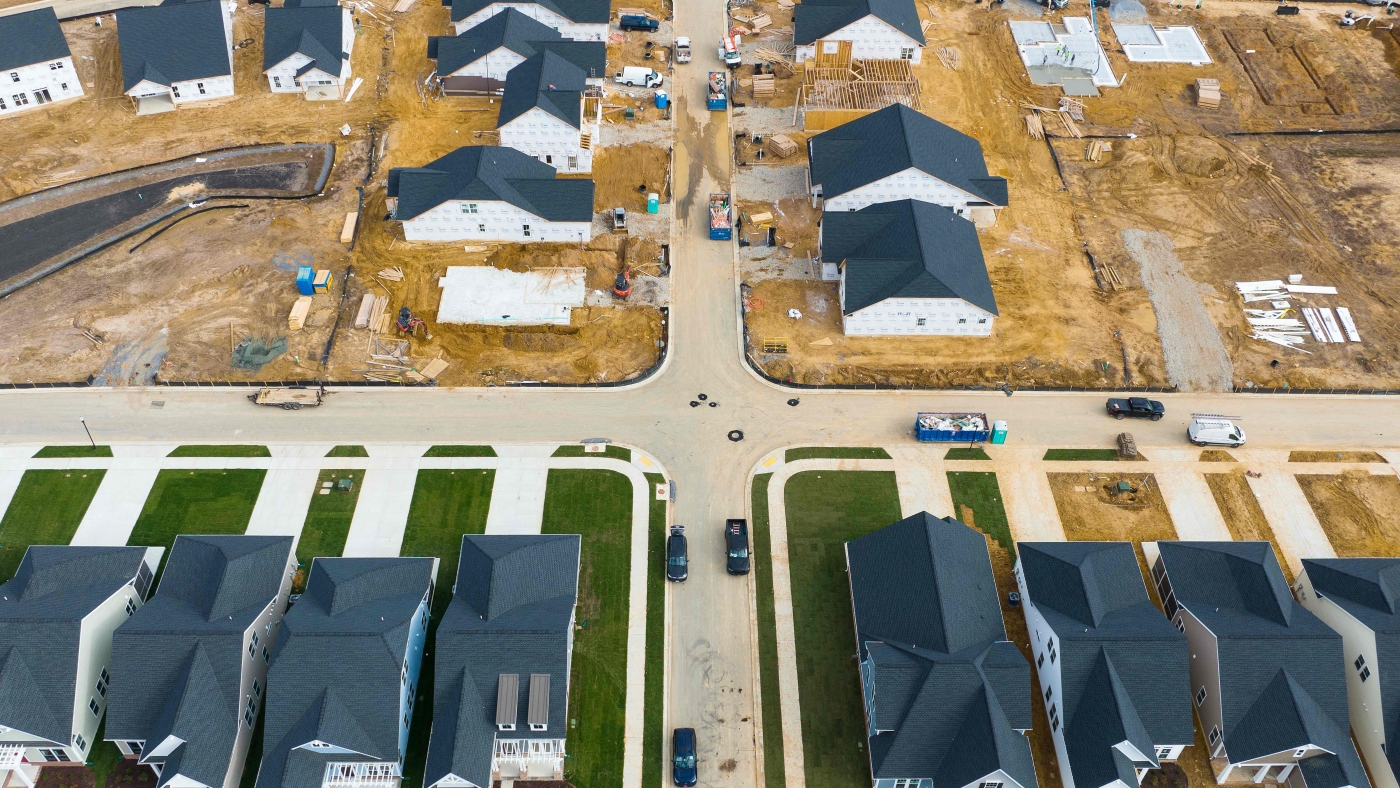
The Outlook for Housing Starts: A Future Defined by Demographics and Demand

The Congressional Budget Office (CBO) has released a comprehensive report on the outlook for housing starts over the next 30 years, highlighting the critical role of population growth and demographic shifts in shaping the future of housing construction in the United States. This analysis, available in full at CBO’s official website, underscores the complex interplay between economic factors and housing demand.

Strong Beginnings and Future Declines

According to the CBO’s projections, housing starts will remain robust through the end of the current decade, driven by the pent-up demand for more living space post-pandemic and the sustained household formation by new immigrants. The report anticipates an average of 1.6 million housing starts per year over the next decade. However, as the 2030s and 2040s approach, a notable decline is expected, with housing starts averaging 1.1 million per year from 2034 to 2043 and 0.8 million per year from 2044 to 2053. This decline is attributed to a slowdown in population growth, an aging demographic, and a return of immigration levels to historical norms.

Key Factors Influencing Housing Starts

The report identifies several factors that could lead to variations in housing starts compared to the projections. Changes in net immigration, for instance, could significantly alter outcomes over the 30-year period. Additionally, financial conditions such as mortgage rates and lending standards play a crucial role in determining the number of housing starts in any given year.

The Demographic Shift

The CBO’s analysis emphasizes the significance of demographic changes in shaping the housing market. As the population ages, the number of deaths rises, slowing the growth of the adult population. By the 2040s, net immigration is projected to contribute almost as much to the demand for new housing as domestic population growth, marking a significant shift from past trends.

Economic Implications

Housing construction is a vital component of the U.S. economy, accounting for over 2% of the gross domestic product (GDP). The CBO projects that the contribution of housing starts to GDP will decline as housing starts decrease in the coming decades. This decline may be partially offset by increased residential improvements, as households choose to upgrade existing homes rather than purchase new ones. Figure 1-1: housing starts

Uncertainty and Future Projections

Despite the detailed projections, the CBO acknowledges significant uncertainty in the forecast of housing starts. Financial and cyclical conditions, demographic factors, and changes in headship rates contribute to this uncertainty. The report also explores alternative scenarios, such as differing rates of net immigration and life expectancy, to illustrate the potential variability in housing starts. Figure 2-1: declining annual household formation due to slower domestic population growth

For a deeper dive into the methods used for these projections and the potential implications for the economy, readers can access the full report at CBO’s official website. The analysis provides valuable insights for policymakers, economists, and stakeholders in the housing industry as they navigate the evolving landscape of U.S. housing starts.

More Articles

Getting licensed or staying ahead in your career can be a journey—but it doesn’t have to be overwhelming. Grab your favorite coffee or tea, take a moment to relax, and browse through our articles. Whether you’re just starting out or renewing your expertise, we’ve got tips, insights, and advice to keep you moving forward. Here’s to your success—one sip and one step at a time!

A New Era in Real Estate: The Ultimate CRM Tools for 2024

In the dynamic world of real estate, where relationships are the cornerstone of success, the right Customer Relationship Management (CRM) software can be a game-changer.

By |October 13, 2024|Categories: Article, CRM Software, Real Estate|Tags: , |0 Comments

Florida’s Real-Estate Market Faces Turmoil Amid Back-to-Back Hurricanes

As Florida braces for the impact of Hurricane Milton, the state's real-estate market finds itself in a precarious position. This powerful Category 4 storm, following closely after Hurricane Helene, threatens to exacerbate an already volatile situation.

By |October 13, 2024|Categories: Article, Natural Disasters, Real Estate|Tags: , |0 Comments

Jersey City Tops 2024 Apartment Investment List Amid New York Metro Challenges

Jersey City, New Jersey, has emerged as the top prospect for apartment investment in 2024, according to real estate professionals, despite a backdrop of population decline in the New York metro area.

By |October 13, 2024|Categories: Article, Investment, Real Estate|Tags: |0 Comments

The Best CRM for Real Estate of 2024: A Comprehensive Guide

In the ever-evolving world of real estate, maintaining strong relationships is the cornerstone of success. Realtors are increasingly turning to Customer Relationship Management (CRM) software to streamline their operations and enhance client interactions.

By |October 13, 2024|Categories: Article, CRM Software, Real Estate|Tags: , |0 Comments

Federal Reserve Rate Cut: Impact on Housing Market

Mortgage rates, which soared to nearly 8% last year, have already begun to decline, even before the Fed's official announcement. Currently, long-term fixed-rate mortgages are hovering around 6.2%, the lowest since February 2023. However, experts like Charlie Dougherty from Wells Fargo suggest that while rates might dip slightly, significant reductions are unlikely in the immediate future.

By |October 13, 2024|Categories: Article, Economics, Real Estate|Tags: |0 Comments

Binance Integrates USDT on TON: A New Era for Stablecoin Transactions

In a groundbreaking move, Binance has announced the integration of Tether's USDT token on The Open Network (TON), a development that promises to enhance liquidity and reduce transaction fees for its users.