In the heart of New Zealand’s real estate landscape, a quiet revolution is taking place. The age-old practice of property valuation, once a labor-intensive and opaque process, is being transformed by the rise of artificial intelligence (AI). Yet, this transformation is not without its challenges. As the nation grapples with the increasing use of Automated Valuation Models (AVMs), questions about transparency and trust loom large. New Zealand’s economy has often been described as a “housing market with bits tacked on,” a sentiment echoed by many as property transactions become a national pastime. However, the public remains largely in the dark about how these property valuations are crafted. Enter AI, with its promise of efficiency and speed. But as noted in The Conversation, these models often operate as “black boxes,” offering little insight into their inner workings. Woman on laptop with a clipboard and small model house in foreground The journey of AVMs in New Zealand began in the early 2010s, leveraging basic data sources like property sales records. Today, they incorporate sophisticated geo-spatial data from entities such as Land Information New Zealand. While these advancements have improved efficiency, the opacity of proprietary algorithms remains a significant hurdle. In an ongoing effort to address these issues, researchers like William Cheung and Edward Yiu from the University of Auckland are developing frameworks to evaluate and improve these automated valuations. Their work seeks to ensure that AI-driven valuations are not only fast but also fair and transparent. The importance of transparency and accountability in AI valuations cannot be overstated. As highlighted in a recent discussion forum, there is a pressing need for AI developers to disclose data sources, algorithms, and error margins. By incorporating a “confidence interval,” these models can offer a clearer understanding of the uncertainty inherent in each valuation. However, transparency alone is not sufficient. As New Zealand courts now require a qualified person to check AI-generated information used in tribunal proceedings, the role of AI auditors becomes crucial. These auditors, akin to financial auditors in accounting, ensure the accuracy and integrity of valuations. The research by Cheung and Yiu goes beyond transparency, incorporating a bias correction mechanism to address regional disparities and undervaluation issues. By doing so, they aim to prevent long-term market distortions that unchecked AI models could create. As New Zealand navigates this new era of AI in property valuation, the call for a comprehensive evaluation framework—prioritizing transparency, accountability, and bias correction—grows louder. In the end, it’s not just about trusting the algorithms, but trusting the people and systems behind them.


More Articles

Getting licensed or staying ahead in your career can be a journey—but it doesn’t have to be overwhelming. Grab your favorite coffee or tea, take a moment to relax, and browse through our articles. Whether you’re just starting out or renewing your expertise, we’ve got tips, insights, and advice to keep you moving forward. Here’s to your success—one sip and one step at a time!

Phoenix Housing Market Surges Ahead of the Nation in 2025

The Phoenix housing market continues to outperform the rest of the country, posting stronger sales, rising equity, and an influx of qualified buyers. With closed sales, pending sales, new listings, and median prices all trending upward, the Valley is outpacing national growth by a wide margin. City‑level data shows impressive strength across Scottsdale, Goodyear, Gilbert, Phoenix, and more—making 2025 a powerful year for agents, investors, and professionals watching the Arizona market.

20 High-Demand Jobs to Watch as 2026 Approaches — Major Events Are Fueling New Opportunities

With the 2026 FIFA World Cup and America’s 250th birthday celebrations on the horizon, the U.S. job market is gearing up for a surge across multiple industries. Seasonal, flexible, and part‑time roles are expected to rise—especially for workers 50+ who have struggled in a cooling labor market. From accounting and HR leadership to event staffing and delivery driving, major cities are preparing for increased hiring tied to tourism, infrastructure, and yearlong national celebrations. Many of these fast‑growing roles connect directly to licensing and certification pathways, giving professionals new chances to pivot or upskill through programs offered by Cameron Academy.

New Florida Laws Taking Effect January 1, 2026: Key Updates for Professionals

Florida is rolling out a new wave of laws on January 1, 2026 that will impact professionals in real estate, insurance, healthcare, education, and other regulated industries. From new insurance rules and healthcare billing requirements to condo association deadlines and statewide databases, these updates reshape compliance expectations across the state. Whether you work in property, finance, or public‑facing services, understanding these changes is essential for staying aligned with Florida’s evolving regulations.

Commercial Real Estate Pros Are Almost All Bullish on 2026

Nearly every commercial real estate professional is expecting a stronger year ahead, with 97% predicting increased or stable activity in 2026, according to Avison Young’s latest outlook. Confidence has surged dramatically since mid‑2025 as strong sales, anticipated rate cuts, and improving fundamentals across key sectors signal that CRE recovery and growth may finally be taking hold.

Dallas‑Fort Worth’s 2025 Boom: The Metroplex Redefining U.S. Growth

Dallas‑Fort Worth is finishing 2025 as the nation’s top real estate and business powerhouse, fueled by corporate relocations, a dominant industrial sector, infrastructure megaprojects, and a rapidly evolving workforce landscape. From data center expansion to the launch of the DART Silver Line, the region continues to outpace national trends—while also confronting a growing demand for skilled professionals and licensed talent across construction, real estate, and technical fields.

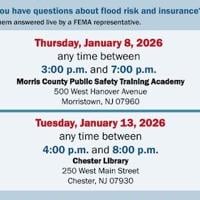
FEMA and NJDEP Unveil New Morris County Flood Maps, Triggering Key Changes for Property Owners and Professionals

FEMA and the NJDEP have released revised preliminary flood maps for Morris County, reshaping how homeowners, real estate agents, insurers, and mortgage professionals assess flood risk. The updated FIRMs may shift properties into or out of higher‑risk zones, affecting insurance requirements, closing processes, and long‑term property values. With public review and appeals ahead, industry professionals are urged to study the changes now and prepare clients for potential impacts.