The history of standardized testing in the United States is steeped in controversy and criticism, particularly regarding its impact on students of color. From their inception over a century ago, these tests have been criticized as instruments of systemic racism and bias. As noted by the National Education Association, standardized tests have historically marginalized students of color, particularly those from low-income families.
Notably, educational researchers like Ibram X. Kendi have been vocal about the inherent biases in these assessments. Kendi, a prominent figure at the Antiracist Research & Policy Center, argues that standardized tests have been used as tools to degrade Black and Brown minds, excluding them from prestigious educational opportunities.
Historical Context
The origins of these tests can be traced back to the early 20th century, when figures like psychologist and eugenicist Carl Brigham played pivotal roles in their development. Brigham, who was instrumental in the creation of the SAT, believed in the superiority of certain races, a belief that influenced the design and implementation of these tests.
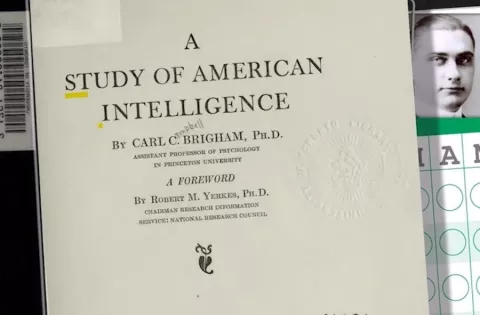
Shortly after the publication of “A Study of American Intelligence” in 1923, the College Board commissioned Carl Brigham to lead development of the SAT.
As the U.S. absorbed millions of immigrants, standardized tests were used to segregate and categorize students, often to their detriment. These biases have had lasting effects, contributing to educational disparities that persist today.
Modern Implications
Today, there is a growing movement to resist the overuse and misuse of standardized testing. Critics argue that these tests fail to accurately measure student learning and often exacerbate educational inequalities. Instead, there is a push for more authentic assessment methods that reflect a broader range of student skills and learning.
“The tests have failed time and again to achieve their intended purposes: measuring intelligence and predicting future academic and professional success. The tests, not the black test-takers, have been underachieving.” – Ibram X. Kendi
Efforts to reform these assessment systems are gaining traction, with educators and civil rights organizations advocating for changes that do not perpetuate racial and economic inequalities. As the National Education Association emphasizes, the focus should be on promoting assessments that support the academic, social, and emotional needs of students.
Getting licensed or staying ahead in your career can be a journey—but it doesn’t have to be overwhelming. Grab your favorite coffee or tea, take a moment to relax, and browse through our articles. Whether you’re just starting out or renewing your expertise, we’ve got tips, insights, and advice to keep you moving forward. Here’s to your success—one sip and one step at a time!
In a rapidly evolving digital landscape, experts have weighed in on what they anticipate will be the "new normal" by 2025. According to a Pew Research Center report, a significant number of experts foresee a future where society becomes increasingly tech-driven, presenting both challenges and opportunities.
For those looking to obtain a real estate license in Colorado, the process has never been more straightforward. In a detailed guide shared by KW Mega Broker Sean Moudry, aspiring real estate professionals are walked through the necessary steps to launch their careers in the vibrant Colorado market.
The landscape for first-time home buyers is revealed to be more inclusive than ever. The definition of a first-time home buyer is not as restrictive as many might assume.
In an era where digital transformation is reshaping every facet of our lives, education is no exception. The rise of online learning has been nothing short of meteoric since its inception in the 1990s. Today, it stands as a beacon of flexibility and accessibility, particularly for those who face barriers to traditional on-campus education. Forbes Advisor recently undertook the monumental task of evaluating over 3,400 institutions across the United States to identify the top 10 online colleges for 2025.
Saturday, August 17, marked a pivotal moment for the real estate industry, with the National Association of Realtors (NAR) and several brokerages agreeing to pay over $970 million to settle a federal lawsuit in Missouri. The lawsuit alleged that traditional agent commission structures inflated costs for homebuyers.
On October 21, 2024, the Division of Examinations of the Securities and Exchange Commission (SEC) released its much-anticipated 2025 examination priorities. This announcement serves as a crucial guide for registered investment advisers, investment companies, and broker-dealers, highlighting areas under scrutiny for the upcoming year.