The Rapid Evolution of Telehealth Under Medicare
The landscape of healthcare has dramatically shifted in recent years, with
telehealth emerging as a key player in the delivery of medical services. This transformation has been particularly evident in the realm of
Medicare, where
telehealth has seen a significant uptick in utilization. The
Kaiser Family Foundation recently highlighted this trend, noting the legislative changes and policy shifts that have facilitated the growth of
telehealth services for Medicare beneficiaries.
The Pandemic’s Role in Telehealth Expansion
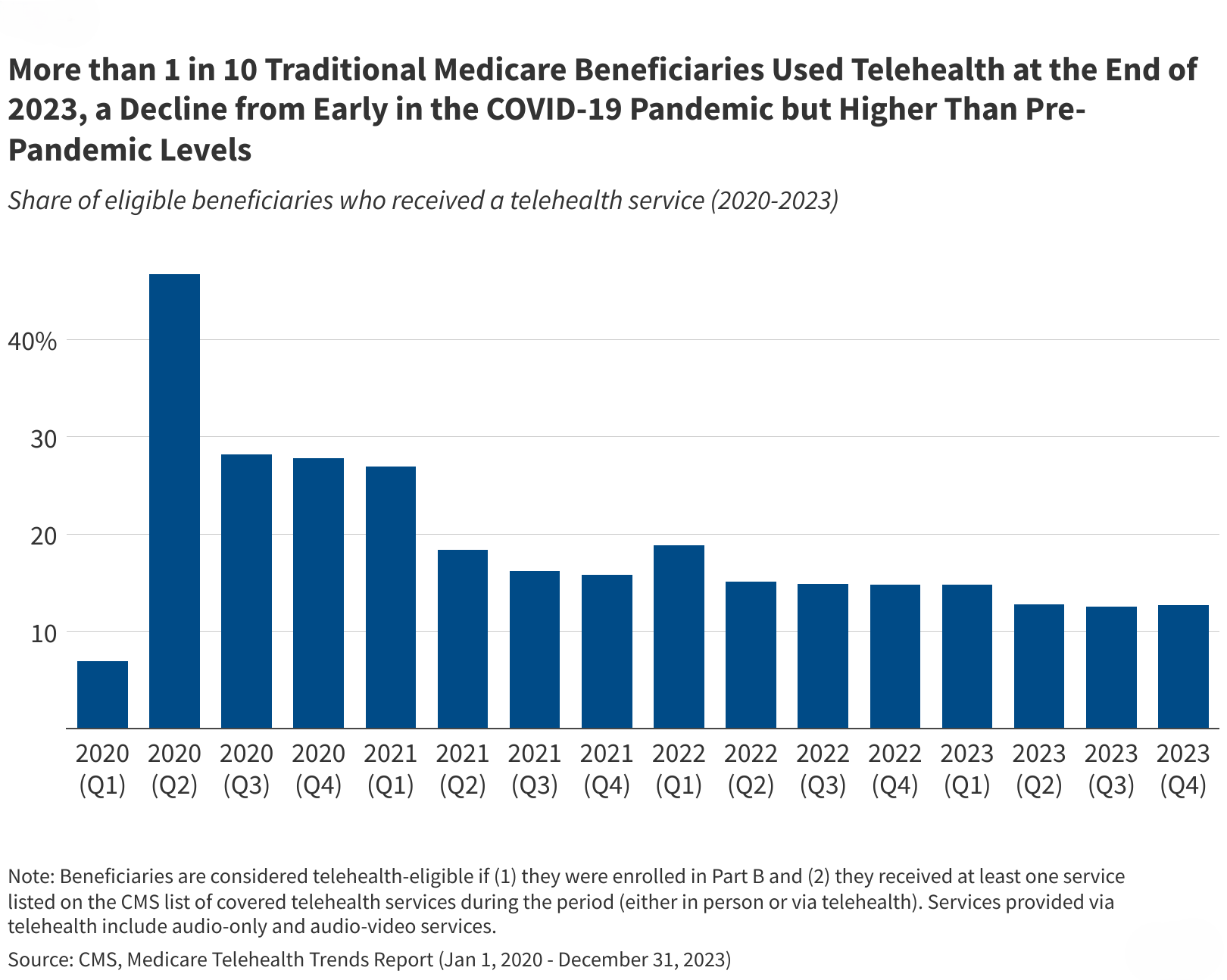
Prior to the onset of the COVID-19 pandemic,
telehealth was a relatively niche service within Medicare, primarily available to those in rural settings. However, the public health emergency necessitated rapid adaptation, leading to a dramatic increase in
telehealth utilization. Temporary measures were introduced, allowing for broader access and coverage, as detailed in the
Medicare Telehealth Report. These changes not only increased access but also highlighted the potential of
telehealth to address healthcare disparities.
Legislative Measures and Future Prospects
With the official end of the COVID-19 public health emergency on May 11, 2023, Congress faces the challenge of deciding the future of these
telehealth flexibilities. There is bipartisan support for extending these measures, as seen in proposed legislation like the
Preserving Telehealth, Hospital, and Ambulances Act. However, the majority of these flexibilities are set to expire by December 2024, prompting ongoing discussions about the potential for permanent expansion.
Demographic Disparities in Telehealth Usage
The adoption of
telehealth services varies significantly across different demographics. Urban areas have seen higher rates of
telehealth use compared to rural regions, likely due to disparities in broadband access and communication technologies, as noted in a
Brookings article. Additionally, usage is higher among Asian, Pacific Islander, and Hispanic beneficiaries, suggesting that
telehealth may play a role in improving access to care for certain groups.
The Financial Implications
Medicare’s payment structure for
telehealth services has also evolved, with current rates matching those of in-person visits. This parity is crucial for encouraging providers to invest in
telehealth infrastructure. However, questions remain about the long-term financial impact on the Medicare program. The Congressional Budget Office has estimated the cost of extending
telehealth flexibilities, and ongoing research is needed to assess the balance between increased spending and potential savings from reduced emergency department visits and improved medication adherence.
Ensuring Program Integrity
As
telehealth becomes more entrenched in the Medicare landscape, concerns about program integrity and potential fraud have arisen. Despite some high-profile cases, investigations have shown minimal evidence of widespread misuse. Recommendations from the
MedPAC include increased scrutiny of outlier billing patterns and in-person visit requirements for high-cost services.
In conclusion, while
telehealth has proven to be a valuable tool for expanding access to healthcare, its future within Medicare remains uncertain. The ongoing legislative discussions will determine whether the current flexibilities will become a permanent fixture, shaping the healthcare landscape for years to come.