The Rapid Evolution of Telehealth Under Medicare
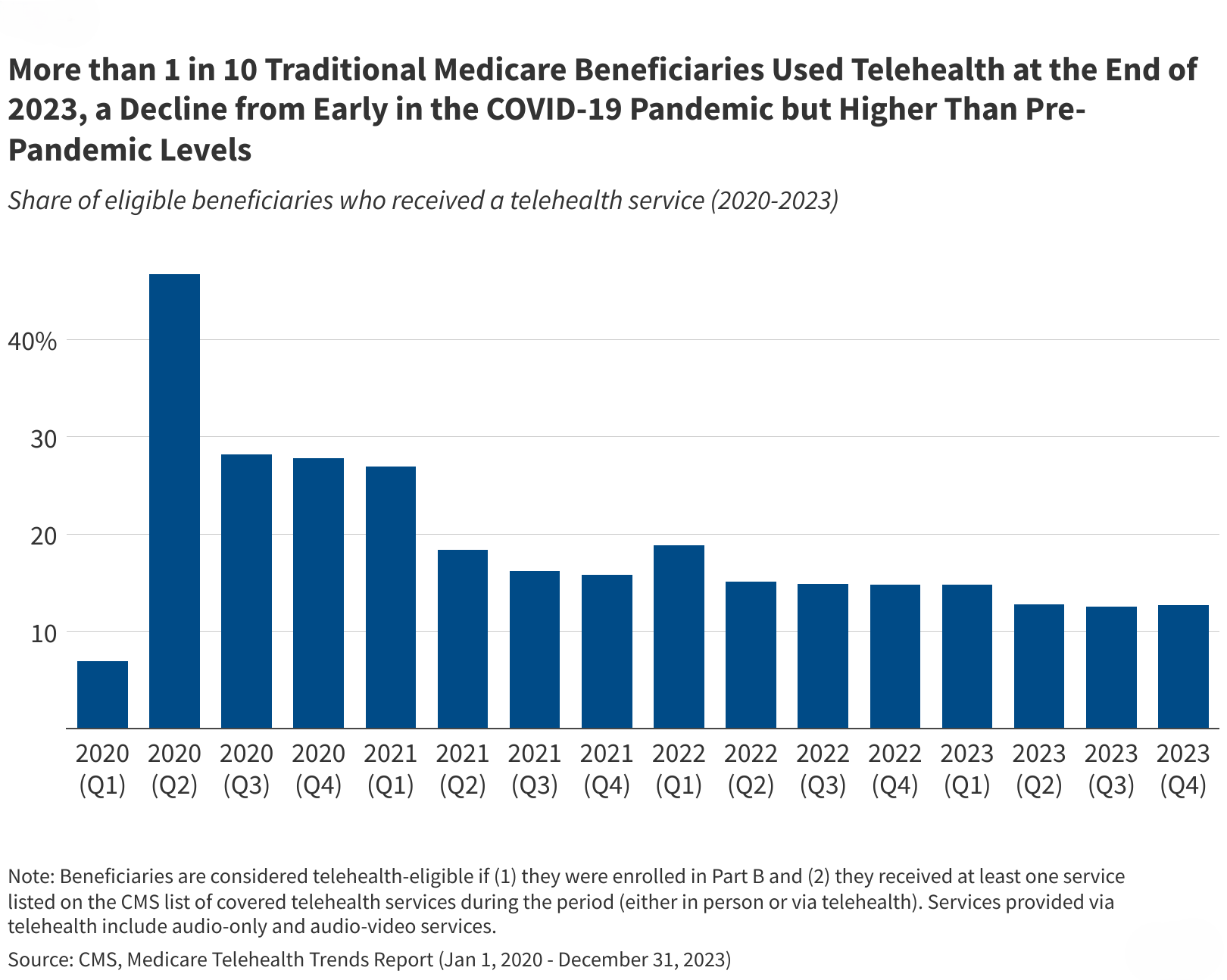
Medicare telehealth usage The landscape of healthcare has dramatically shifted in recent years, with telehealth emerging as a key player in the delivery of medical services. This transformation has been particularly evident in the realm of Medicare, where telehealth has seen a significant uptick in utilization. The Kaiser Family Foundation recently highlighted this trend, noting the legislative changes and policy shifts that have facilitated the growth of telehealth services for Medicare beneficiaries.

The Pandemic’s Role in Telehealth Expansion

Prior to the onset of the COVID-19 pandemic, telehealth was a relatively niche service within Medicare, primarily available to those in rural settings. However, the public health emergency necessitated rapid adaptation, leading to a dramatic increase in telehealth utilization. Temporary measures were introduced, allowing for broader access and coverage, as detailed in the Medicare Telehealth Report. These changes not only increased access but also highlighted the potential of telehealth to address healthcare disparities.

Legislative Measures and Future Prospects

With the official end of the COVID-19 public health emergency on May 11, 2023, Congress faces the challenge of deciding the future of these telehealth flexibilities. There is bipartisan support for extending these measures, as seen in proposed legislation like the Preserving Telehealth, Hospital, and Ambulances Act. However, the majority of these flexibilities are set to expire by December 2024, prompting ongoing discussions about the potential for permanent expansion.

Demographic Disparities in Telehealth Usage

The adoption of telehealth services varies significantly across different demographics. Urban areas have seen higher rates of telehealth use compared to rural regions, likely due to disparities in broadband access and communication technologies, as noted in a Brookings article. Additionally, usage is higher among Asian, Pacific Islander, and Hispanic beneficiaries, suggesting that telehealth may play a role in improving access to care for certain groups.

The Financial Implications

Medicare’s payment structure for telehealth services has also evolved, with current rates matching those of in-person visits. This parity is crucial for encouraging providers to invest in telehealth infrastructure. However, questions remain about the long-term financial impact on the Medicare program. The Congressional Budget Office has estimated the cost of extending telehealth flexibilities, and ongoing research is needed to assess the balance between increased spending and potential savings from reduced emergency department visits and improved medication adherence.

Ensuring Program Integrity

As telehealth becomes more entrenched in the Medicare landscape, concerns about program integrity and potential fraud have arisen. Despite some high-profile cases, investigations have shown minimal evidence of widespread misuse. Recommendations from the MedPAC include increased scrutiny of outlier billing patterns and in-person visit requirements for high-cost services.
In conclusion, while telehealth has proven to be a valuable tool for expanding access to healthcare, its future within Medicare remains uncertain. The ongoing legislative discussions will determine whether the current flexibilities will become a permanent fixture, shaping the healthcare landscape for years to come.

More Articles

Getting licensed or staying ahead in your career can be a journey—but it doesn’t have to be overwhelming. Grab your favorite coffee or tea, take a moment to relax, and browse through our articles. Whether you’re just starting out or renewing your expertise, we’ve got tips, insights, and advice to keep you moving forward. Here’s to your success—one sip and one step at a time!

Proptech Promised a Revolution — So Why Does Real Estate Still Feel the Same?

Despite billions poured into proptech and a decade of flashy digital upgrades, the real estate experience remains largely unchanged. Apps made processes smoother, but not more transparent — because the industry’s core structures, data control and power dynamics stayed the same. True disruption will come from platforms that shift information and control to consumers, not just digitize outdated systems.

CRE Markets Wake Up in 2026: What Real Estate Professionals Need to Know

Early 2026 is delivering a clear message: commercial real estate is entering a recalibration phase. Construction is softening, pending home sales just saw a sharp drop, consumer sentiment is inching upward but remains fragile, and capital markets are tightening as major CRE sectors face rising distress. From data centers powering ahead to CMBS foreclosures climbing and office-to-residential conversions gaining momentum, professionals across real estate, mortgage, insurance, and finance need to stay sharp as the industry shifts.

Top 10 Highest-Paying Real Estate Careers of 2026

Discover the real estate roles earning the biggest paychecks in 2026. From investment consultants to commercial leasing managers, this breakdown highlights the salaries, responsibilities, and career paths offering the strongest financial potential in today’s evolving market—perfect for newcomers and seasoned professionals mapping their next big move.

Montana Launches Bold Licensing Reform Task Force to Boost Workforce Participation

Montana is taking major steps to remove outdated licensing barriers and strengthen its workforce. Governor Greg Gianforte has created a new Licensing Reform Task Force aimed at modernizing regulations, speeding up approvals, and helping more professionals enter high‑demand fields like construction and healthcare. With licensing numbers doubling over the past decade and rural communities facing critical shortages, the state is pushing for faster, more efficient pathways to work. The task force begins meeting in February and will deliver its full reform report by September 2026 — a move that could influence licensing modernization efforts nationwide.

AI Becomes Standard Gear for Real Estate Agents in 2026

Artificial intelligence has officially moved from novelty to necessity in the real estate world. According to new industry data, 97% of brokerage leaders say their agents now rely on AI tools for everything from listing descriptions to full-scale marketing campaigns. As adoption skyrockets, so do concerns over training, accuracy, and compliance — especially among smaller firms. The message is clear: for today’s real estate professionals, AI literacy isn’t optional anymore.

How the Biggest Players Shaped the 2025 Commercial Real Estate Comeback

Commercial real estate roared back to life in 2025, with more than $255B pouring into multifamily, industrial, office and retail assets. Major investors moved fast on falling interest rates, improving bond yields and rising confidence across sectors. Multifamily dominated with over $115B in deals, industrial surged under private equity leadership, office saw renewed activity from owner-users and retail proved surprisingly resilient. For today’s real estate and finance professionals, the message is clear: opportunity favors those who stay informed and ready to act.