The Rapid Evolution of Telehealth Under Medicare
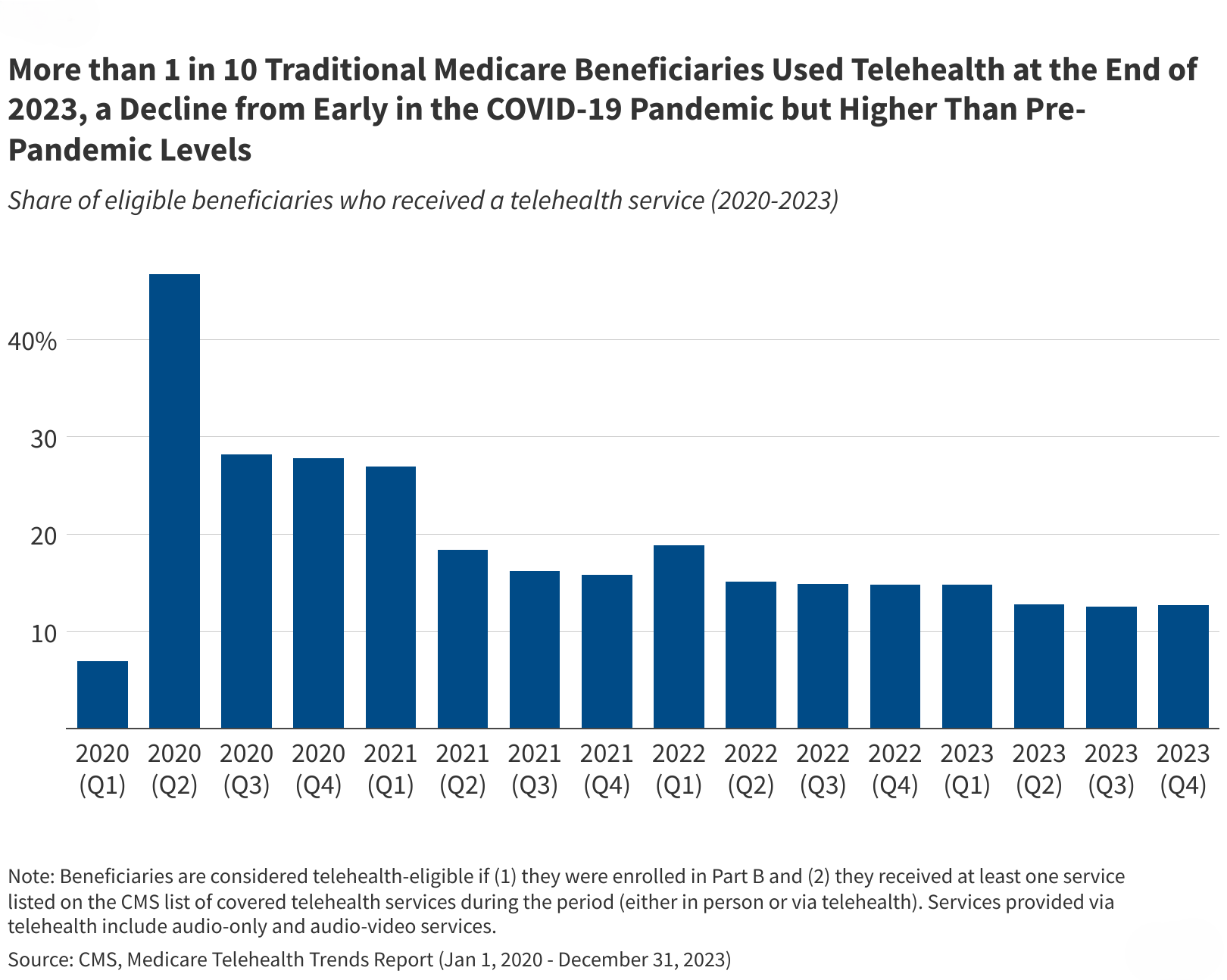
Medicare telehealth usage The landscape of healthcare has dramatically shifted in recent years, with telehealth emerging as a key player in the delivery of medical services. This transformation has been particularly evident in the realm of Medicare, where telehealth has seen a significant uptick in utilization. The Kaiser Family Foundation recently highlighted this trend, noting the legislative changes and policy shifts that have facilitated the growth of telehealth services for Medicare beneficiaries.

The Pandemic’s Role in Telehealth Expansion

Prior to the onset of the COVID-19 pandemic, telehealth was a relatively niche service within Medicare, primarily available to those in rural settings. However, the public health emergency necessitated rapid adaptation, leading to a dramatic increase in telehealth utilization. Temporary measures were introduced, allowing for broader access and coverage, as detailed in the Medicare Telehealth Report. These changes not only increased access but also highlighted the potential of telehealth to address healthcare disparities.

Legislative Measures and Future Prospects

With the official end of the COVID-19 public health emergency on May 11, 2023, Congress faces the challenge of deciding the future of these telehealth flexibilities. There is bipartisan support for extending these measures, as seen in proposed legislation like the Preserving Telehealth, Hospital, and Ambulances Act. However, the majority of these flexibilities are set to expire by December 2024, prompting ongoing discussions about the potential for permanent expansion.

Demographic Disparities in Telehealth Usage

The adoption of telehealth services varies significantly across different demographics. Urban areas have seen higher rates of telehealth use compared to rural regions, likely due to disparities in broadband access and communication technologies, as noted in a Brookings article. Additionally, usage is higher among Asian, Pacific Islander, and Hispanic beneficiaries, suggesting that telehealth may play a role in improving access to care for certain groups.

The Financial Implications

Medicare’s payment structure for telehealth services has also evolved, with current rates matching those of in-person visits. This parity is crucial for encouraging providers to invest in telehealth infrastructure. However, questions remain about the long-term financial impact on the Medicare program. The Congressional Budget Office has estimated the cost of extending telehealth flexibilities, and ongoing research is needed to assess the balance between increased spending and potential savings from reduced emergency department visits and improved medication adherence.

Ensuring Program Integrity

As telehealth becomes more entrenched in the Medicare landscape, concerns about program integrity and potential fraud have arisen. Despite some high-profile cases, investigations have shown minimal evidence of widespread misuse. Recommendations from the MedPAC include increased scrutiny of outlier billing patterns and in-person visit requirements for high-cost services.
In conclusion, while telehealth has proven to be a valuable tool for expanding access to healthcare, its future within Medicare remains uncertain. The ongoing legislative discussions will determine whether the current flexibilities will become a permanent fixture, shaping the healthcare landscape for years to come.


More Articles

Getting licensed or staying ahead in your career can be a journey—but it doesn’t have to be overwhelming. Grab your favorite coffee or tea, take a moment to relax, and browse through our articles. Whether you’re just starting out or renewing your expertise, we’ve got tips, insights, and advice to keep you moving forward. Here’s to your success—one sip and one step at a time!

The iad Group: A New Era in the Brokerage Industry

The iad Group, a renowned name in the real estate industry, is making its grand entry into the U.S. market. Originating from Paris, the iad Group has established its presence in numerous countries, and now, it's Florida's turn to experience the iad Group's unique approach to real estate. The iad Group's business model is a blend of human connections and a cloud-based structure. This innovative approach has been the driving force behind the company's success in various countries, and it aims to replicate this success in the U.S. The iad Group's Florida operation, iad Florida, is launching with 18 agents based in the vibrant city of Kissimmee. These agents are ready to spearhead the iad Group's expansion into the U.S., bringing their expertise and passion for real estate to the American market.

By |October 5, 2023|Categories: Real Estate Industry|Tags: |0 Comments

Integrated Technology: The Key to Enhanced Efficiency in Real Estate

In the ever-evolving world of real estate, staying ahead of the competition requires innovative solutions that streamline processes and maximize opportunities. MoxiWorks, a leading real estate technology platform, has recently integrated two powerful tools, MoxiPresent and MoxiConnect, to revolutionize the way agents create presentations, conduct buyer tours, and provide annual property reviews. This integration not only enhances efficiency but also empowers agents to deliver a higher level of service to their clients. Ready to take your real estate career to the next level? Explore the online career education courses offered by Cameron Academy and gain the skills and knowledge you need to thrive in the industry.

Fair Housing Protections Based on Shared Ancestry and Ethnicity: A HUD Highlight

The U.S. Department of Housing and Urban Development (HUD), along with seven other federal agencies, has recently taken significant steps towards promoting fair housing. The agencies have clarified and enforced Title VI of the Civil Rights Act of 1964, which prohibits discrimination based on race, color, or national origin. Now, the protection extends to include discrimination based on shared ancestry and ethnicity. A housing-specific fact sheet has been published by HUD in collaboration with other federal agencies. This fact sheet provides guidance on reporting housing discrimination and seeking assistance, serving as a valuable resource for individuals who have experienced discrimination and are seeking justice.

By |October 4, 2023|Categories: Fair Housing Protections|Tags: |0 Comments

Adjustments in Seller’s Prices Amid Rising Mortgage Rates

As mortgage rates rise, home sellers are navigating a challenging market landscape, adjusting their prices to attract potential buyers. Increasing mortgage rates present significant challenges for buyers, impacting affordability and decreasing demand for homes. In response, many sellers are reducing their prices. Despite these challenges, the median U.S. home sale price has shown resilience, rising by 3% year over year. As the housing market continues to evolve, it's crucial for both buyers and sellers to stay informed about the latest trends and dynamics.

By |October 4, 2023|Categories: Australian Housing Market|Tags: |0 Comments

Persistent Challenge: Discrimination Faced by Non-White Homebuyers

Non-white homebuyers, particularly Hispanics and Blacks, continue to encounter discrimination during their search for a new home, despite existing legislation aimed at preventing such practices. According to a recent survey conducted by Redfin, 36% of Hispanics and 32% of Blacks reported feeling discriminated against throughout their homebuying journey. The study also highlights that discrimination extends beyond race, with 22% of LGBTQ+ respondents experiencing bias based on their sexual orientation. These findings shed light on the persistence of discrimination in the housing market, challenging the effectiveness of current laws and regulations.

Soaring Mortgage Rates Reach Highest Level in Over Two Decades

In a startling turn of events, mortgage rates have skyrocketed to their highest level since 2000, causing ripples throughout the housing market. This surge is driven by inflation concerns and the Federal Reserve's plan to taper its bond-buying program. As the economy continues to recover from the pandemic, inflationary pressures are mounting, leading to higher borrowing costs. This article delves into the details of this alarming trend and its potential implications for the housing market.

By |October 3, 2023|Categories: Mortgage Rates|Tags: |0 Comments