The Rapid Evolution of Telehealth Under Medicare
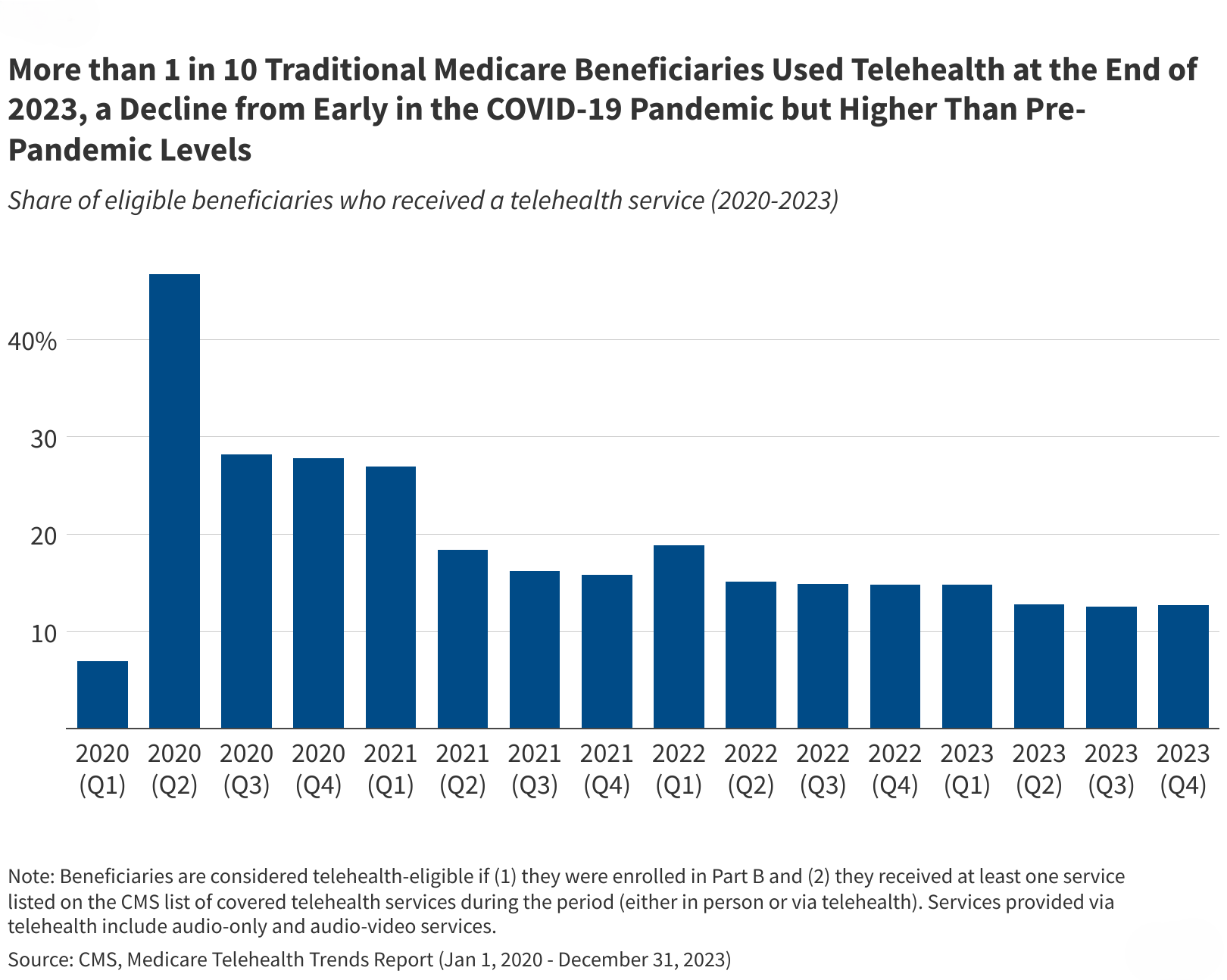
Medicare telehealth usage The landscape of healthcare has dramatically shifted in recent years, with telehealth emerging as a key player in the delivery of medical services. This transformation has been particularly evident in the realm of Medicare, where telehealth has seen a significant uptick in utilization. The Kaiser Family Foundation recently highlighted this trend, noting the legislative changes and policy shifts that have facilitated the growth of telehealth services for Medicare beneficiaries.

The Pandemic’s Role in Telehealth Expansion

Prior to the onset of the COVID-19 pandemic, telehealth was a relatively niche service within Medicare, primarily available to those in rural settings. However, the public health emergency necessitated rapid adaptation, leading to a dramatic increase in telehealth utilization. Temporary measures were introduced, allowing for broader access and coverage, as detailed in the Medicare Telehealth Report. These changes not only increased access but also highlighted the potential of telehealth to address healthcare disparities.

Legislative Measures and Future Prospects

With the official end of the COVID-19 public health emergency on May 11, 2023, Congress faces the challenge of deciding the future of these telehealth flexibilities. There is bipartisan support for extending these measures, as seen in proposed legislation like the Preserving Telehealth, Hospital, and Ambulances Act. However, the majority of these flexibilities are set to expire by December 2024, prompting ongoing discussions about the potential for permanent expansion.

Demographic Disparities in Telehealth Usage

The adoption of telehealth services varies significantly across different demographics. Urban areas have seen higher rates of telehealth use compared to rural regions, likely due to disparities in broadband access and communication technologies, as noted in a Brookings article. Additionally, usage is higher among Asian, Pacific Islander, and Hispanic beneficiaries, suggesting that telehealth may play a role in improving access to care for certain groups.

The Financial Implications

Medicare’s payment structure for telehealth services has also evolved, with current rates matching those of in-person visits. This parity is crucial for encouraging providers to invest in telehealth infrastructure. However, questions remain about the long-term financial impact on the Medicare program. The Congressional Budget Office has estimated the cost of extending telehealth flexibilities, and ongoing research is needed to assess the balance between increased spending and potential savings from reduced emergency department visits and improved medication adherence.

Ensuring Program Integrity

As telehealth becomes more entrenched in the Medicare landscape, concerns about program integrity and potential fraud have arisen. Despite some high-profile cases, investigations have shown minimal evidence of widespread misuse. Recommendations from the MedPAC include increased scrutiny of outlier billing patterns and in-person visit requirements for high-cost services.
In conclusion, while telehealth has proven to be a valuable tool for expanding access to healthcare, its future within Medicare remains uncertain. The ongoing legislative discussions will determine whether the current flexibilities will become a permanent fixture, shaping the healthcare landscape for years to come.


More Articles

Getting licensed or staying ahead in your career can be a journey—but it doesn’t have to be overwhelming. Grab your favorite coffee or tea, take a moment to relax, and browse through our articles. Whether you’re just starting out or renewing your expertise, we’ve got tips, insights, and advice to keep you moving forward. Here’s to your success—one sip and one step at a time!

Florida’s Insurance Market Finally Stabilizes After Years of Crisis, Says State Commissioner

At the 2025 Florida Chamber Insurance Summit, Insurance Commissioner Mike Yaworsky announced that Florida’s long‑volatile insurance market has at last regained stability. After a decade marked by runaway litigation, inflated claims, and insurer exits, the sweeping tort and insurance reforms passed in 2022 and 2023 have reversed the decline. Litigation has fallen to pre‑2019 levels, new carriers and reinsurers are entering the state, and consumers now have more options than they’ve seen in years. Yaworsky cautioned, however, that rolling back these reforms would undo the progress and impose massive costs on Floridians.

Driving With an Expired License in 2025: What Professionals Need to Know Before Hitting the Road

Driving with an expired license is illegal in nearly every state, and in 2025 the consequences are more serious than most people realize. From fines and potential jail time to denied insurance claims and professional repercussions, even a simple lapse can create a ripple effect—especially for licensed professionals in real estate, insurance, mortgage, and finance. This quick morning read breaks down the real penalties, why professionals should pay attention, and how to renew your license before it becomes a costly mistake.

Talking to Your Photos: Chat‑Based AI Is Quietly Transforming Real Estate Listings

A new wave of chat‑based AI tools is reshaping how quickly real estate professionals can prepare and enhance listing photos. By simply describing changes—like brightening a kitchen, removing clutter, or fully staging a room—agents and property managers can produce high‑impact images in minutes. This technology not only speeds up market readiness but also boosts renter and buyer engagement by presenting spaces at their full potential from the very first glance.

Staying Ahead of the Curve: The Rental Market Trends That Will Define 2026

The rental market is gearing up for major shifts in 2026, from rising compliance demands and surging insurance costs to the rapid adoption of AI‑powered property management tools. Tenants’ expectations are evolving just as quickly, pushing owners to deliver lifestyle‑driven communities rather than simple lease agreements. Investors and operators who embrace technology, stay ahead of regulatory changes and prioritize renter experience will be best positioned to thrive in the coming year.

The AI Revolution in Real Estate: How Technology Is Reshaping the Industry

Artificial intelligence is transforming real estate at lightning speed, turning days of manual work into minutes of automated insight. With the AI real estate market projected to soar from $222.65B in 2024 to over $975B by 2029, professionals who understand this technology now will lead the industry tomorrow. From smarter valuations to automated workflows and predictive analytics, AI is redefining how agents, investors, and property managers operate—making today the perfect time to embrace the tools shaping the future of real estate.

The Human Connection Real Estate Will Always Need in an AI‑Driven Future

As AI takes over the repetitive tasks that slow agents down, industry expert Matt Britton says the future of real estate belongs to professionals who combine intelligent automation with irreplaceable human trust. Speaking to thousands at NAR NXT 2025, Britton emphasized that the next wave of success will come from agents who embrace AI workflows while doubling down on what technology can’t replicate: empathy, creativity, and meaningful client relationships.