The Rapid Evolution of Telehealth Under Medicare
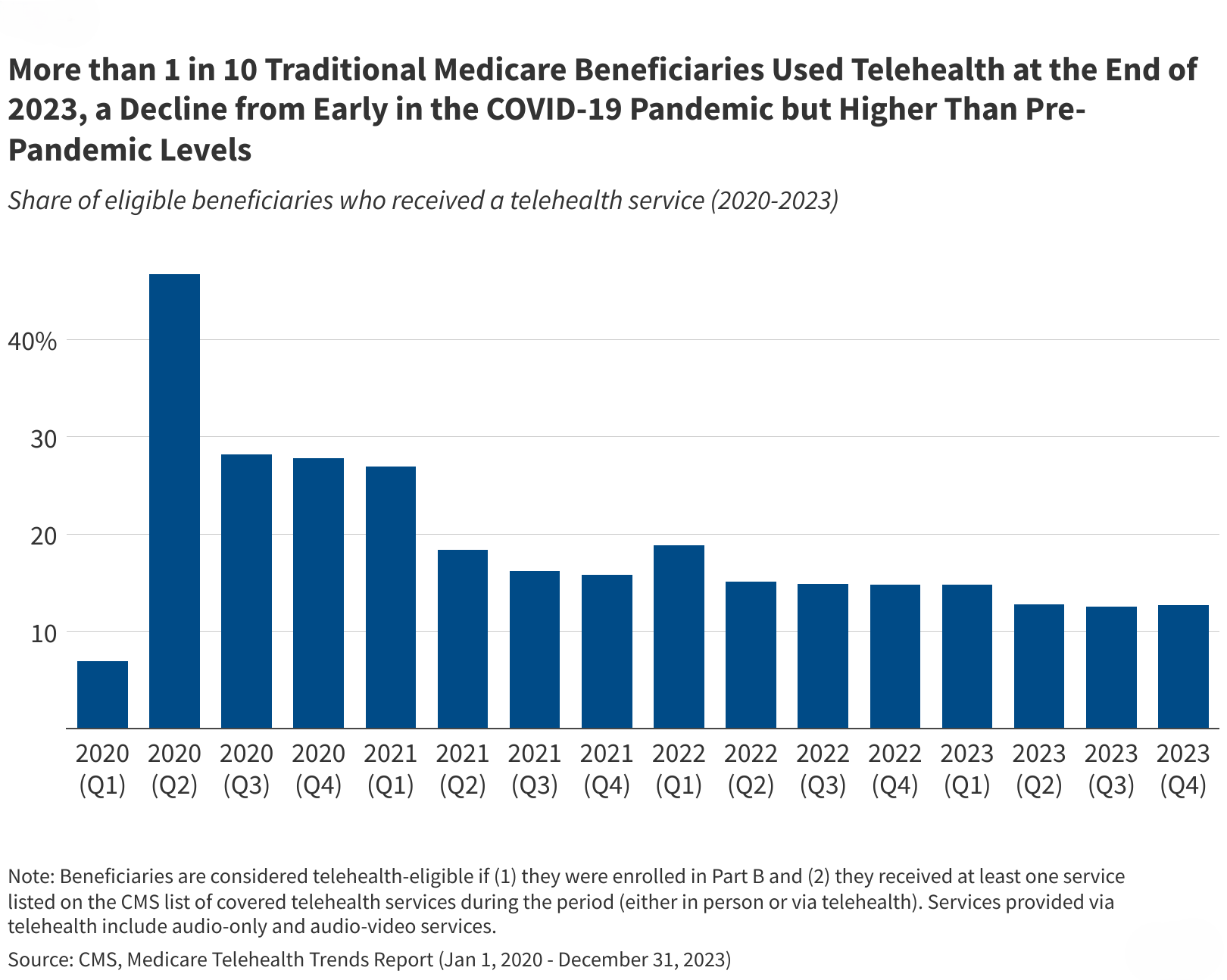
Medicare telehealth usage The landscape of healthcare has dramatically shifted in recent years, with telehealth emerging as a key player in the delivery of medical services. This transformation has been particularly evident in the realm of Medicare, where telehealth has seen a significant uptick in utilization. The Kaiser Family Foundation recently highlighted this trend, noting the legislative changes and policy shifts that have facilitated the growth of telehealth services for Medicare beneficiaries.

The Pandemic’s Role in Telehealth Expansion

Prior to the onset of the COVID-19 pandemic, telehealth was a relatively niche service within Medicare, primarily available to those in rural settings. However, the public health emergency necessitated rapid adaptation, leading to a dramatic increase in telehealth utilization. Temporary measures were introduced, allowing for broader access and coverage, as detailed in the Medicare Telehealth Report. These changes not only increased access but also highlighted the potential of telehealth to address healthcare disparities.

Legislative Measures and Future Prospects

With the official end of the COVID-19 public health emergency on May 11, 2023, Congress faces the challenge of deciding the future of these telehealth flexibilities. There is bipartisan support for extending these measures, as seen in proposed legislation like the Preserving Telehealth, Hospital, and Ambulances Act. However, the majority of these flexibilities are set to expire by December 2024, prompting ongoing discussions about the potential for permanent expansion.

Demographic Disparities in Telehealth Usage

The adoption of telehealth services varies significantly across different demographics. Urban areas have seen higher rates of telehealth use compared to rural regions, likely due to disparities in broadband access and communication technologies, as noted in a Brookings article. Additionally, usage is higher among Asian, Pacific Islander, and Hispanic beneficiaries, suggesting that telehealth may play a role in improving access to care for certain groups.

The Financial Implications

Medicare’s payment structure for telehealth services has also evolved, with current rates matching those of in-person visits. This parity is crucial for encouraging providers to invest in telehealth infrastructure. However, questions remain about the long-term financial impact on the Medicare program. The Congressional Budget Office has estimated the cost of extending telehealth flexibilities, and ongoing research is needed to assess the balance between increased spending and potential savings from reduced emergency department visits and improved medication adherence.

Ensuring Program Integrity

As telehealth becomes more entrenched in the Medicare landscape, concerns about program integrity and potential fraud have arisen. Despite some high-profile cases, investigations have shown minimal evidence of widespread misuse. Recommendations from the MedPAC include increased scrutiny of outlier billing patterns and in-person visit requirements for high-cost services.
In conclusion, while telehealth has proven to be a valuable tool for expanding access to healthcare, its future within Medicare remains uncertain. The ongoing legislative discussions will determine whether the current flexibilities will become a permanent fixture, shaping the healthcare landscape for years to come.


More Articles

Getting licensed or staying ahead in your career can be a journey—but it doesn’t have to be overwhelming. Grab your favorite coffee or tea, take a moment to relax, and browse through our articles. Whether you’re just starting out or renewing your expertise, we’ve got tips, insights, and advice to keep you moving forward. Here’s to your success—one sip and one step at a time!

Florida Judge Reopens Hundreds of Citizens Insurance Disputes, Triggering Statewide Arbitration Shake‑Up

A Leon County judge has ordered Florida’s administrative courts to restart arbitration on more than 400 stalled Citizens Insurance cases, reigniting a legal showdown over whether the state’s insurer of last resort can force policyholders out of traditional courtrooms. The ruling directly conflicts with a separate Hillsborough County injunction that called Citizens’ arbitration system “likely unconstitutional,” setting up a rare judicial clash that could reshape how Floridians fight denied or underpaid property claims.

Inhabit Unveils Cutting‑Edge AI, Fraud Prevention, and Compliance Tech Set to Transform Property Management in 2025

Inhabit has launched a powerful new suite of AI‑driven tools designed to modernize leasing, strengthen fraud prevention, and simplify compliance for property managers nationwide. From advanced leasing assistants and NYC‑specific regulatory AI to instant income verification and upcoming identity‑screening tech, these innovations aim to solve some of the industry’s toughest challenges. Real estate professionals—especially in multifamily—can expect faster operations, stronger safeguards, and a more efficient workflow as these technologies roll out.

The Coming Housing Surplus: How Baby Boomer Demographics Could Reshape the Real Estate Market

A growing body of demographic research suggests that today’s housing shortage may give way to a future surplus as millions of Baby Boomer–owned homes return to the market over the next two decades. With affordability at historic lows and inventory still tight, this long‑term shift could eventually cool prices and transform the landscape for real estate professionals. The analysis draws parallels to aging populations abroad and highlights why understanding demographic cycles is becoming essential knowledge for agents, brokers, and mortgage professionals preparing for the next era of the housing market.

Griffin Funding Elevates John Jones to SVP of Growth as Lender Targets $3B in Non‑QM Volume

Griffin Funding has appointed John Jones as Senior Vice President of Growth and EOS Integrator, a move aimed at accelerating the lender’s push toward $3 billion in annual non‑QM loan volume by 2030. Jones, previously the company’s fractional integrator and COO, will lead expansion strategies, operational optimization, and leadership development as the lender strengthens its position in the increasingly competitive non‑QM market.

Tampa Defies National Real Estate Slowdown With Nearly 20% Stronger Multifamily Returns

A new report shows Tampa outperforming the national real estate slowdown with a 6.5 percent annualized multifamily return, nearly 20 percent higher than the U.S. average. While many metros face oversupply or regulatory drag, Tampa’s balanced development pipeline, strong population growth, and investor confidence continue to fuel resilient performance heading into 2026.

Global Investors Are Re‑Entering the Market—and Their Next Moves Could Reshape 2026

A new Colliers outlook reveals that global capital is picking up momentum again, with investors shifting toward more active, hands‑on strategies. Data centers are surging, offices are rebounding, and value‑add plays like adaptive reuse are defining the next wave of opportunity. Regional markets—from the U.S. to APAC—are seeing renewed demand as fundraising spreads across continents and investors seek speed, control, and scale. This snapshot helps today’s real estate and finance professionals stay aligned with where global money is moving next.