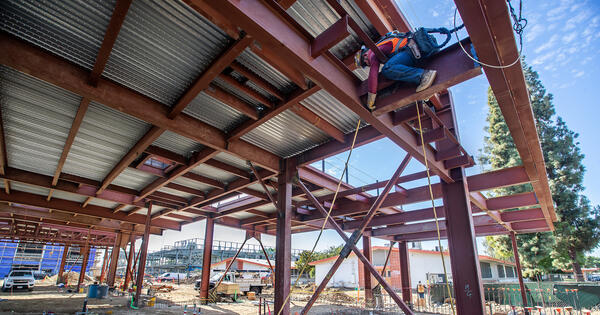
As families consider relocating, the quality of local public schools often becomes a pivotal factor. The allure of modern athletic facilities, spacious classrooms, and cutting-edge technology in science and computer labs can be irresistible for parents who equate these attributes with a superior education. But, as a recent study from Yale Insights explores, does the financial investment in school infrastructure genuinely enhance educational outcomes?
Barbara Biasi, an Assistant Professor of Economics at Yale SOM, alongside her colleagues Julien Lafortune and David Schönholzer, delved into this question. Their research, which spans data from across the United States, seeks to unravel the complex relationship between capital spending on schools and its impact on educational quality and real estate prices. For those interested in a deeper dive, the full article can be found here.
The study’s findings indicate that while capital projects generally increase both test scores and property values, the benefits are predominantly seen in districts with disadvantaged students. Interestingly, the type of capital project plays a crucial role in determining its impact. Projects focused on infrastructure improvements, such as HVAC systems, significantly enhance test scores but do not necessarily raise property values. Conversely, investments in visible amenities like athletic facilities tend to boost property prices.
Biasi’s research highlights a critical consideration for voters who decide on capital proposals. She emphasizes the importance of understanding whether these investments will truly benefit students or merely serve to increase local property values. As she notes, “Public schools are supposed to be free, but really people are paying for the best public school they can afford.”
Implications for Policy and Community
This study raises essential questions about the role of voters in making decisions that impact educational infrastructure. With the majority of voters not being parents, there’s a risk that the benefits of certain projects may not be fully appreciated or prioritized. Biasi hopes that this research will encourage a more informed discussion around school funding and its implications for both students and the broader community.
Looking ahead, Biasi and her team plan to explore how different funding rules across states affect the approval and impact of capital projects. This next phase aims to provide further insights into how modifications in funding rules could potentially reshape the educational landscape.
For more insights from Barbara Biasi and her team, visit her profile on Yale Insights.
More Articles
Getting licensed or staying ahead in your career can be a journey—but it doesn’t have to be overwhelming. Grab your favorite coffee or tea, take a moment to relax, and browse through our articles. Whether you’re just starting out or renewing your expertise, we’ve got tips, insights, and advice to keep you moving forward. Here’s to your success—one sip and one step at a time!
The latest MBA survey shows overall mortgage applications dipping 1.4% during the holiday week, even as purchase activity rose on a seasonally adjusted basis. Refinances cooled despite lower rates, which averaged 6.32% for a 30‑year fixed. Rising ARMs and shifting buyer behavior highlight a market still trying to stabilize amid softening economic indicators.
October delivered the first year‑over‑year slowdown in commercial real estate deals in nearly two years, signaling a growing disconnect between buyers and sellers as elevated rates and policy uncertainty reshape pricing expectations. While multifamily cooled and office assets traded at steep discounts, hotels and adaptive‑reuse projects stood out as rare bright spots. For professionals across real estate, mortgage, and finance, the shifting landscape underscores the need for sharper analysis and continued education heading into 2026.
The US workers’ compensation market is bracing for a pivotal year in 2026 as medical inflation, rising claim complexity, and tightening state regulations push costs higher for insurers and employers. With cumulative trauma injuries increasing and states expanding presumption laws—especially for first responders and healthcare workers—underwriting strategies are being forced to evolve. At the same time, technology like predictive analytics and workplace wearables is reshaping loss prevention, while more organizations turn to captives and hybrid programs to manage volatility.
Over the past 25 years, Florida Realtors has transformed from a simple support desk into one of the most influential tech ecosystems in real estate. Through member‑driven tools like Tech Helpline, Form Simplicity and the new Sabal Sign platform, the association has built a stable, fully integrated system used by agents across the U.S. and Canada. Free from outside investors and focused entirely on member needs, Florida Realtors has quietly become a tech powerhouse—proving that long-term vision, not venture capital, is what truly drives innovation in the industry.
Massachusetts is poised for a major shift in home‑sale transparency as Gov. Maura Healey pushes for mandatory flood disclosures — a change that could impact buyers, sellers, and real estate professionals statewide. With worsening climate conditions and growing flood damage in communities like Winthrop and Salem, the proposal aims to ensure buyers understand a property’s true risk before they commit. The move has wide support from insurers and municipalities, while the real estate industry remains split over its potential impact on the state’s long‑standing “buyer beware” culture.
Florida’s long‑troubled property insurance market is finally showing early signs of recovery. Thanks to recent legislative reforms that reduced litigation and attracted new insurers, some homeowners are even seeing their premiums drop. These improvements are boosting consumer confidence and creating new opportunities for real estate, mortgage, and insurance professionals across the state.