The Surprising Truth Behind America’s Housing Crisis: Why Deregulation Isn’t the Fix
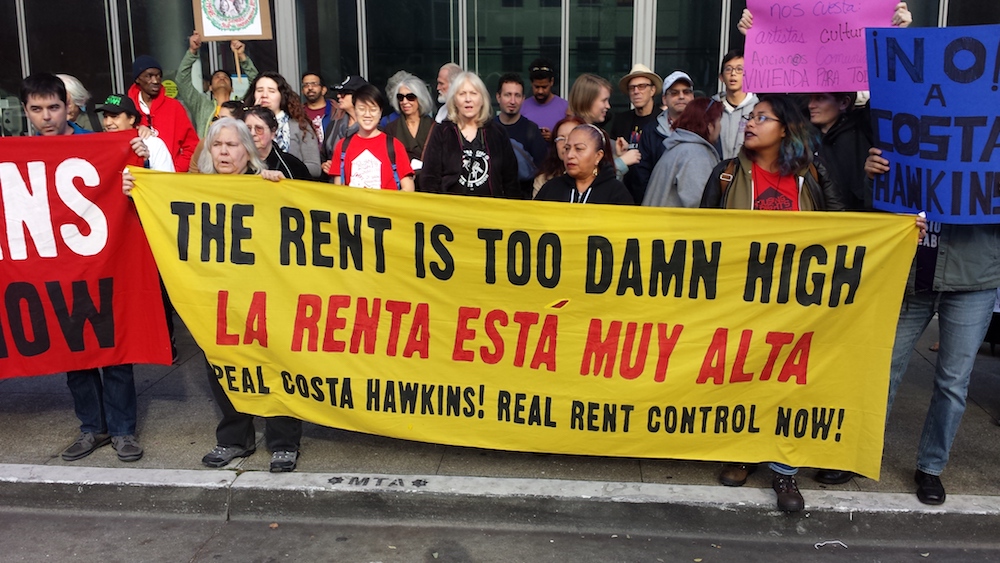
Rent control protest

Every few months, a familiar message resurfaces in housing policy debates: if cities would simply “deregulate” and eliminate zoning restrictions, housing would become magically affordable. But a groundbreaking academic study challenges this long‑held assumption—and the findings are shaking the foundation of the deregulation narrative.

According to the research, conducted by four leading urban scholars, the true driver of America’s affordability crisis isn’t zoning, regulations, or construction slowdowns.

It’s economic inequality—pure and simple.

Why Deregulation Isn’t the Golden Ticket

The authors modeled several major U.S. cities, including San Francisco, and demonstrated that even if construction boomed at unrealistically high levels, rents would barely move for decades. Their mathematical simulation found it could take up to 100 years of extraordinary housing production to bring rents down to levels ordinary workers could afford.

“The simulation makes clear it is unrealistic to think that we can deregulate and build our way out of the affordability crisis with market-rate housing, even with large positive supply shocks.”

Even one of the study’s lead authors, UCLA professor Michael Storper, has repeatedly warned that deregulation can actually worsen displacement in high-demand areas.

Upzoning Has Benefits—But Not the Ones You Think

The authors don’t villainize upzoning. In fact, it has real perks: improved access to jobs, shorter commutes, and reduced carbon emissions. But there’s a catch—those perks make neighborhoods more desirable, often pushing prices up, not down.

“Upzoning may be desirable from some policy perspectives, but it is not a robust tool to increase affordability.”

The Real Culprit: Wealth Gaps and Inequality

The study reinforces findings from the National Bureau of Economic Research: housing prices follow income growth, not zoning policy. Even places with minimal zoning—like Houston—or shrinking cities like Cleveland continue to face affordability issues because wage gaps are widening.

San Francisco, for example, saw both mean rent and mean income rise roughly 600% between 1980 and 2019. But workers without degrees saw far smaller income gains. That widening gulf is the core of the crisis.

“Rising national inequality and the spatial sorting of economic activity have reshaped regional labor markets and incomes.”

The Tax Factor No One Talks About

The mid‑20th century—a period often remembered as an era of affordable American housing—had something the modern era doesn’t: extremely high marginal tax rates for the wealthy. That suppressed inequality and pumped more money into middle‑income households.

Today, wealth is concentrated in stock options and investments—many lightly taxed or not taxed at all.

Developers Aren’t the Villains—But the Market Has Limits

The study highlights an emerging economic idea: option value. Developers often hold off on construction when they expect future profits to be higher. Ironically, regulations can sometimes push them to build sooner, not later.

Even in wildly optimistic scenarios—tens of thousands of new units built every year—rents wouldn’t fall meaningfully for decades. One projection estimated 124 years before the average working-class resident could afford typical rent.

If Inequality Isn’t Addressed, No Policy Will Fix Housing

The authors warn that unless the U.S. confronts its economic divides, housing policy tweaks like upzoning amount to little more than rearranging deck chairs on the Titanic.

“We can’t solve our problem now until there is a radical redistribution of economic and political power.” — Martin Luther King Jr.

This is the conversation cities urgently need—not just how many units we can squeeze onto land, but how income inequality shapes every corner of the housing market.

What This Means for Real Estate Professionals

For agents, mortgage brokers, investors, and anyone navigating today’s volatile market, understanding these dynamics is essential. Markets aren’t shaped by zoning alone—they’re driven by wage trends, economic forces, and investor expectations.

This is why institutions like Cameron Academy emphasize economic literacy alongside licensing. Today’s professionals must understand not just the laws—but the forces behind them.

Explore the Original Reporting

This article draws from excellent investigative reporting by Tim Redmond at 48 Hills. Explore the full story here:

New study shows that deregulation is not the answer to the affordable housing crisis – 48 Hills

Join their community discussion on Facebook, Twitter, and Instagram.

More Articles

Getting licensed or staying ahead in your career can be a journey—but it doesn’t have to be overwhelming. Grab your favorite coffee or tea, take a moment to relax, and browse through our articles. Whether you’re just starting out or renewing your expertise, we’ve got tips, insights, and advice to keep you moving forward. Here’s to your success—one sip and one step at a time!

Strategic Decision of RE/MAX: $55 Million Commission Lawsuit Settlement

In the competitive world of real estate, RE/MAX recently settled a commission lawsuit for a substantial $55 million. This strategic decision has sparked intrigue and raised questions about the company's future. The lawsuit, initiated by a group of real estate agents, accused RE/MAX of commission fraud and unfair practices. However, RE/MAX chose to settle the lawsuit, demonstrating its commitment to swiftly resolving legal matters and maintaining a positive trajectory. Despite the financial implications, RE/MAX remains financially robust and poised for future growth. The company's commitment to transparency, fairness, and ethical business practices remains steadfast. As the dust settles on the commission lawsuit settlement, RE/MAX looks to the future with unwavering confidence.

By |November 26, 2023|Categories: AI in Real Estate|Tags: |0 Comments

¡Ofrecemos el Curso de Pre-Licencia de Bienes Raíces de 63 Horas en Florida, 100% en Español!

¿Interesado en obtener una licencia de bienes raíces? Nuestra versión en español del curso de pre-licencia de bienes raíces de 63 horas está diseñada para personas que prefieren aprender en español. Nuestro currículo integral cubre temas esenciales desde principios de bienes raíces hasta la ley de contratos y ética. Con la flexibilidad del aprendizaje en línea, puedes adaptar tu educación inmobiliaria a tu apretada agenda. Inscríbete hoy y da el primer paso para convertirte en un profesional inmobiliario con licencia. ¡Inicia tu viaje en el mundo de los bienes raíces hoy mismo!

Bob Goldberg Steps Down as NAR CEO: A Leadership Change at the National Association of Realtors

The real estate industry is abuzz with Bob Goldberg stepping down as the CEO of the National Association of Realtors (NAR). This leadership change comes after the Sitzer/Burnett commission lawsuit trial, raising questions about NAR's practices. Goldberg's departure marks a significant moment in NAR's history, presenting an opportunity for reevaluation and rebuilding. As the industry evolves, NAR must adapt and embrace change to remain relevant. At Cameron Academy, we provide high-quality career education courses for a competitive advantage in the real estate industry. Start your journey towards success today! Explore Our Courses: https://cameronacademy.com/our-courses-cameron-academy

eXP CEO Glenn Sanford Voices Concerns About Commission Lawsuits’ Impact on Buyers

Commission lawsuits in the real estate sector are becoming increasingly prevalent, causing industry professionals to worry. Glenn Sanford, eXp World Holdings' CEO, recently voiced his fears about the potential repercussions of these lawsuits on low-income buyers. Sanford's primary worry centers around affordable housing access for low-income buyers. With the rise of commission lawsuits, Sanford is apprehensive that the legal costs will ultimately be shouldered by the buyers. This could further complicate the process for low-income individuals striving to enter the housing market and achieve homeownership. The Sitzer/Burnett verdict, which found real estate agents guilty of antitrust violations by conspiring to fix buyer broker commissions, has brought the issue of commission lawsuits to the forefront. The far-reaching implications of this verdict have ignited debates about the future of buyer broker commissions.

Perspectives on the Commission Lawsuit Trial: A Discussion Among Agents and Experts

The ongoing Sitzer/Burnett commission lawsuit trial has captured the attention of the real estate industry, as it holds the potential to reshape the way agent commissions are structured. In this article, we explore the viewpoints of brokers, agents, and real estate economists, who provide valuable insights into the possible outcomes of the trial and its implications for the industry. By examining their perspectives, we aim to shed light on the debate surrounding real estate agent commissions and the potential impact of this landmark trial.

By |November 24, 2023|Categories: Real Estate Industry|Tags: |0 Comments

New Reporting Obligations Imposed on Nonbank Financial Institutions by FTC

The Federal Trade Commission (FTC) has recently implemented a new rule that mandates nonbank financial institutions to report data breaches and other security events. This rule aims to enhance transparency and ensure the safety of customers' information. Nonbank financial institutions, including mortgage brokers, payday lenders, and virtual currency exchanges, must promptly report data breaches if they affect at least 500 customers and involve unauthorized access to unencrypted information. The FTC's new rule requiring nonbank financial institutions to report data breaches is a significant step towards ensuring transparency, accountability, and customer safety.