The Rise of Agentic AI: Lofty Unveils a Game-Changing Operating System for Real Estate
Artificial intelligence has steadily evolved from a helpful tool into a full‑fledged business partner—and the latest breakthrough comes from Lofty. The company has introduced Lofty AOS, an agentic AI operating system built to manage, automate and optimize major segments of a brokerage’s daily workflow.
Unlike traditional tools that wait for instructions, Lofty AOS is proactive. It plans, executes and intelligently adapts workflows on its own, freeing agents and broker‑owners from administrative burdens and unlocking more time for revenue‑producing activities.
A New Era of AI: More Than a Digital Assistant
Dave Carter, Lofty’s vice president of marketing, shared with HousingWire that previous forms of AI still depended on agents to make the magic happen. Lofty AOS seeks to eliminate that friction by performing tasks quietly in the background—efficiently, consistently and with minimal oversight.
“It’s all about agent productivity,” Carter said. “The underlying benefit is that it’s automating more and more of the processes—whether administrative or related to sales and marketing.”
Real estate professionals who juggle follow‑ups, lead qualification, social posting, valuations and transaction coordination will find this shift transformative. Lofty AOS empowers multiple AI agents to run simultaneously—each one contributing to smoother, smarter business operations.
How Lofty AOS Works Behind the Scenes
The system is built around a strategically coordinated network of AI agents:
Lead‑management agents that prioritize new inquiries.
AI conversation agents that engage prospects, write scripts and analyze calls.
Social media agents that write, schedule and publish content.
Homeowner‑focused agents that grow databases and automate valuation outreach.
AI assistants for SEO, website building and transaction coordination.
Agents remain fully in control—reviewing conversations, refining tone, approving content and taking over whenever they wish. Lofty AOS brings automation without sacrificing human intuition.
“If the agent was doing it themselves, they might only be able to do that with one or two leads,” Carter said. “Now, they can do it at scale and proactively engage everyone in their database.”
Control, Compliance and Trust
One of the top concerns with agentic AI is compliance and message accuracy. Lofty addresses this through transparency—users can review logs, activities and results at any time. Even agents who aren’t tech‑savvy can define rules, set boundaries and customize workflows with ease.
Carter also revealed that Lofty is developing a powerful AI studio that will allow broker‑owners to build and customize their own AI agents to fit unique business strategies.
Built for Integration and Flexibility
Lofty AOS integrates seamlessly with existing CRMs and tech stacks, ensuring smooth adoption and minimal disruption. Lofty also plans to launch a public marketplace where integrations and plug‑ins can be explored with ease.
For real estate professionals, agentic AI represents the next wave of competitive advantage—one that increases efficiency, enhances client relationships and frees up valuable time.
What This Means for Real Estate Professionals
The emergence of agentic AI systems like Lofty AOS marks a pivotal shift in how the industry operates. Tasks that used to drain hours each week can now be handled automatically—with intelligence and precision.
New agents entering the field can focus on learning the business instead of wrestling with admin tasks. Seasoned brokers can scale without losing personal touch. And for those pursuing or renewing their real estate license, understanding AI’s role is becoming as essential as knowing contracts and market trends.
At Cameron Academy, we’ve seen how tech‑savvy agents rise faster and build stronger careers. The future belongs to professionals who embrace innovation—and we’re here to help you grow every step of the way.
Explore the Source
This article was inspired by reporting from HousingWire.
Getting licensed or staying ahead in your career can be a journey—but it doesn’t have to be overwhelming. Grab your favorite coffee or tea, take a moment to relax, and browse through our articles. Whether you’re just starting out or renewing your expertise, we’ve got tips, insights, and advice to keep you moving forward. Here’s to your success—one sip and one step at a time!
Florida families are feeling the squeeze as everyday costs, insurance premiums, and homeownership barriers continue to climb. House District 102 candidate Jayden D’Onofrio is calling for a broader, more unified affordability strategy—one that tackles the state’s insurance crisis, supports first‑time homebuyers, and restores real competition in the market. His message centers on transparency, practical solutions, and keeping Florida livable for the professionals, workers, and families who power its economy.
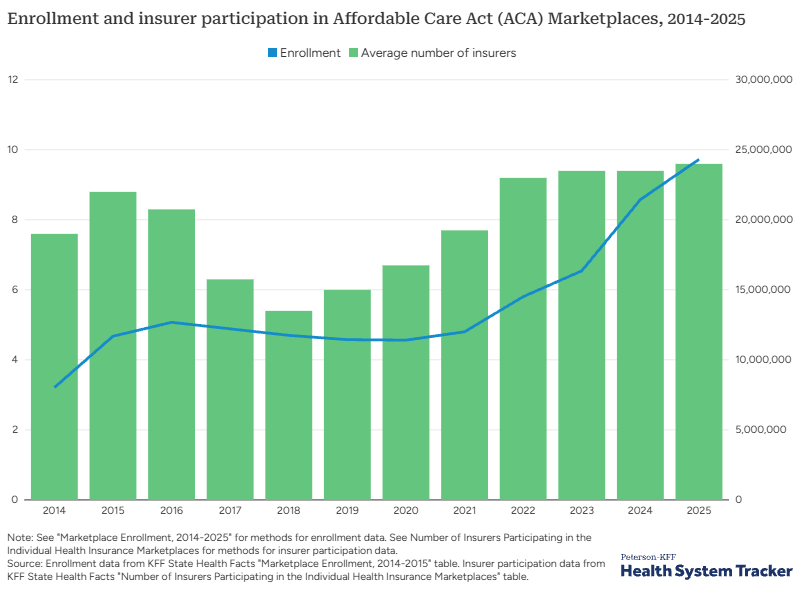
A decade of dramatic change is reshaping America’s health insurance markets. Employer group plans are becoming increasingly dominated by a few powerful insurers, while the ACA individual marketplace is experiencing record‑breaking competition and enrollment. Self‑funded plans are surging, small‑group premiums are driving employers to new coverage models, and major policy shifts in 2025 could redefine affordability for millions. This data‑driven Peterson‑KFF analysis breaks down the trends every insurance, finance, and business professional needs to understand as the industry enters a transformative new era.
Sarasota County is inching closer to approving Winchester Ranch, a massive 8,999‑home community planned for more than 3,100 acres in North Port. With a 7‑1 vote from the Planning Commission and a final decision expected in early 2026, the project could become one of Southwest Florida’s largest developments in decades—bringing new housing, commercial space, and industry while raising fresh questions about growth, the environment, and the region’s rapidly evolving real estate market.
Lument Finance Trust has closed a major $663.8 million commercial real estate CLO, marking one of the standout CRE finance deals of 2025. The transaction, LMNT 2025-FL3, features a strong reinvestment period, non‑recourse and non‑mark‑to‑market financing, and a diversified pool of 32 loans tied to 49 properties nationwide. With J.P. Morgan leading the structuring and more than $585 million placed in investment‑grade securities, the deal highlights renewed stability in transitional CRE debt—making it a development real estate and finance professionals will want to watch closely.
Walmart has partnered with Alquist 3D to roll out the nation’s first large‑scale wave of 3D‑printed commercial buildings, signaling a major shift in how future retail and industrial spaces will be constructed. After completing an 8,000‑square‑foot 3D‑printed expansion in Tennessee—the largest of its kind—the company is moving forward with over a dozen new projects nationwide, accelerating a tech‑driven transformation in commercial real estate.
Citizens Property Insurance Corp. is recommending statewide rate reductions for 2026—the first proposed decrease in more than a decade. Most Citizens policyholders could see an average 11.5% drop, reflecting recent insurance‑market reforms that have stabilized Florida’s turbulent property sector. With hundreds of thousands of policies moving back to private insurers and state‑backed Citizens shrinking to record‑low enrollment, real estate and insurance professionals should prepare for how lower premiums may influence affordability, buyer confidence, and market activity heading into 2026.