The Rise of Telemedicine: A Double-Edged Sword for Rural Healthcare
The advent of telemedicine has revolutionized healthcare delivery, providing a crucial bridge for patients who find it challenging to physically visit healthcare providers. This technological shift, which saw a significant uptick during the COVID-19 pandemic, has now become an indispensable part of modern healthcare systems.
A recent study spearheaded by Zihan Ye from the University of Tennessee, along with Kimberly Cornaggia from Penn State University and Xuelin Li from Columbia Business School, sheds light on the financial ramifications of telemedicine. The study uncovers some unintended consequences, particularly concerning rural healthcare access.
While urban hospitals, with their superior resources, attract rural patients through remote services, rural healthcare providers are witnessing a decline in patient numbers. This patient migration is affecting their operational decisions and financial health, leading to an alarming rise in rural hospital bankruptcies.
Competition and Financial Strain
The allure of telemedicine has intensified competition among hospitals, often resulting in price wars that favor urban facilities. These urban hospitals, benefiting from a higher influx of telemedicine patients, are typically able to charge more than their rural counterparts. This dynamic not only affects rural hospital revenues but also influences insurance reimbursement strategies, particularly for Medicare and Medicaid, which are notorious for lower payouts.
As urban healthcare facilities reap financial benefits, rural hospitals find themselves grappling with downgraded credit ratings. This financial strain translates to higher bond yields, further exacerbating their economic burdens. Ye emphasizes the urgent need for policy reforms to ensure rural hospitals can partake in the telemedicine boom, preventing further financial distress.
A Call for Balanced Healthcare Access
While telemedicine has undeniably extended healthcare access, Ye cautions both policymakers and patients to consider the economic repercussions that threaten the sustainability of rural healthcare. This reflection underscores the delicate balance required between embracing technological advancements and maintaining equitable healthcare access across all communities.
Getting licensed or staying ahead in your career can be a journey—but it doesn’t have to be overwhelming. Grab your favorite coffee or tea, take a moment to relax, and browse through our articles. Whether you’re just starting out or renewing your expertise, we’ve got tips, insights, and advice to keep you moving forward. Here’s to your success—one sip and one step at a time!
The financial landscape in South Korea is poised for a seismic shift as KBank, a major digital bank, grapples with a legislative curveball. The bank, which is heavily reliant on deposits from Upbit, Korea’s dominant cryptocurrency exchange, is facing a potential profit squeeze. The new Virtual Asset User Protection Act, set to take effect on July 19, 2024, mandates that banks must pay interest on crypto exchange deposits, a move that could severely impact KBank's bottom line.
AI's ability to analyze vast amounts of data is paving the way for a profound change in medical diagnostics. Khosla predicted that AI could take over up to 80% of standard medical tasks, reducing errors and biases in human diagnosis. This is particularly evident in fields like radiology and pathology, where AI's proficiency in analyzing medical imaging allows for the early detection of diseases such as cancer, significantly improving treatment outcomes.
The COVID-19 pandemic has dramatically reshaped the housing market landscape, resulting in an unprecedented surge in home prices throughout the United States.
In a world where technology is rapidly evolving, artificial intelligence (AI) is proving to be a game-changer in the healthcare sector. AI-powered tools are improving patient outcomes, enhancing operational efficiency, and reducing costs, reshaping the very fabric of healthcare delivery.
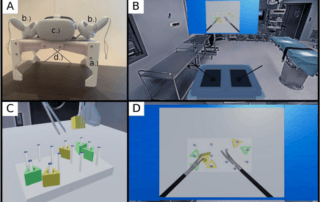
In a groundbreaking study published by Nature, researchers have unveiled a novel approach to surgical training using a low-fidelity virtual reality (VR) simulator enhanced with artificial intelligence (AI) for objective assessment. This pioneering method is poised to transform how medical students acquire laparoscopic skills, offering a cost-effective and efficient alternative to traditional training models.
AI in healthcare is projected to grow into a $188 billion industry worldwide by 2030, promising to revolutionize the field. From drug development to improved diagnostics, AI is already making significant strides, transforming medical practices and enhancing patient care efficiency.