The Shifting Landscape of Commercial Real Estate: A Glimpse into 2030
As we peer into the future of
commercial real estate (CRE), the horizon is painted with both challenges and opportunities. The
original article by Netguru explores the anticipated transformation of the
CRE market by 2030, driven by evolving work models, technological advancements, and sustainability imperatives.
Hybrid Work and Office Space Dynamics
The COVID-19 pandemic has indelibly altered work patterns, with many companies adopting a
hybrid model that reduces the demand for traditional office space. According to
Statista, the
CRE market is projected to grow at a CAGR of 2.96% from 2024 to 2028, reaching $133.5 trillion. However, a sobering prediction by
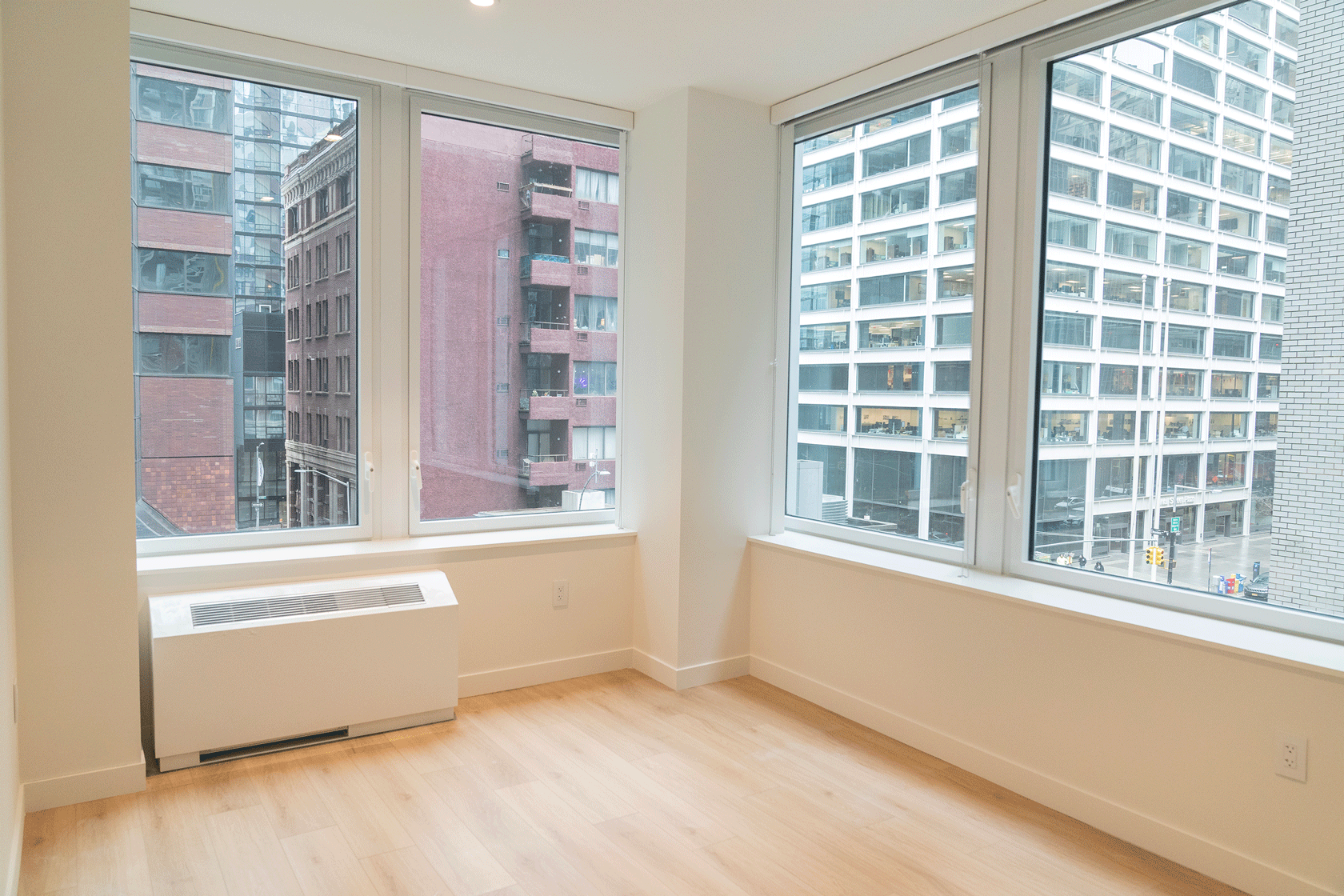
Fortune magazine highlights $800 billion worth of empty office space in major cities.
Economic Uncertainty and Interest Rates
The
CRE market is grappling with economic uncertainty, exacerbated by rising interest rates and inflation. In 2023, property values plummeted by $590 billion, with another $480 billion loss anticipated in 2024, as reported by
Fortune. Reports from
EY and CBRE attribute these challenges primarily to tighter regulations and stricter credit standards.
Proptech: The Game Changer
In this evolving landscape,
proptech emerges as a beacon of hope, promising to streamline
CRE operations. From IoT devices to AI-powered platforms, proptech is set to revolutionize the industry by automating mundane tasks and optimizing resource allocation.
GenAI applications like property description generators and chatbots are already making waves.
Vacancy Rates and the Hybrid Work Model
The
hybrid work model’s persistence means that office vacancy rates will remain elevated. According to
McKinsey, office attendance is only at 30% of pre-pandemic levels, and demand in cities like New York and San Francisco will stay subdued. However, the demand for high-quality office spaces could still thrive, as noted by
Tony Scacco of Riverside Investment & Development.
The Rise of Data Centers
While office demand wanes, the need for
data centers is set to soar. AI’s impact on industries necessitates increased computing power, driving demand for data center space. A
JLL report from Q1 2023 highlights $32 billion in AI-related investments, underscoring the potential for
CRE to recoup losses.
Sustainability and ESG Initiatives
Sustainability is no longer optional in
CRE. As energy prices rise, property owners must prioritize eco-friendly practices to cut costs and comply with regulations. A
Deloitte study warns that 60% of businesses lack the infrastructure to meet ESG standards, posing a significant challenge.
Conclusion
The
CRE market of 2030 will be shaped by hybrid work, technological innovation, and sustainability demands. As we navigate this new terrain, the ability to adapt and embrace change will be crucial for success.