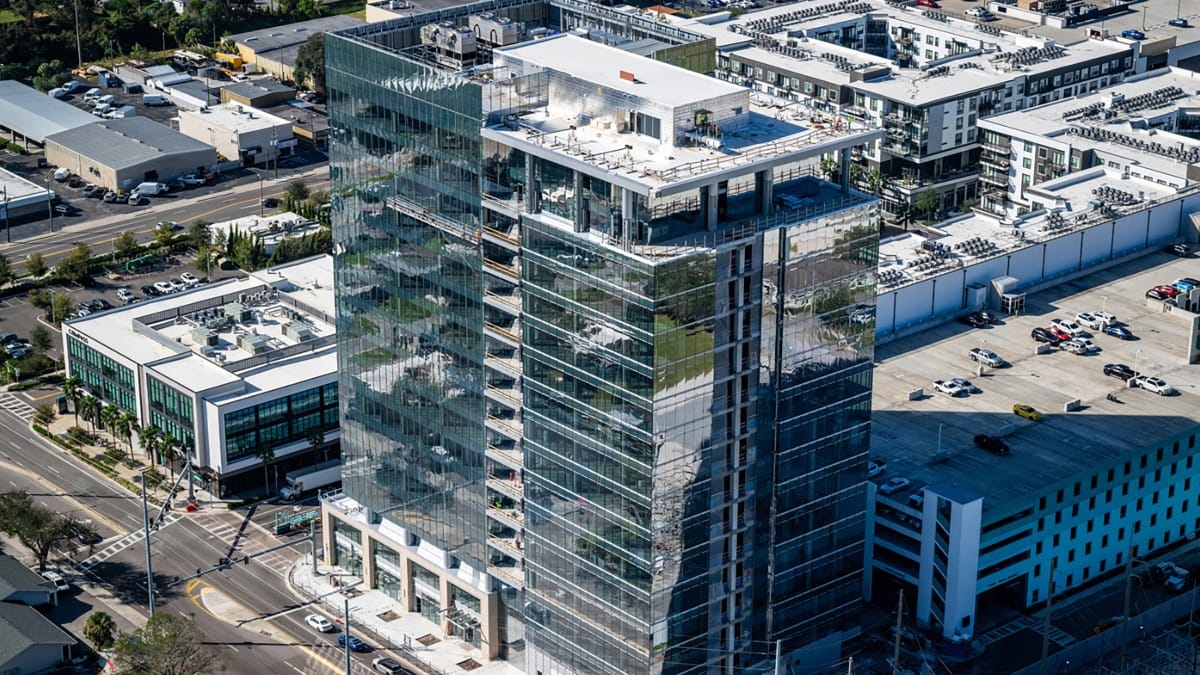
The Shifting Landscape of Commercial Real Estate: A Glimpse into 2030

As we peer into the future of commercial real estate (CRE), the horizon is painted with both challenges and opportunities. The original article by Netguru explores the anticipated transformation of the CRE market by 2030, driven by evolving work models, technological advancements, and sustainability imperatives.
Hybrid Work and Office Space Dynamics
The COVID-19 pandemic has indelibly altered work patterns, with many companies adopting a hybrid model that reduces the demand for traditional office space. According to Statista, the CRE market is projected to grow at a CAGR of 2.96% from 2024 to 2028, reaching $133.5 trillion. However, a sobering prediction by Fortune magazine highlights $800 billion worth of empty office space in major cities.
Economic Uncertainty and Interest Rates
The CRE market is grappling with economic uncertainty, exacerbated by rising interest rates and inflation. In 2023, property values plummeted by $590 billion, with another $480 billion loss anticipated in 2024, as reported by Fortune. Reports from EY and CBRE attribute these challenges primarily to tighter regulations and stricter credit standards.
Proptech: The Game Changer
In this evolving landscape, proptech emerges as a beacon of hope, promising to streamline CRE operations. From IoT devices to AI-powered platforms, proptech is set to revolutionize the industry by automating mundane tasks and optimizing resource allocation. GenAI applications like property description generators and chatbots are already making waves.
Vacancy Rates and the Hybrid Work Model
The hybrid work model’s persistence means that office vacancy rates will remain elevated. According to McKinsey, office attendance is only at 30% of pre-pandemic levels, and demand in cities like New York and San Francisco will stay subdued. However, the demand for high-quality office spaces could still thrive, as noted by Tony Scacco of Riverside Investment & Development.
The Rise of Data Centers
While office demand wanes, the need for data centers is set to soar. AI’s impact on industries necessitates increased computing power, driving demand for data center space. A JLL report from Q1 2023 highlights $32 billion in AI-related investments, underscoring the potential for CRE to recoup losses.
Sustainability and ESG Initiatives
Sustainability is no longer optional in CRE. As energy prices rise, property owners must prioritize eco-friendly practices to cut costs and comply with regulations. A Deloitte study warns that 60% of businesses lack the infrastructure to meet ESG standards, posing a significant challenge.

Conclusion

The CRE market of 2030 will be shaped by hybrid work, technological innovation, and sustainability demands. As we navigate this new terrain, the ability to adapt and embrace change will be crucial for success.


More Articles

Getting licensed or staying ahead in your career can be a journey—but it doesn’t have to be overwhelming. Grab your favorite coffee or tea, take a moment to relax, and browse through our articles. Whether you’re just starting out or renewing your expertise, we’ve got tips, insights, and advice to keep you moving forward. Here’s to your success—one sip and one step at a time!

Florida Judge Reopens Hundreds of Citizens Insurance Disputes, Triggering Statewide Arbitration Shake‑Up

A Leon County judge has ordered Florida’s administrative courts to restart arbitration on more than 400 stalled Citizens Insurance cases, reigniting a legal showdown over whether the state’s insurer of last resort can force policyholders out of traditional courtrooms. The ruling directly conflicts with a separate Hillsborough County injunction that called Citizens’ arbitration system “likely unconstitutional,” setting up a rare judicial clash that could reshape how Floridians fight denied or underpaid property claims.

Inhabit Unveils Cutting‑Edge AI, Fraud Prevention, and Compliance Tech Set to Transform Property Management in 2025

Inhabit has launched a powerful new suite of AI‑driven tools designed to modernize leasing, strengthen fraud prevention, and simplify compliance for property managers nationwide. From advanced leasing assistants and NYC‑specific regulatory AI to instant income verification and upcoming identity‑screening tech, these innovations aim to solve some of the industry’s toughest challenges. Real estate professionals—especially in multifamily—can expect faster operations, stronger safeguards, and a more efficient workflow as these technologies roll out.

The Coming Housing Surplus: How Baby Boomer Demographics Could Reshape the Real Estate Market

A growing body of demographic research suggests that today’s housing shortage may give way to a future surplus as millions of Baby Boomer–owned homes return to the market over the next two decades. With affordability at historic lows and inventory still tight, this long‑term shift could eventually cool prices and transform the landscape for real estate professionals. The analysis draws parallels to aging populations abroad and highlights why understanding demographic cycles is becoming essential knowledge for agents, brokers, and mortgage professionals preparing for the next era of the housing market.

Griffin Funding Elevates John Jones to SVP of Growth as Lender Targets $3B in Non‑QM Volume

Griffin Funding has appointed John Jones as Senior Vice President of Growth and EOS Integrator, a move aimed at accelerating the lender’s push toward $3 billion in annual non‑QM loan volume by 2030. Jones, previously the company’s fractional integrator and COO, will lead expansion strategies, operational optimization, and leadership development as the lender strengthens its position in the increasingly competitive non‑QM market.

Tampa Defies National Real Estate Slowdown With Nearly 20% Stronger Multifamily Returns

A new report shows Tampa outperforming the national real estate slowdown with a 6.5 percent annualized multifamily return, nearly 20 percent higher than the U.S. average. While many metros face oversupply or regulatory drag, Tampa’s balanced development pipeline, strong population growth, and investor confidence continue to fuel resilient performance heading into 2026.

Global Investors Are Re‑Entering the Market—and Their Next Moves Could Reshape 2026

A new Colliers outlook reveals that global capital is picking up momentum again, with investors shifting toward more active, hands‑on strategies. Data centers are surging, offices are rebounding, and value‑add plays like adaptive reuse are defining the next wave of opportunity. Regional markets—from the U.S. to APAC—are seeing renewed demand as fundraising spreads across continents and investors seek speed, control, and scale. This snapshot helps today’s real estate and finance professionals stay aligned with where global money is moving next.