The Waldorf Astoria’s Billion-Dollar Test: Is Commercial Real Estate Finally Recovering?
Few buildings in America carry the cultural weight of Manhattan’s Waldorf Astoria. Once home to icons like Cole Porter, Frank Sinatra, and Marilyn Monroe — and even the site of Grace Kelly’s famed engagement party — this legendary landmark is stepping back into the spotlight, this time as a potential catalyst for a commercial real estate revival.
A report from The Daily Upside reveals that the Chinese state-run company that owns the property may list it for sale. The last transaction occurred in 2014 when China’s Anbang Insurance Group purchased the hotel for $1.95 billion — then poured more than $1 billion above budget into renovations. Now, its rumored sale price could exceed a billion dollars, even if it means Beijing taking a substantial loss.
A Sale That Signals a Turning Market
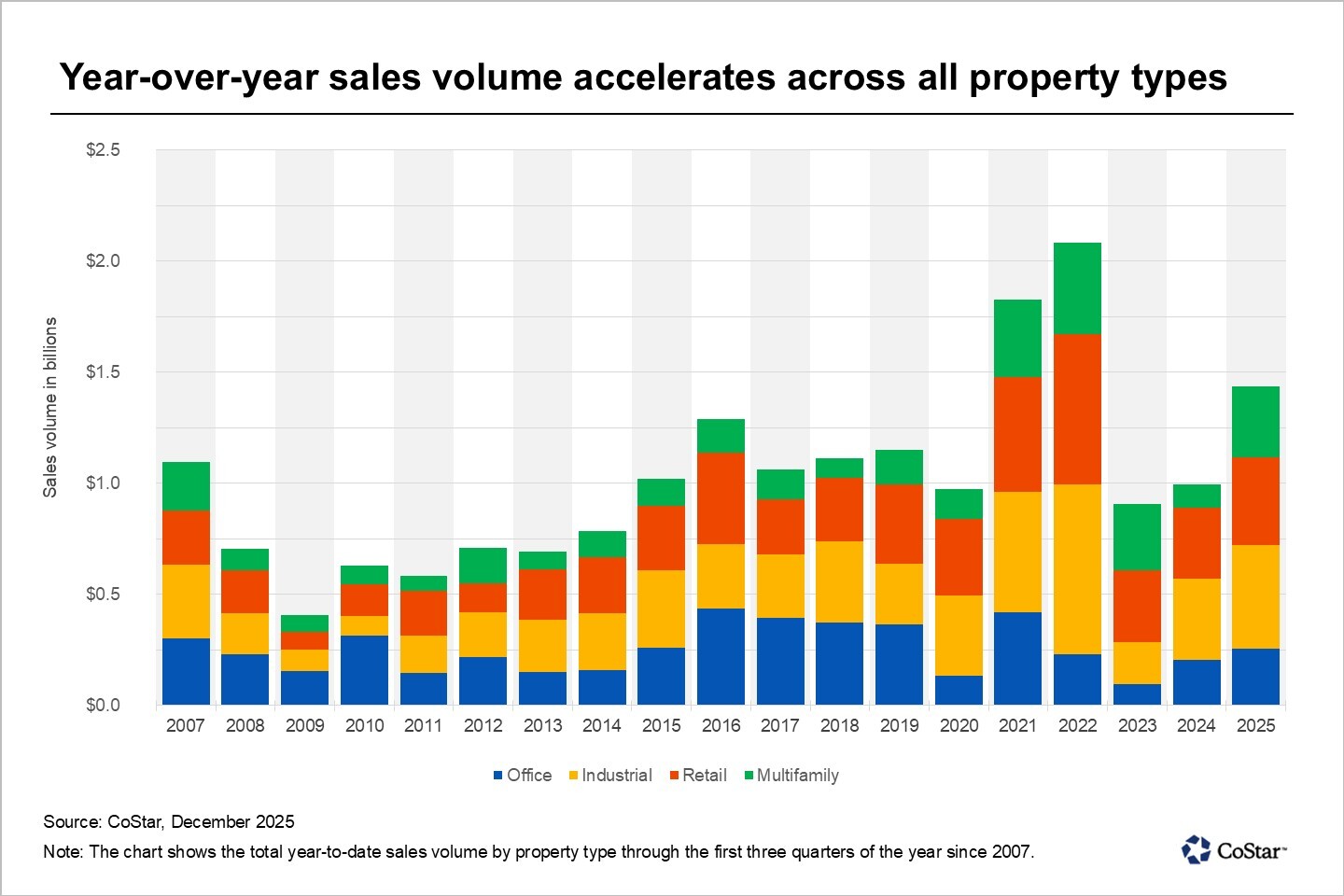
The timing is striking. After several turbulent years marked by inflation spikes, tariff battles, and even a 43-day government shutdown in late 2025, commercial real estate has been fighting uphill. But new indicators suggest a shift — perhaps even a resurgence.
Research from NAIOP showed that in 2025 alone, new commercial projects added $3.5 trillion to U.S. GDP. Firms such as JPMorgan and CBRE now forecast an increasingly optimistic 2026, hinting that momentum may finally be accelerating.
Market Optimism at a Glance
JPMorgan anticipates a rise in transactions in 2026, fueled by stronger fundamentals and renewed capital stability.
CBRE predicts commercial real estate investment will surge 16% to reach $562 billion — nearly back to pre-pandemic levels.
Automation Anxiety in Real Estate Services
However, not all areas of the industry are celebrating. Service-sector giants like CBRE, JLL, Hudson Pacific Properties, and Cushman & Wakefield are wrestling with investor concerns over AI-driven disruption. As artificial intelligence continues reshaping industries from software to law, the ripple is now hitting brokerage operations, staffing models, and property valuation services.
What This Means for Today’s and Tomorrow’s Professionals
Whether you’re in real estate, mortgage lending, construction, or finance, the Waldorf’s highly anticipated sale is more than a flashy headline — it’s a preview of how capital will move, how properties will be evaluated, and how competitive the market may become in the next cycle. Staying informed is no longer optional; it’s essential.
Institutions like Cameron Academy help professionals stay licensed, educated, and ahead of disruptive trends across all 50 states. With the market on the cusp of a new phase, now is the perfect time to strengthen your credentials or explore new opportunities in real estate and beyond.
To explore the full reporting behind this story, visit The Daily Upside for more insights and ongoing coverage.
More Articles
Getting licensed or staying ahead in your career can be a journey—but it doesn’t have to be overwhelming. Grab your favorite coffee or tea, take a moment to relax, and browse through our articles. Whether you’re just starting out or renewing your expertise, we’ve got tips, insights, and advice to keep you moving forward. Here’s to your success—one sip and one step at a time!
In 2026, financial advisors are no longer just experimenting with AI — they’re relying on it. Once confined to back-office duties, AI now supports meeting prep, portfolio analysis, and even early-stage financial planning. Advisors say the tech is strengthening client relationships by freeing them from administrative overload, though entry-level roles like paraplanners may feel the squeeze as automation accelerates.
Cybercriminals are weaponizing AI to launch highly convincing email scams and system breaches across the mortgage industry, overwhelming lenders and servicers whose cybersecurity measures can’t keep up. With major companies already hit and regulation lagging behind, experts warn the sector—now considered critical infrastructure—must rapidly upgrade protections, collaborate on threat intelligence, and improve AI governance before the risks escalate further.
Escrow payments are quietly surging across the country as property taxes and insurance premiums spike—pushing many homeowners toward delinquencies and even foreclosure. New data from Cotality shows the sharpest increases hitting the South and Midwest, with Florida among the hardest‑hit states. Even with fixed mortgage rates, rising escrow requirements are driving monthly payments higher and threatening affordability heading into 2026.
Milwaukee entered 2025 with renewed momentum, posting its strongest commercial real estate sales volume in three years. After a period of uncertainty and high capital costs, investors are returning with a sharper focus on quality assets, realistic pricing, and reliable cash flow. Activity is increasing across industrial, office, multifamily, and retail sectors, signaling a broad-based recovery fueled by stabilizing interest rates and improved market confidence.
As 2026 approaches, the title insurance industry is navigating a complex mix of market recovery, rising fraud threats, and sweeping regulatory changes. Industry leaders say the path forward centers on smarter technology, leaner operations, and stronger support for title agents. With AI-driven workflows, enhanced fraud prevention, and new compliance demands—including FinCEN’s expanded Geographic Targeting Orders—companies like Stewart and First American are reshaping how title work gets done. For real estate and mortgage professionals, the year ahead promises more automation, heightened standards, and major opportunities for those who stay ahead of the curve.
The real estate industry is undergoing a major transformation in 2025 as advancements in AI, proptech, blockchain, and data intelligence redefine how properties are marketed, valued, financed, and experienced. From instant digital valuations and immersive virtual tours to tokenized investments and predictive analytics, technology is reshaping every stage of the real estate lifecycle. Professionals who embrace these innovations—while maintaining the human expertise clients still rely on—will lead the next era of the industry.