Top Commercial Real Estate Issues to Watch in 2026
Economic uncertainty, rapid technological innovation and shifting population patterns are setting the stage for a pivotal year in commercial real estate. The latest research from the Counselors of Real Estate, unveiled at NAR NXT by global chair John Hentschel, reveals ten major issues poised to shape strategy, investment and opportunity in 2026.
This analysis from Florida Realtors and NAR delivers clarity and caution for the industry. If you work in real estate, mortgage, finance or related fields, now is an ideal moment to sharpen your expertise. And if you’re ready to elevate your credentials, Cameron Academy continues supporting professionals across all 50 states with forward‑thinking training and licensing education.
1. Fiscal & Monetary Policy
The U.S. economy remains surprisingly resilient despite high debt levels and global uncertainty. Employment, inflation and consumer activity show strength, but commercial property—especially for‑sale housing and B/C class offices—faces uneven performance.
Takeaway: Real estate is likely to remain a stabilizing force unless major policy changes shift the landscape.
2. Portfolio Risk
Risk evaluation now stretches far beyond building condition. Investors weigh financing structures, climate exposure, insurance volatility, regulation and even indoor environmental quality. AI, drones and climate modeling are sharpening due diligence.
Takeaway: Risk and resiliency are emerging as core skill sets in commercial real estate.
3. The Changing Nature of Real Estate
Cap rate compression no longer guarantees profit. Operators must return to fundamentals: efficient operations, prime location and sustained tenant satisfaction.
Takeaway: Operational excellence is now the heart of asset performance.
4. Capital Sources & Flows
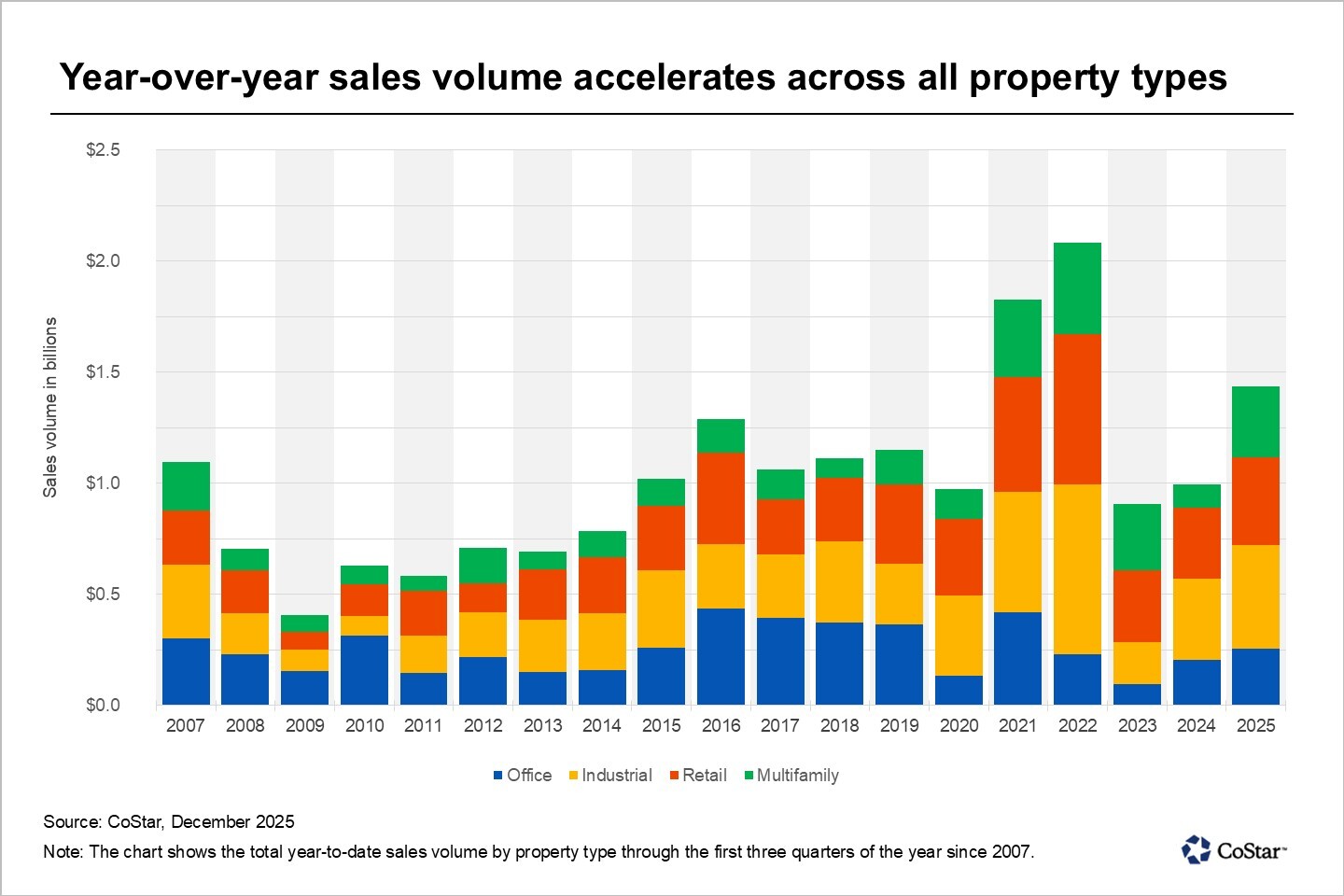
Transaction slowdowns challenge fundraising efforts, and foreign investors remain cautious. Capital is flowing toward infrastructure—especially energy and digital—intensifying competition for CRE investment.
Takeaway: Investors will demand deeper justification for long‑term value and liquidity.
5. Technology Transformation & AI
AI is reshaping underwriting, improving building performance and driving data‑center growth. Yet fragmented systems make unified data access difficult.
Takeaway: Adaptation is mandatory—those resisting innovation will fall behind.
6. The Future of Real Estate: The Bayesian Shift
AI enables constantly updating, data‑rich decision-making—moving beyond static formulas into dynamic strategy.
Takeaway: Smart, iterative thinking will define the next era of real estate leadership.
7. Global Chess: Confidence & Uncertainty
Fluctuating rates, tariffs and geopolitics have increased hesitation. Even promising opportunities now require slower, more strategic analysis.
Takeaway: Expertise and education are becoming non‑negotiable assets.
8. Housing Attainability
Shortages and rising costs strain nearly every market. Many states need tens of thousands of new units—yet development pace lags behind demand.
Takeaway: True progress demands cooperation between public and private sectors.
9. Pricing Risk
With nearly $1 trillion in loans maturing between 2025–2027, pressure builds on both private and bank debt markets. Distressed assets remain slower to appear than expected.
Takeaway: The market may stabilize in 2028, when pricing gaps shrink and buyers re‑enter.
10. Flow of People
Population growth is cooling, household formation is slowing and immigration remains below normal levels. Developers can no longer rely on automatic demand.
Takeaway: Markets attracting younger workers will offer the strongest long‑term stability.
Professional Insight: For real estate agents, brokers and investors, these trends highlight why ongoing education matters more than ever. Cameron Academy provides licensing and advanced training across real estate, mortgage, insurance, finance and more—empowering professionals to stay ahead of the curve.
© 2025 National Association of Realtors®