In today’s digital era, the rapid advancement in technologies such as digital currencies, blockchain, and the burgeoning fintech sector are transforming the financial landscape. Coupled with increasing cybersecurity threats and heightened customer expectations for personalized services, these changes are leading to increased competition and complexity.
Gartner Finance, through a survey of 250 CFOs and finance leaders during “The Top Priorities for CFOs in 2025” webinar, uncovered that slower top-line growth and talent retention are perceived as the most pressing challenges for enterprise performance by 2025. The evolving financial landscape necessitates CFOs to proficiently communicate data-driven insights and adopt new technologies.
According to Alexander Bant, Chief of Research at Gartner Finance practice, CFOs are endeavoring to streamline their finance functions to finance two emerging skill sets needed for the future. The ongoing digital integration across various sectors has led to a shortage of specialized talent in data analytics, technology, and finance, thereby exacerbating retention issues for CFOs.
The pandemic-driven transition to remote and hybrid work models has intensified the competition for top talent. To combat these challenges, CFOs are urged to devise strategies to improve employee development, work-life balance, engagement, and compensation.
Key Survey Insights on Enterprise Performance Challenges in 2025
Slower top-line growth: 19%
Talent retention: 18%
Strategic alignment and execution gaps: 17%
Rising costs: 15%
Data quality: 14%
AI strategy and implementation: 9%
Political and regulatory shifts: 8%
To safeguard top-line growth, CFOs are advised to embrace five core practices outlined by Gartner:
Cycle discipline ensures resilience during market fluctuations.
Eradicating growth anchors that inadvertently divert resources.
Cultivating an environment that fosters overperformance.
Balancing cost-cutting measures without stifling growth.
Simplifying product offerings to enhance efficiency.
Emphasizing revenue innovation and workforce development is crucial for CFOs to navigate future challenges. Organizations are encouraged to pursue digital transformation, data-driven decision-making, and foster a culture of innovation to remain adaptive and competitive.
As highlighted by Arjun Mahajan, Chief of Client Partnerships at AND Digital, attracting talent skilled in data analysis enables finance teams to streamline functions and generate actionable insights. Financial institutions must adopt a people-centric innovation approach, focusing on equipping staff with essential digital skills to withstand market pressures and enhance overall productivity.
Explore the latest edition of FinTech Magazine and join the conversation at our global conference series, FinTech LIVE. Secure your tickets and participate in upcoming events to stay ahead in the rapidly evolving financial sector.
More Articles
Getting licensed or staying ahead in your career can be a journey—but it doesn’t have to be overwhelming. Grab your favorite coffee or tea, take a moment to relax, and browse through our articles. Whether you’re just starting out or renewing your expertise, we’ve got tips, insights, and advice to keep you moving forward. Here’s to your success—one sip and one step at a time!
In 2026, financial advisors are no longer just experimenting with AI — they’re relying on it. Once confined to back-office duties, AI now supports meeting prep, portfolio analysis, and even early-stage financial planning. Advisors say the tech is strengthening client relationships by freeing them from administrative overload, though entry-level roles like paraplanners may feel the squeeze as automation accelerates.
Cybercriminals are weaponizing AI to launch highly convincing email scams and system breaches across the mortgage industry, overwhelming lenders and servicers whose cybersecurity measures can’t keep up. With major companies already hit and regulation lagging behind, experts warn the sector—now considered critical infrastructure—must rapidly upgrade protections, collaborate on threat intelligence, and improve AI governance before the risks escalate further.
Escrow payments are quietly surging across the country as property taxes and insurance premiums spike—pushing many homeowners toward delinquencies and even foreclosure. New data from Cotality shows the sharpest increases hitting the South and Midwest, with Florida among the hardest‑hit states. Even with fixed mortgage rates, rising escrow requirements are driving monthly payments higher and threatening affordability heading into 2026.
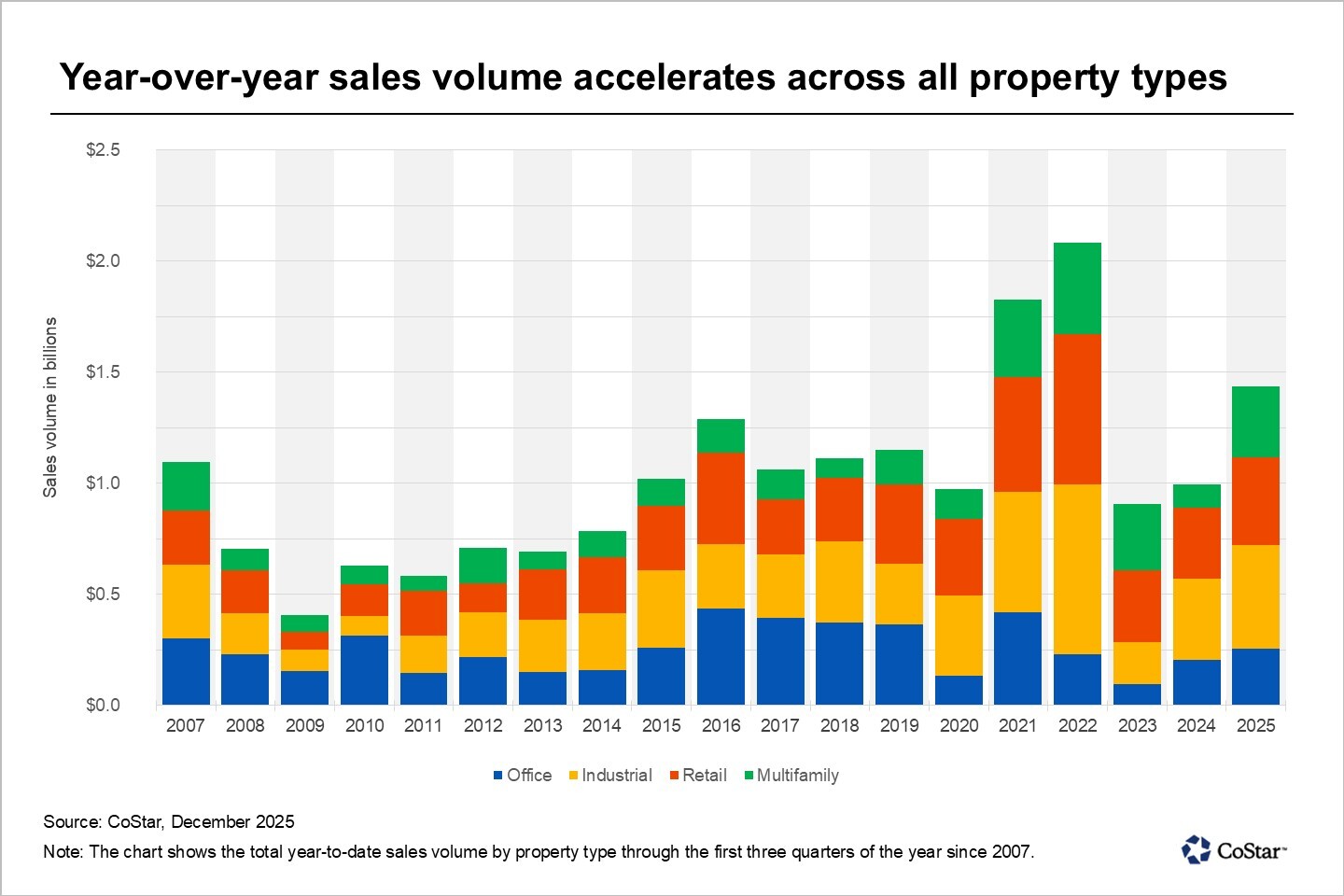
Milwaukee entered 2025 with renewed momentum, posting its strongest commercial real estate sales volume in three years. After a period of uncertainty and high capital costs, investors are returning with a sharper focus on quality assets, realistic pricing, and reliable cash flow. Activity is increasing across industrial, office, multifamily, and retail sectors, signaling a broad-based recovery fueled by stabilizing interest rates and improved market confidence.
As 2026 approaches, the title insurance industry is navigating a complex mix of market recovery, rising fraud threats, and sweeping regulatory changes. Industry leaders say the path forward centers on smarter technology, leaner operations, and stronger support for title agents. With AI-driven workflows, enhanced fraud prevention, and new compliance demands—including FinCEN’s expanded Geographic Targeting Orders—companies like Stewart and First American are reshaping how title work gets done. For real estate and mortgage professionals, the year ahead promises more automation, heightened standards, and major opportunities for those who stay ahead of the curve.
The real estate industry is undergoing a major transformation in 2025 as advancements in AI, proptech, blockchain, and data intelligence redefine how properties are marketed, valued, financed, and experienced. From instant digital valuations and immersive virtual tours to tokenized investments and predictive analytics, technology is reshaping every stage of the real estate lifecycle. Professionals who embrace these innovations—while maintaining the human expertise clients still rely on—will lead the next era of the industry.