UAE’s Vision for Desert Expansion and Urban Innovation
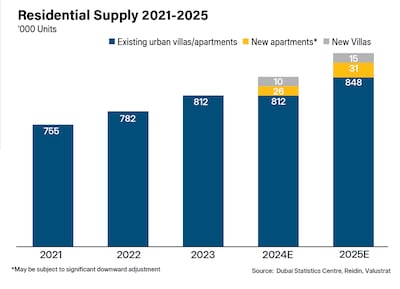
In a bold move to accommodate its rapidly growing population, the UAE is set to transform its expansive desert landscapes into thriving residential communities. This strategic development aligns with the nation’s commitment to harnessing natural resources and implementing the ’15-minute city’ model. This urban planning concept aims to make essential amenities accessible within a short walk, enhancing city life and promoting climate resilience.
Population Surge and Urban Planning
The population of Dubai is projected to nearly double by 2040, driven by its dynamic economy and global connectivity. According to the Dubai Statistics Centre, approximately 25,700 people relocated to the city in the first quarter of 2024. Other cities, including Abu Dhabi, Ras Al Khaimah, and Sharjah, are also experiencing increased migration.
Prof Carlos Moreno from IAE Paris Sorbonne University emphasizes the need for innovative urban planning to address the challenges and opportunities this growth presents. He envisions ‘proxilience,’ a concept promoting resilience through proximity and accessibility to community facilities.
Optimism at Big 5 Global
At the recent Big 5 Global event in Dubai, industry leaders expressed optimism about the UAE’s demographic potential. Discussions highlighted the importance of integrating residential, commercial, and recreational spaces to enhance quality of life.
As central areas in Abu Dhabi and Dubai become more crowded, developers are turning to peripheral lands for expansion, similar to suburban growth in North American cities. Areas like Al Ain Road and Dubai South are evolving from city fringes to self-sufficient communities.
Commercial real estate experts, including Jay French and Jack Sellers, predict these areas will become vibrant communities fueled by off-plan purchases, while traditional prime real estate remains valuable.
Building Smarter for the Future
The construction sector faces increased pressure to innovate. Jay French advocates for using steel framing, a sustainable method suitable for modular construction, to meet the demands of rapid urban expansion.
Despite the overall optimism, experts caution that maintaining inclusivity and infrastructure development is crucial for sustaining quality of life in growing urban spaces. Balancing economic progress with community well-being remains a challenge for the UAE’s urban planners.
More Articles
Getting licensed or staying ahead in your career can be a journey—but it doesn’t have to be overwhelming. Grab your favorite coffee or tea, take a moment to relax, and browse through our articles. Whether you’re just starting out or renewing your expertise, we’ve got tips, insights, and advice to keep you moving forward. Here’s to your success—one sip and one step at a time!
Lofty has launched the industry’s first Agentic AI Operating System, a breakthrough platform that doesn’t just follow commands—it plans, executes, evaluates, and adapts entire workflows on its own. Designed specifically for real estate professionals, the system acts like an AI “orchestra,” coordinating specialized agents for lead qualification, marketing, SEO, transaction management, website creation, and more. With leaders calling this a major leap beyond traditional tools, Lofty AOS signals a new era where agents can focus on relationships and closings while AI handles the heavy lifting.
Florida’s insurance landscape is finally showing signs of stability as private insurers return and Citizens Property Insurance drops below 400,000 policies. Insurance Commissioner Michael Yaworsky says reforms are working, but homeowners may not feel relief yet as inflation and rebuilding costs keep premiums high. With transparency improvements, mitigation credits, and new AI regulations on the horizon, Florida aims to avoid another insurance crisis while keeping the market competitive and consumer‑friendly.
Mortgage rates just hit their lowest point since 2022, closing January at 6.18% and giving buyers and industry professionals a rare moment of relief. But while the Federal Reserve continues to pause rate hikes, economists warn that significant declines are unlikely. Most forecasts show rates hovering near 6% through 2026, with political uncertainty and inflation keeping markets volatile. For now, stability may be the best we get — and even that could be temporary.
Propy, a fast-growing real estate tech firm blending AI automation with blockchain-backed transaction systems, has secured a major $100 million credit facility to accelerate nationwide title company consolidation. The funding aims to modernize the traditionally slow, paper-heavy closing process, offering real estate professionals a faster, more secure, and more transparent experience. As automation reshapes the industry, staying educated on emerging technology will be essential for agents, brokers, mortgage professionals, and investors looking to stay competitive.
Escrow payments in Florida have jumped an astonishing 70% since 2019, far outpacing the national average and now consuming nearly 38% of a typical monthly mortgage payment. Surging insurance premiums and rising property taxes are driving the increase, reshaping affordability for homeowners and pricing out many would‑be buyers.
After losing their Altadena home in the LA wildfires, Jessica and Matt Conkle expected State Farm to help them rebuild. Instead, they faced months of delays, low valuations, and stalled claims — a struggle shared by nearly 80 percent of wildfire survivors. As insurers pull out of high‑risk areas and premiums soar, the crisis is reshaping homeownership, tightening mortgage approvals, and straining government safety nets. What’s happening in California is rapidly becoming a national issue, with real estate, mortgage, and insurance professionals on the front lines of a system under unprecedented pressure.