Unlocking Business Value: Navigating the AI Landscape

The journey to establish a return on investment (ROI) from AI projects can be as complex as it is rewarding. As organizations continue to invest in generative AI, the challenge lies in translating hype into tangible business value. According to a recent CIO article, focusing on specific metrics, aligning data operations with revenue-centric tasks, and enhancing employee engagement with AI are key strategies to maximize the potential of these technologies.

The AI Hype Cycle: A Double-Edged Sword?

While the AI hype has fueled investments, Gartner’s recent analysis has placed generative AI at the “peak of inflated expectations,” suggesting a potential dip into the “trough of disillusionment” is imminent. Despite this, the AI honeymoon isn’t over yet. A report from AI at Wharton indicates that 72% of enterprises anticipate increased budgets for AI over the next year, though growth is expected to slow thereafter.

Productivity and Beyond: The Real Impact of AI

Many early successes with generative AI have focused on boosting productivity. For instance, developers leveraging GitHub Copilot have reported a 26% increase in task completion. However, for CIOs, the challenge remains to justify continued investments by demonstrating AI’s broader strategic impacts, especially on the bottom line.

Strategic Metrics: The Key to Success

To unlock AI’s potential, CIOs need to identify and focus on metrics that align with core business objectives. As Shaown Nandi from AWS suggests, setting clear, measurable goals is crucial. Whether it’s reducing call center escalation rates or enhancing customer communication, pinpointing these metrics can provide a roadmap for AI success.

Data Strategies: The Backbone of AI Initiatives

Improving data quality and integration is vital for marketing departments aiming to track the financial impact of AI. As noted by Michelle Suzuki, CMO of Glassbox, a seamless partnership between CIOs and CMOs is essential to enhance decision-making capabilities. This involves prioritizing proactive data governance and embracing DataOps practices.

Call Centers and Service Operations: A New Frontier

AI’s role in support services is transformative. By expediting operations and improving customer satisfaction, AI can significantly enhance service desk efficiencies. As Ram Ramamoorthy from ManageEngine highlights, AI-driven knowledge graphs and intelligent routing are game-changers in this space.

Employee Experience: The Human Element

As AI reshapes work environments, CIOs must also consider its impact on employee well-being. A report by Deloitte reveals that only 20% of organizations are well-prepared for the talent considerations associated with AI adoption. This underscores the need for effective change management strategies to ensure a smooth transition.
In conclusion, while the path to achieving ROI from AI investments is fraught with challenges, the potential rewards make it a journey worth undertaking. By focusing on strategic metrics, aligning data strategies, and fostering a supportive environment for employees, organizations can harness AI’s full potential.


More Articles

Getting licensed or staying ahead in your career can be a journey—but it doesn’t have to be overwhelming. Grab your favorite coffee or tea, take a moment to relax, and browse through our articles. Whether you’re just starting out or renewing your expertise, we’ve got tips, insights, and advice to keep you moving forward. Here’s to your success—one sip and one step at a time!

How AI Is Transforming Financial Advisors’ Daily Routines in 2026

In 2026, financial advisors are no longer just experimenting with AI — they’re relying on it. Once confined to back-office duties, AI now supports meeting prep, portfolio analysis, and even early-stage financial planning. Advisors say the tech is strengthening client relationships by freeing them from administrative overload, though entry-level roles like paraplanners may feel the squeeze as automation accelerates.

AI Is Outpacing the Mortgage Industry’s Cyber Defenses as Attacks Surge

Cybercriminals are weaponizing AI to launch highly convincing email scams and system breaches across the mortgage industry, overwhelming lenders and servicers whose cybersecurity measures can’t keep up. With major companies already hit and regulation lagging behind, experts warn the sector—now considered critical infrastructure—must rapidly upgrade protections, collaborate on threat intelligence, and improve AI governance before the risks escalate further.

Hidden Housing Costs May Become 2026’s Most Dangerous Budget Buster

Escrow payments are quietly surging across the country as property taxes and insurance premiums spike—pushing many homeowners toward delinquencies and even foreclosure. New data from Cotality shows the sharpest increases hitting the South and Midwest, with Florida among the hardest‑hit states. Even with fixed mortgage rates, rising escrow requirements are driving monthly payments higher and threatening affordability heading into 2026.

Milwaukee’s Commercial Real Estate Market Is Turning the Corner

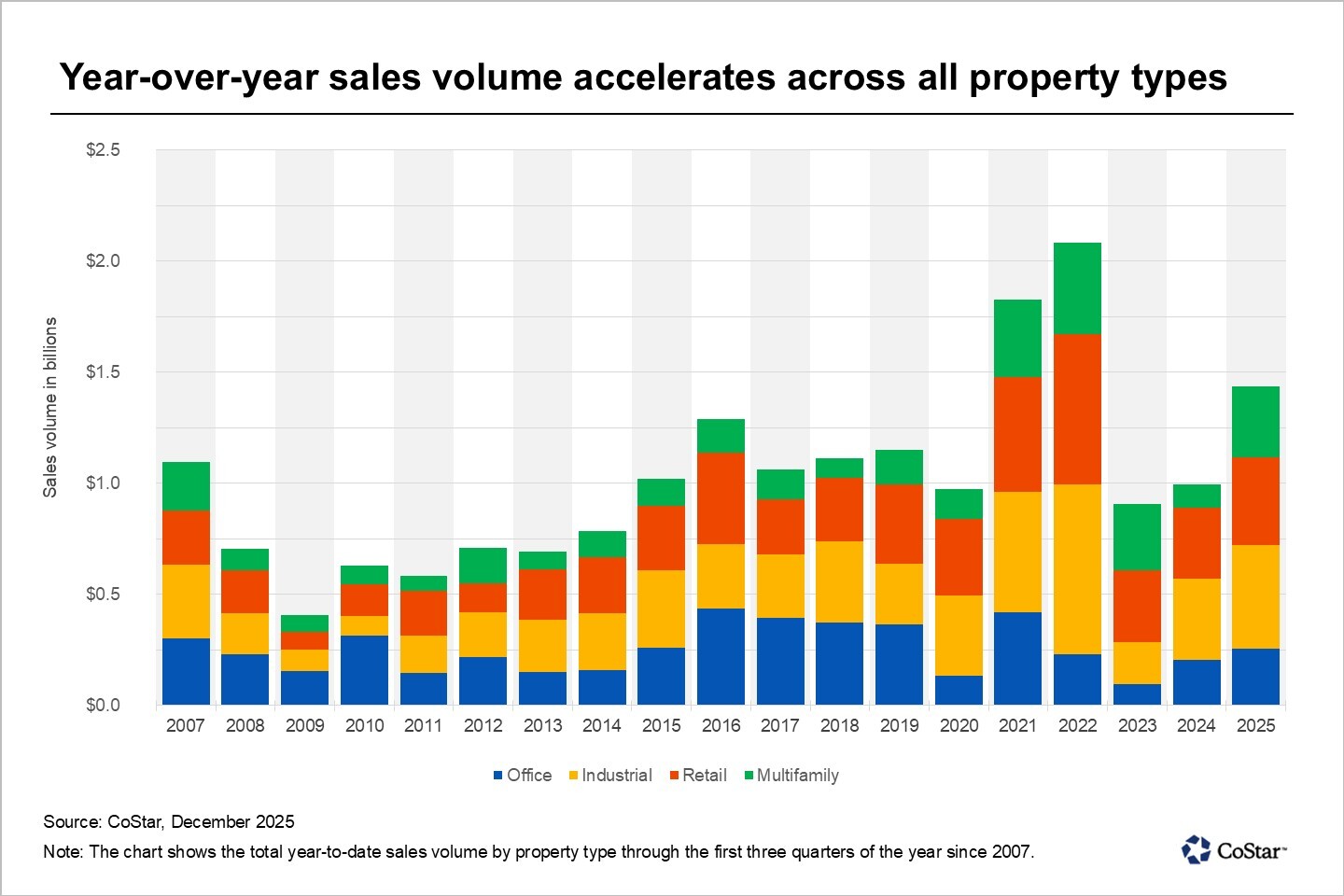
Milwaukee entered 2025 with renewed momentum, posting its strongest commercial real estate sales volume in three years. After a period of uncertainty and high capital costs, investors are returning with a sharper focus on quality assets, realistic pricing, and reliable cash flow. Activity is increasing across industrial, office, multifamily, and retail sectors, signaling a broad-based recovery fueled by stabilizing interest rates and improved market confidence.

Title Insurance Leaders Lean Into Tech, Efficiency, and Resilience for 2026

As 2026 approaches, the title insurance industry is navigating a complex mix of market recovery, rising fraud threats, and sweeping regulatory changes. Industry leaders say the path forward centers on smarter technology, leaner operations, and stronger support for title agents. With AI-driven workflows, enhanced fraud prevention, and new compliance demands—including FinCEN’s expanded Geographic Targeting Orders—companies like Stewart and First American are reshaping how title work gets done. For real estate and mortgage professionals, the year ahead promises more automation, heightened standards, and major opportunities for those who stay ahead of the curve.

Technology and the Future of Real Estate: Innovation Reshaping 2025

The real estate industry is undergoing a major transformation in 2025 as advancements in AI, proptech, blockchain, and data intelligence redefine how properties are marketed, valued, financed, and experienced. From instant digital valuations and immersive virtual tours to tokenized investments and predictive analytics, technology is reshaping every stage of the real estate lifecycle. Professionals who embrace these innovations—while maintaining the human expertise clients still rely on—will lead the next era of the industry.