In an intriguing exploration of memory, the University of Cambridge’s Memory Lab is shedding light on the intricate workings of our minds. This initiative, led by Professor Jon Simons, delves into the various facets of memory, offering insights into how we can enhance and preserve our cognitive abilities.
“When anxious thoughts flood our minds, they compete for space in our working memory and impair our ability to recall long-term memories. If we can find ways to reduce stress and anxiety, our memory can often bounce back.”
Jon Simons
What exactly is a memory? According to Simons, it’s a complex interplay of brain activities, a skill to hone, and a blueprint for future actions. The Memory Lab invites volunteers to engage in tasks that range from online exercises to MRI scans, all in the quest to decode memory’s mysteries.
If Memory Serves
Memories are biochemical changes that span the brain’s landscape, influenced by factors such as whether a memory is being encoded or reconstructed. The hippocampus plays a crucial role in forming new memories, but long-term storage involves multiple cortical areas.
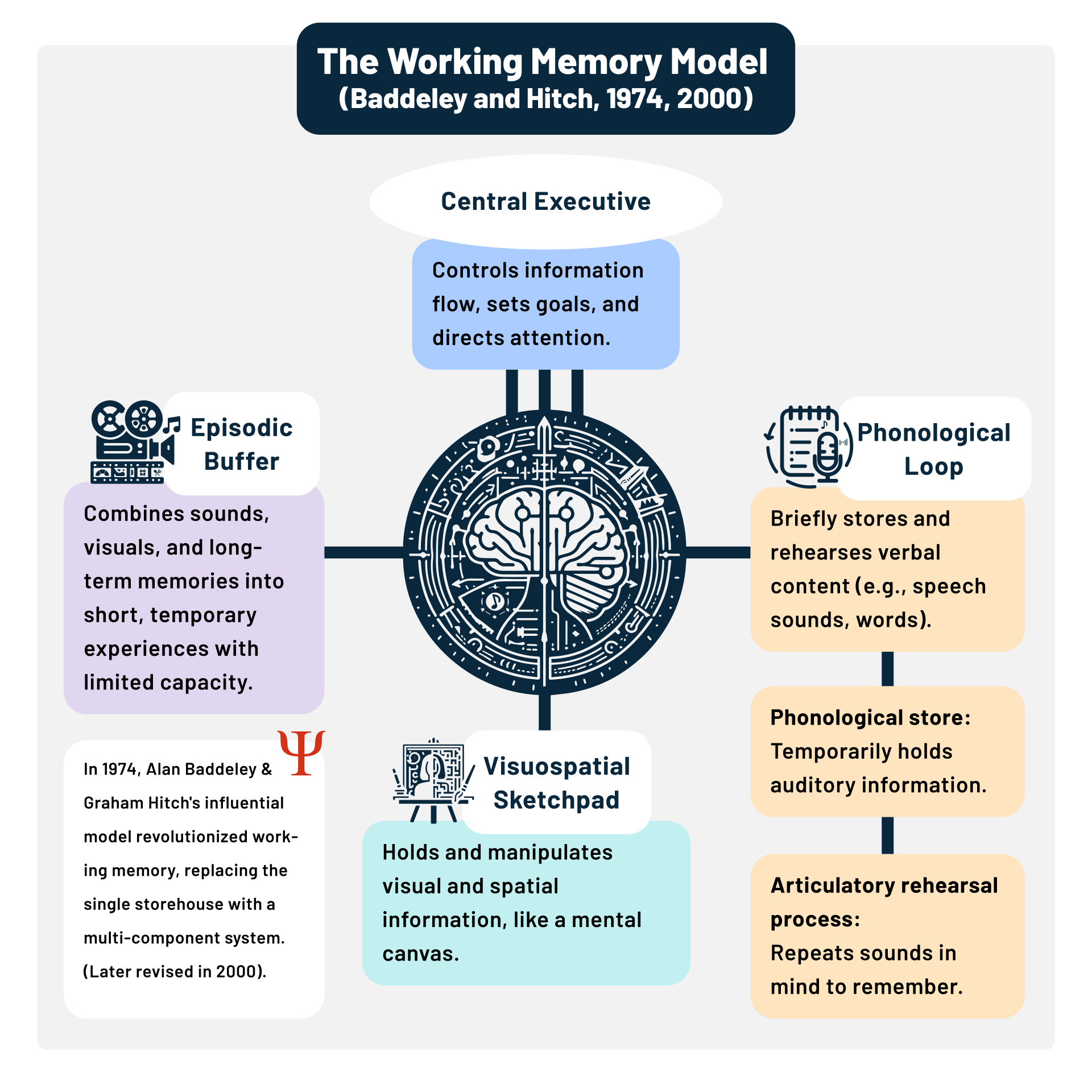
Short-term memory, with its fleeting nature, is limited to about 7 items, as posited by Harvard’s George Miller. Alan Baddeley, a former director at Cambridge’s MRC Applied Psychology Unit, introduced a ‘working memory’ model that distinguishes between different types of short-term memories.
Long-term memories, on the other hand, allow us to ‘mentally time-travel,’ reliving past events with vivid sensory details. Research suggests that memory reconstruction is a creative process influenced by biases and emotions.
Cambridge’s Long Memory
Cambridge’s memory research legacy includes the work of Sir Frederic Bartlett, whose experiments demonstrated how cultural biases shape our recollections. His famous ‘war of the ghosts’ study revealed how students altered story elements to fit their familiar world.
Another pivotal figure, Brenda Milner, studied patient Henry Molaison, whose case highlighted the hippocampus’s role in memory formation. Her work transformed our understanding of memory.
Peak Performance
Simons, alongside Professor Simon Baron-Cohen, is investigating the UK’s top memorisers to uncover the secrets of their exceptional abilities. Preliminary findings suggest that a psychological trait called ‘systemising’ might be linked to superior memory performance.
For those not naturally inclined to ‘systemise,’ there are strategies to boost memory. Mnemonics, for example, involve spatial thinking, akin to the ‘mind palace’ technique used by ancient orators.
Jon Simons advises making memory triggers distinctive, as this helps the brain differentiate between memories. The hippocampus’s role in pattern separation underscores the importance of creating unique memory cues.
The COVID-19 pandemic’s ‘brain fog’ phenomenon illustrates how routine experiences can blur memories. To enrich our lives, we should seek varied experiences and manage stress, as anxiety can reduce cognitive abilities.
For those eager to delve deeper into memory research, Cambridge offers opportunities to participate in studies. To learn more about enhancing mental resilience and combating anxiety, explore resources like Brain Boost by Dr. Barbara Sahakian and Dr. Christelle Langley, or Dr. Olivia Remes’s techniques.
To participate in Memory Lab studies, get in touch.
“`
More Articles
Getting licensed or staying ahead in your career can be a journey—but it doesn’t have to be overwhelming. Grab your favorite coffee or tea, take a moment to relax, and browse through our articles. Whether you’re just starting out or renewing your expertise, we’ve got tips, insights, and advice to keep you moving forward. Here’s to your success—one sip and one step at a time!
Lofty has unveiled Lofty AOS, an autonomous AI operating system built to transform how real estate brokerages manage daily operations. Unlike traditional AI tools that wait for prompts, Lofty AOS uses coordinated AI agents to proactively run workflows—from lead management to social media posting—allowing agents to focus on revenue‑producing activities. Designed for control, compliance and seamless integration, this new system signals a major shift in how real estate professionals scale productivity in an increasingly tech‑driven market.
A national survey shows a major shift in how Americans approach estate planning, with 41% now turning to financial advisors before attorneys. Consumers increasingly expect advisors to guide not only wealth transfer, but also values, family communication, and preparing the next generation — creating a powerful opportunity for professionals across real estate, mortgage, insurance, and finance.
A new CBRE survey shows a strong surge in investor optimism as the commercial real estate market begins to stabilize after two turbulent years. Nearly all investors expect to buy the same or more property in 2026, with over half planning to increase their capital allocations. Dallas remains the nation’s top investment market, multifamily leads all asset classes, and moderate‑risk value‑add strategies dominate as confidence and capital return to the sector.
Conversational AI is changing the way real estate professionals create and market listing photos. Instead of waiting for perfect conditions or hiring photo editors, agents and property managers can now brighten rooms, remove clutter, change wall colors, or even virtually stage a space using simple text prompts. The technology helps listings hit the market faster, gives renters and buyers clearer first impressions, and supports more honest, transparent marketing through features like before‑and‑after sliders and edit labels. As AI becomes an essential skill in real estate and related industries, tools like these are redefining how professionals communicate a property’s true potential.
Artificial intelligence is transforming Des Moines’ finance and insurance sectors—home to giants like Wells Fargo, Principal, Nationwide, and Athene. With AI taking over routine quantitative work, the metro faces both economic disruption and new possibilities. While entry‑level roles may shrink, experts say human talent will shift toward strategy, client guidance, and innovation. The ripple effects extend far beyond office walls, raising questions about community vitality, future leadership pipelines, and how today’s professionals can stay competitive through upskilling and ongoing education.
The property management sector is undergoing rapid transformation driven by AI, IoT building systems, automation, and digital platforms. A new report from The Business Research Company projects the market will hit $33.93 billion by 2030, highlighting major shifts such as remote oversight tools, predictive maintenance, and cloud‑based solutions. Industry giants like IBM, Yardi, AppFolio, and JLL are leading the charge, while consolidation moves—such as MCB Real Estate’s acquisition of Pinkard Properties—signal continued expansion. Vacation rental tech is also accelerating, with unified platforms like Streamline One redefining short‑term rental operations. This evolving landscape underscores the growing need for skilled, tech‑savvy real estate professionals.