In an intriguing exploration of memory, the University of Cambridge’s Memory Lab is shedding light on the intricate workings of our minds. This initiative, led by Professor Jon Simons, delves into the various facets of memory, offering insights into how we can enhance and preserve our cognitive abilities.
“When anxious thoughts flood our minds, they compete for space in our working memory and impair our ability to recall long-term memories. If we can find ways to reduce stress and anxiety, our memory can often bounce back.”
Jon Simons
What exactly is a memory? According to Simons, it’s a complex interplay of brain activities, a skill to hone, and a blueprint for future actions. The Memory Lab invites volunteers to engage in tasks that range from online exercises to MRI scans, all in the quest to decode memory’s mysteries.
If Memory Serves
Memories are biochemical changes that span the brain’s landscape, influenced by factors such as whether a memory is being encoded or reconstructed. The hippocampus plays a crucial role in forming new memories, but long-term storage involves multiple cortical areas.
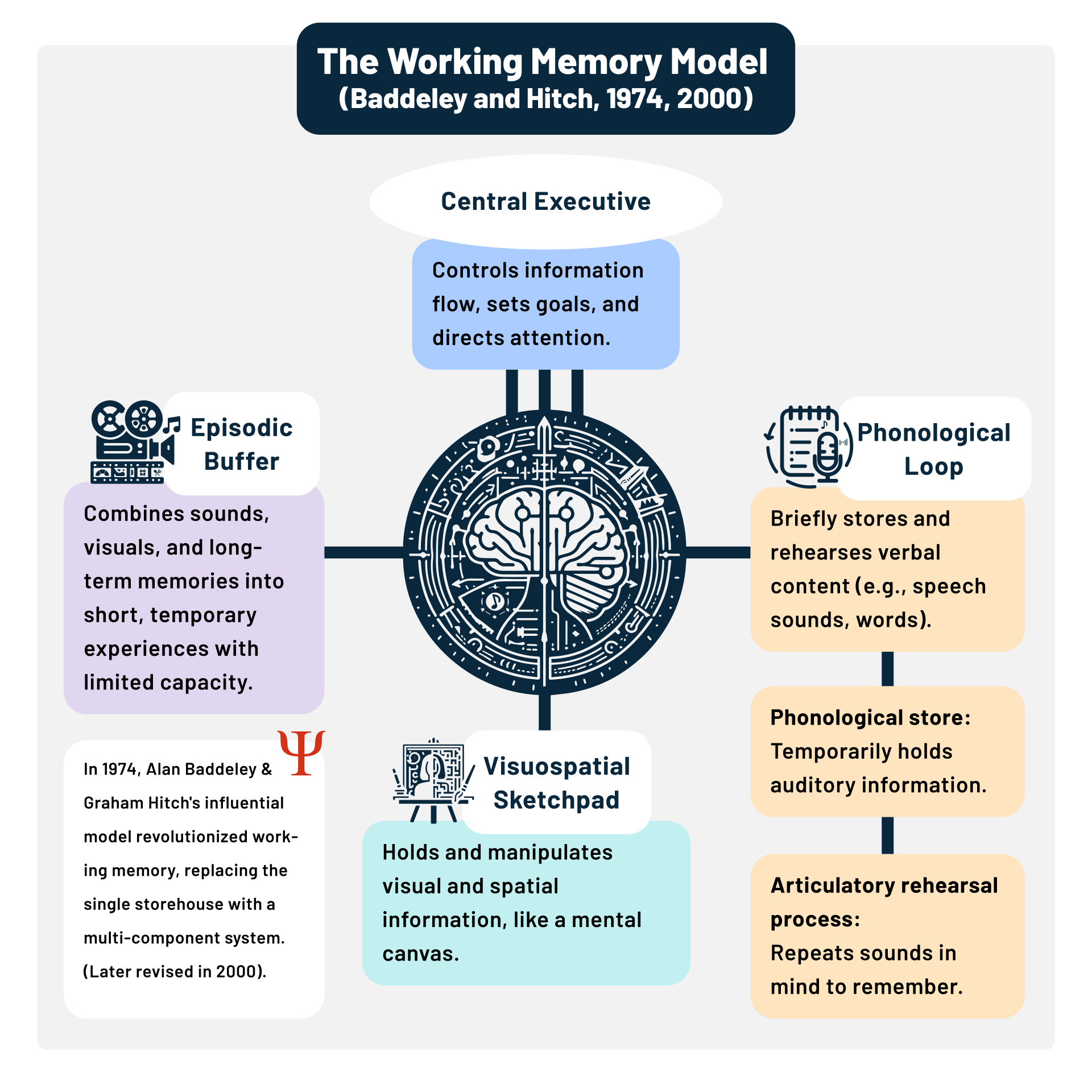
Short-term memory, with its fleeting nature, is limited to about 7 items, as posited by Harvard’s George Miller. Alan Baddeley, a former director at Cambridge’s MRC Applied Psychology Unit, introduced a ‘working memory’ model that distinguishes between different types of short-term memories.
Long-term memories, on the other hand, allow us to ‘mentally time-travel,’ reliving past events with vivid sensory details. Research suggests that memory reconstruction is a creative process influenced by biases and emotions.
Cambridge’s Long Memory
Cambridge’s memory research legacy includes the work of Sir Frederic Bartlett, whose experiments demonstrated how cultural biases shape our recollections. His famous ‘war of the ghosts’ study revealed how students altered story elements to fit their familiar world.
Another pivotal figure, Brenda Milner, studied patient Henry Molaison, whose case highlighted the hippocampus’s role in memory formation. Her work transformed our understanding of memory.
Peak Performance
Simons, alongside Professor Simon Baron-Cohen, is investigating the UK’s top memorisers to uncover the secrets of their exceptional abilities. Preliminary findings suggest that a psychological trait called ‘systemising’ might be linked to superior memory performance.
For those not naturally inclined to ‘systemise,’ there are strategies to boost memory. Mnemonics, for example, involve spatial thinking, akin to the ‘mind palace’ technique used by ancient orators.
Jon Simons advises making memory triggers distinctive, as this helps the brain differentiate between memories. The hippocampus’s role in pattern separation underscores the importance of creating unique memory cues.
The COVID-19 pandemic’s ‘brain fog’ phenomenon illustrates how routine experiences can blur memories. To enrich our lives, we should seek varied experiences and manage stress, as anxiety can reduce cognitive abilities.
For those eager to delve deeper into memory research, Cambridge offers opportunities to participate in studies. To learn more about enhancing mental resilience and combating anxiety, explore resources like Brain Boost by Dr. Barbara Sahakian and Dr. Christelle Langley, or Dr. Olivia Remes’s techniques.
To participate in Memory Lab studies, get in touch.
“`
More Articles
Getting licensed or staying ahead in your career can be a journey—but it doesn’t have to be overwhelming. Grab your favorite coffee or tea, take a moment to relax, and browse through our articles. Whether you’re just starting out or renewing your expertise, we’ve got tips, insights, and advice to keep you moving forward. Here’s to your success—one sip and one step at a time!
In the competitive world of real estate, RE/MAX recently settled a commission lawsuit for a substantial $55 million. This strategic decision has sparked intrigue and raised questions about the company's future. The lawsuit, initiated by a group of real estate agents, accused RE/MAX of commission fraud and unfair practices. However, RE/MAX chose to settle the lawsuit, demonstrating its commitment to swiftly resolving legal matters and maintaining a positive trajectory. Despite the financial implications, RE/MAX remains financially robust and poised for future growth. The company's commitment to transparency, fairness, and ethical business practices remains steadfast. As the dust settles on the commission lawsuit settlement, RE/MAX looks to the future with unwavering confidence.
¿Interesado en obtener una licencia de bienes raíces? Nuestra versión en español del curso de pre-licencia de bienes raíces de 63 horas está diseñada para personas que prefieren aprender en español. Nuestro currículo integral cubre temas esenciales desde principios de bienes raíces hasta la ley de contratos y ética. Con la flexibilidad del aprendizaje en línea, puedes adaptar tu educación inmobiliaria a tu apretada agenda. Inscríbete hoy y da el primer paso para convertirte en un profesional inmobiliario con licencia. ¡Inicia tu viaje en el mundo de los bienes raíces hoy mismo!
The real estate industry is abuzz with Bob Goldberg stepping down as the CEO of the National Association of Realtors (NAR). This leadership change comes after the Sitzer/Burnett commission lawsuit trial, raising questions about NAR's practices. Goldberg's departure marks a significant moment in NAR's history, presenting an opportunity for reevaluation and rebuilding. As the industry evolves, NAR must adapt and embrace change to remain relevant. At Cameron Academy, we provide high-quality career education courses for a competitive advantage in the real estate industry. Start your journey towards success today! Explore Our Courses: https://cameronacademy.com/our-courses-cameron-academy
Commission lawsuits in the real estate sector are becoming increasingly prevalent, causing industry professionals to worry. Glenn Sanford, eXp World Holdings' CEO, recently voiced his fears about the potential repercussions of these lawsuits on low-income buyers. Sanford's primary worry centers around affordable housing access for low-income buyers. With the rise of commission lawsuits, Sanford is apprehensive that the legal costs will ultimately be shouldered by the buyers. This could further complicate the process for low-income individuals striving to enter the housing market and achieve homeownership. The Sitzer/Burnett verdict, which found real estate agents guilty of antitrust violations by conspiring to fix buyer broker commissions, has brought the issue of commission lawsuits to the forefront. The far-reaching implications of this verdict have ignited debates about the future of buyer broker commissions.
The ongoing Sitzer/Burnett commission lawsuit trial has captured the attention of the real estate industry, as it holds the potential to reshape the way agent commissions are structured. In this article, we explore the viewpoints of brokers, agents, and real estate economists, who provide valuable insights into the possible outcomes of the trial and its implications for the industry. By examining their perspectives, we aim to shed light on the debate surrounding real estate agent commissions and the potential impact of this landmark trial.
The Federal Trade Commission (FTC) has recently implemented a new rule that mandates nonbank financial institutions to report data breaches and other security events. This rule aims to enhance transparency and ensure the safety of customers' information. Nonbank financial institutions, including mortgage brokers, payday lenders, and virtual currency exchanges, must promptly report data breaches if they affect at least 500 customers and involve unauthorized access to unencrypted information. The FTC's new rule requiring nonbank financial institutions to report data breaches is a significant step towards ensuring transparency, accountability, and customer safety.