In an intriguing exploration of memory, the University of Cambridge’s Memory Lab is shedding light on the intricate workings of our minds. This initiative, led by Professor Jon Simons, delves into the various facets of memory, offering insights into how we can enhance and preserve our cognitive abilities.
“When anxious thoughts flood our minds, they compete for space in our working memory and impair our ability to recall long-term memories. If we can find ways to reduce stress and anxiety, our memory can often bounce back.”
Jon Simons
What exactly is a memory? According to Simons, it’s a complex interplay of brain activities, a skill to hone, and a blueprint for future actions. The Memory Lab invites volunteers to engage in tasks that range from online exercises to MRI scans, all in the quest to decode memory’s mysteries.
If Memory Serves
Memories are biochemical changes that span the brain’s landscape, influenced by factors such as whether a memory is being encoded or reconstructed. The hippocampus plays a crucial role in forming new memories, but long-term storage involves multiple cortical areas.
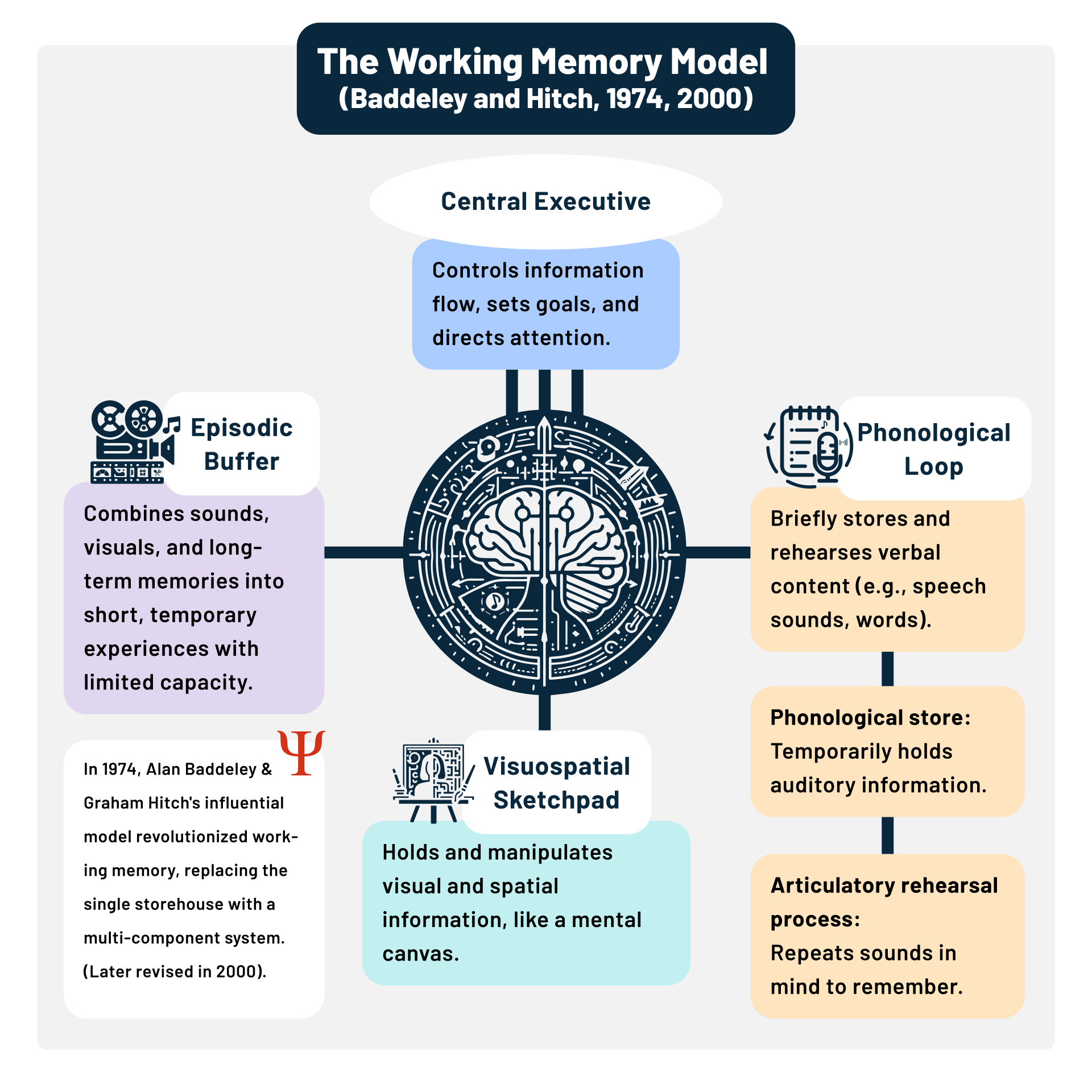
Short-term memory, with its fleeting nature, is limited to about 7 items, as posited by Harvard’s George Miller. Alan Baddeley, a former director at Cambridge’s MRC Applied Psychology Unit, introduced a ‘working memory’ model that distinguishes between different types of short-term memories.
Long-term memories, on the other hand, allow us to ‘mentally time-travel,’ reliving past events with vivid sensory details. Research suggests that memory reconstruction is a creative process influenced by biases and emotions.
Cambridge’s Long Memory
Cambridge’s memory research legacy includes the work of Sir Frederic Bartlett, whose experiments demonstrated how cultural biases shape our recollections. His famous ‘war of the ghosts’ study revealed how students altered story elements to fit their familiar world.
Another pivotal figure, Brenda Milner, studied patient Henry Molaison, whose case highlighted the hippocampus’s role in memory formation. Her work transformed our understanding of memory.
Peak Performance
Simons, alongside Professor Simon Baron-Cohen, is investigating the UK’s top memorisers to uncover the secrets of their exceptional abilities. Preliminary findings suggest that a psychological trait called ‘systemising’ might be linked to superior memory performance.
For those not naturally inclined to ‘systemise,’ there are strategies to boost memory. Mnemonics, for example, involve spatial thinking, akin to the ‘mind palace’ technique used by ancient orators.
Jon Simons advises making memory triggers distinctive, as this helps the brain differentiate between memories. The hippocampus’s role in pattern separation underscores the importance of creating unique memory cues.
The COVID-19 pandemic’s ‘brain fog’ phenomenon illustrates how routine experiences can blur memories. To enrich our lives, we should seek varied experiences and manage stress, as anxiety can reduce cognitive abilities.
For those eager to delve deeper into memory research, Cambridge offers opportunities to participate in studies. To learn more about enhancing mental resilience and combating anxiety, explore resources like Brain Boost by Dr. Barbara Sahakian and Dr. Christelle Langley, or Dr. Olivia Remes’s techniques.
To participate in Memory Lab studies, get in touch.
“`
More Articles
Getting licensed or staying ahead in your career can be a journey—but it doesn’t have to be overwhelming. Grab your favorite coffee or tea, take a moment to relax, and browse through our articles. Whether you’re just starting out or renewing your expertise, we’ve got tips, insights, and advice to keep you moving forward. Here’s to your success—one sip and one step at a time!
The title and real estate industries are entering their most dramatic compliance overhaul in decades. FinCEN’s new anti‑money‑laundering rule now applies to every state, enforces a first‑dollar reporting requirement, and places full responsibility on settlement agents. With the rule already in effect and mandatory reporting beginning March 1, 2026, professionals face urgent operational changes involving software, training, and entity‑buyer disclosures. Combined with state‑level rate shifts and heightened scrutiny of attorney opinion letters, 2025 marks a turning point that demands stronger compliance literacy across the entire real estate and finance ecosystem.
Retirement planning went through major changes in 2025, from new SECURE Act updates to shifting investment behaviors. As we move into 2026, seven key trends are reshaping how Americans save and build long‑term wealth. These shifts matter not only for everyday investors but also for professionals across real estate, finance, mortgage, insurance, and other licensed fields. Understanding these developments can help you strengthen your own financial strategy while staying competitive in your career.
Florida’s housing market is cooling faster than any other state, and soaring insurance premiums are the primary force driving buyers away. With cancellation rates in major metros topping 20%, steep price drops across Southwest Florida, rising HOA and condo fees, and thousands of homes added to new flood zones, many buyers are discovering that insurance—not the mortgage—is what kills the deal. As Citizens shrinks and new legislation raises coverage requirements, professionals in real estate, mortgage, and insurance must adapt quickly to a market where affordability hinges on risk, regulation, and rising premiums.
Commercial real estate is entering 2026 with renewed optimism as pricing floors, revitalized capital markets, and improved market visibility signal a shift away from the volatility of 2025. Analysts from Deloitte, Colliers, Cushman & Wakefield, and CoStar highlight firmer fundamentals, rising deal flow, and increased lender participation. Key sectors such as office, industrial, retail, multifamily, and data centers are showing distinct recovery patterns, positioning industry professionals and students for new opportunities in the year ahead.
Florida’s property insurance market is finally stabilizing after years of storms, lawsuits, and rising rates — yet many homeowners are still seeing higher bills. The reason isn’t the rates themselves but soaring replacement values driven by inflation in labor and building materials. Even as insurers lower rates, the cost to rebuild a home continues to rise, making up roughly 75% of recent premium increases. With new insurers entering the market and reforms taking effect, homeowners now have more options to shop, recalculate coverage, and control their costs.
The 2026 job market is shifting fast, and the biggest winners will be professionals who can prove they’re continuously learning. With more than 90% of employers now preferring candidates with microcredentials, short targeted certificates are becoming the new career currency. From AI and data skills to modern communication and adaptability, microcredentials are helping workers stand out in a competitive landscape — especially as industries like real estate, mortgage, insurance, and finance demand ongoing upskilling.