In an intriguing exploration of memory, the University of Cambridge’s Memory Lab is shedding light on the intricate workings of our minds. This initiative, led by Professor Jon Simons, delves into the various facets of memory, offering insights into how we can enhance and preserve our cognitive abilities.
“When anxious thoughts flood our minds, they compete for space in our working memory and impair our ability to recall long-term memories. If we can find ways to reduce stress and anxiety, our memory can often bounce back.”
Jon Simons
What exactly is a memory? According to Simons, it’s a complex interplay of brain activities, a skill to hone, and a blueprint for future actions. The Memory Lab invites volunteers to engage in tasks that range from online exercises to MRI scans, all in the quest to decode memory’s mysteries.
If Memory Serves
Memories are biochemical changes that span the brain’s landscape, influenced by factors such as whether a memory is being encoded or reconstructed. The hippocampus plays a crucial role in forming new memories, but long-term storage involves multiple cortical areas.
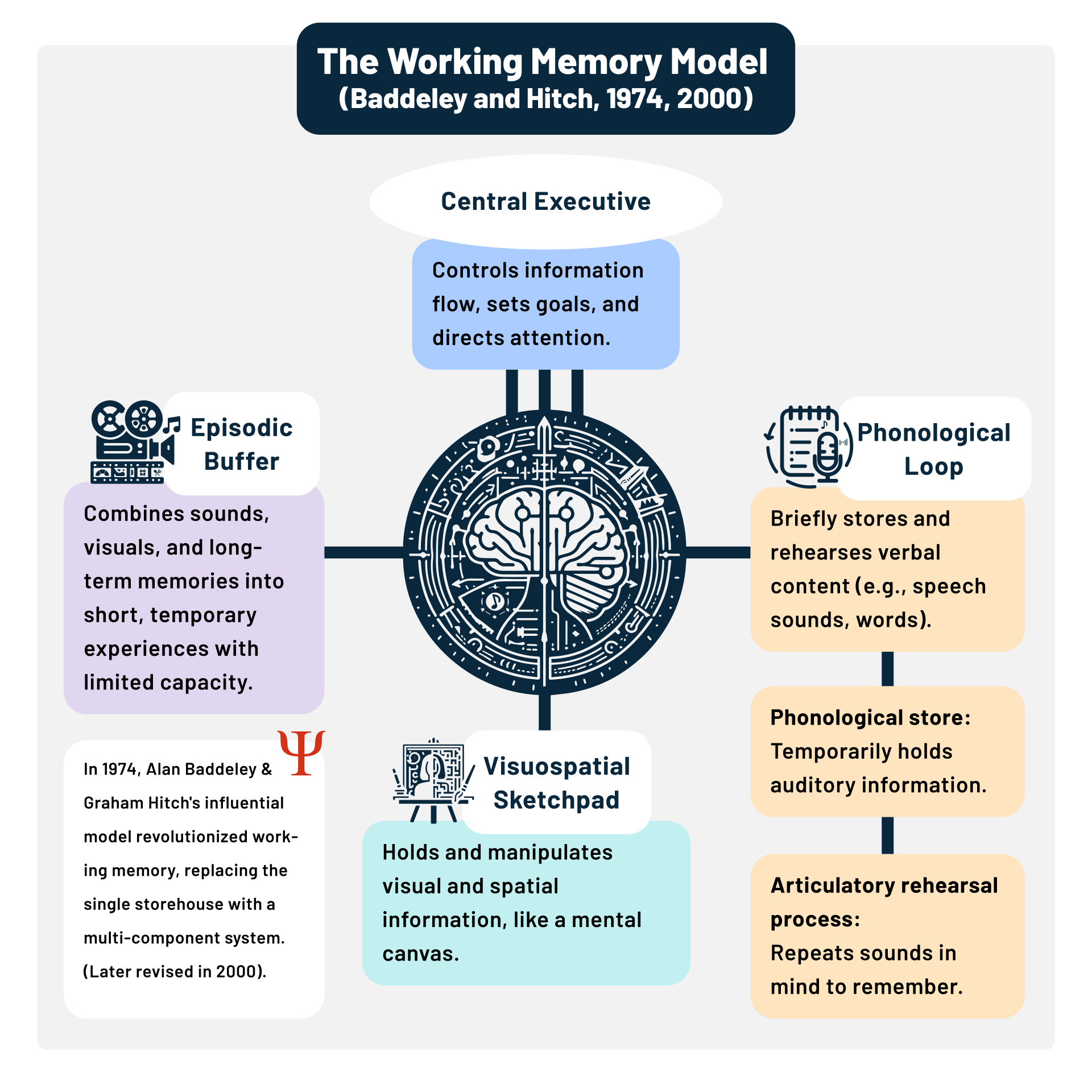
Short-term memory, with its fleeting nature, is limited to about 7 items, as posited by Harvard’s George Miller. Alan Baddeley, a former director at Cambridge’s MRC Applied Psychology Unit, introduced a ‘working memory’ model that distinguishes between different types of short-term memories.
Long-term memories, on the other hand, allow us to ‘mentally time-travel,’ reliving past events with vivid sensory details. Research suggests that memory reconstruction is a creative process influenced by biases and emotions.
Cambridge’s Long Memory
Cambridge’s memory research legacy includes the work of Sir Frederic Bartlett, whose experiments demonstrated how cultural biases shape our recollections. His famous ‘war of the ghosts’ study revealed how students altered story elements to fit their familiar world.
Another pivotal figure, Brenda Milner, studied patient Henry Molaison, whose case highlighted the hippocampus’s role in memory formation. Her work transformed our understanding of memory.
Peak Performance
Simons, alongside Professor Simon Baron-Cohen, is investigating the UK’s top memorisers to uncover the secrets of their exceptional abilities. Preliminary findings suggest that a psychological trait called ‘systemising’ might be linked to superior memory performance.
For those not naturally inclined to ‘systemise,’ there are strategies to boost memory. Mnemonics, for example, involve spatial thinking, akin to the ‘mind palace’ technique used by ancient orators.
Jon Simons advises making memory triggers distinctive, as this helps the brain differentiate between memories. The hippocampus’s role in pattern separation underscores the importance of creating unique memory cues.
The COVID-19 pandemic’s ‘brain fog’ phenomenon illustrates how routine experiences can blur memories. To enrich our lives, we should seek varied experiences and manage stress, as anxiety can reduce cognitive abilities.
For those eager to delve deeper into memory research, Cambridge offers opportunities to participate in studies. To learn more about enhancing mental resilience and combating anxiety, explore resources like Brain Boost by Dr. Barbara Sahakian and Dr. Christelle Langley, or Dr. Olivia Remes’s techniques.
To participate in Memory Lab studies, get in touch.
“`
More Articles
Getting licensed or staying ahead in your career can be a journey—but it doesn’t have to be overwhelming. Grab your favorite coffee or tea, take a moment to relax, and browse through our articles. Whether you’re just starting out or renewing your expertise, we’ve got tips, insights, and advice to keep you moving forward. Here’s to your success—one sip and one step at a time!
After years of sharp increases and shrinking coverage options, Florida’s home insurance market is showing its strongest signs of recovery yet. Multiple insurers are proposing significant premium cuts for 2026 — some in the double digits — as storm‑loss data improves and private carriers re‑enter the state. Citizens Insurance is also seeking its first broad rate reduction in a decade, potentially lowering costs for millions of homeowners. This shift could boost affordability and confidence across Florida’s real estate and mortgage markets heading into the new year.
An AI company that began in a bedroom is now shaking the foundations of the lending industry. Salient, led by CEO Ari Malik, has skyrocketed to a $500 million valuation by fixing one of finance’s messiest problems: debt servicing. With zero customer churn, 100% pilot-to-contract conversions, and AI agents reportedly 30 times more compliant than humans, Salient is redefining how lenders manage loans. Its rapid rise highlights a new era where trust, regulation‑ready AI, and deep industry understanding are becoming essential for professionals across real estate, mortgage, finance, and insurance.
Redmond, Washington is tackling its housing crisis with Prisma, a six‑story, transit‑oriented development built on discounted surplus land from Sound Transit. The project will deliver 328 deeply affordable units—most reserved for households earning 50 percent of AMI or less, including families and people with disabilities. Enabled by a rare cross‑sector funding partnership, Prisma showcases how cities can combine transit investment, public resources, and private support to create long‑term, equitable housing solutions.
Citizens Property Insurance Corp. is recommending rate decreases for millions of Florida homeowners in 2026, marking the first potential premium drop in over a decade. If approved by state regulators, personal-line policies would fall an average of 2.6%, with some homeowners seeing reductions up to 11.5%. The shift reflects growing market stability driven by recent insurance reforms and increased private‑sector participation, though not all counties will benefit equally.
Despite alarming headlines, experts say AI isn’t the true driver behind Wall Street job cuts. Major banks like JPMorgan and Goldman Sachs are trimming staff, but economists point to post‑pandemic overhiring and economic uncertainty—not robots—as the real cause. While banks are investing heavily in AI tools, actual AI‑driven layoffs remain minimal. Instead, AI is slowing new hiring, reshaping roles, and pushing professionals across finance, real estate, and other industries to upskill rather than fear replacement.
Artificial intelligence is reshaping the real estate industry in 2025, powering a new surge of growth and maturity in the proptech sector. AI tools once considered experimental—such as predictive analytics, automated valuations, and digital transaction platforms—are now becoming essential to real estate, mortgage, insurance, and finance workflows. With rising investor confidence and widespread professional adoption, AI‑driven proptech is transforming how the industry operates and what skills modern professionals need to stay competitive.