Transforming Boston’s Schools: A Simple Yet Powerful Idea
On a bright spring morning at John Hay Community Academy in Chicago, a scene unfolds that could hold the key to transforming Boston’s public schools. Three first-graders, Faye, Ka’mari, and A’Kyng, are eagerly participating in a high-dosage tutoring session. This method, which involves intensive, individualized instruction, has shown remarkable promise in improving academic performance.
Just across the hall, Felicia Mason, a dedicated member of the school district’s Tutor Corps, is guiding her young charges through a series of words. With each correct pronunciation, the children’s excitement grows—a testament to the effectiveness of this educational intervention.
High-dosage tutoring is not just another educational fad; it is backed by extensive research. Studies have demonstrated that this approach can significantly enhance learning outcomes, often outperforming other popular strategies like extended school days or summer programs. In fact, a pair of randomized control trials conducted in Chicago a decade ago found that high-dosage tutoring doubled or tripled the learning of low-income Black and Latino high school students.
The COVID-19 pandemic provided a unique opportunity to test the scalability of this intervention. With federal funding pouring into academic recovery, districts across the country, including Boston, were encouraged to adopt evidence-based strategies like high-dosage tutoring. While some states and districts have embraced this approach, Boston has yet to make it a priority.
The Boston Connection
Interestingly, Boston is the birthplace of the high-dosage tutoring movement. Match Charter Public High School, which opened at the turn of the century, pioneered this approach. By employing a “Match Corps” of live-in tutors, the school transformed its student body into one of the highest achieving in the state.
Despite its origins, Boston has not fully embraced high-dosage tutoring in its public schools. The city has experimented with the intervention in a small number of schools, but it has not been prioritized. With a wealth of underutilized school buildings and a rich philanthropic infrastructure, Boston is well-positioned to implement a robust high-dosage tutoring program.
The Boston Globe editorial board argues that Boston should seriously consider investing in high-quality, high-dosage tutoring. The potential benefits are immense—not only in terms of academic achievement but also in addressing long-standing achievement gaps between white students and students of color.
Scaling Up
Scaling up high-dosage tutoring presents challenges, particularly in terms of cost and labor. However, innovative solutions, such as remote and hybrid tutoring models, offer promising pathways to expand these programs. By leveraging technology, districts can tap into a wider pool of qualified tutors, thereby reducing costs and increasing reach.
In Chicago, for example, the district has partnered with Saga Education to implement a hybrid tutoring model. This approach combines self-guided computer lessons with live, remote tutoring sessions, allowing more students to benefit from high-dosage tutoring.
As Boston considers its educational future, it would do well to learn from these examples. By investing in high-dosage tutoring, the city can provide its students with the best learning conditions possible. The potential for transformative change is within reach—Boston just needs to take the leap.
More Articles
Getting licensed or staying ahead in your career can be a journey—but it doesn’t have to be overwhelming. Grab your favorite coffee or tea, take a moment to relax, and browse through our articles. Whether you’re just starting out or renewing your expertise, we’ve got tips, insights, and advice to keep you moving forward. Here’s to your success—one sip and one step at a time!
Newman Properties, a Massachusetts-based investment firm, has expanded its footprint into Connecticut with the $3.65 million acquisition of a 6,350‑square‑foot retail building in Enfield. Anchored by national restaurant chain Red Robin, the property offers the type of stable tenancy investors seek when entering new markets. The deal underscores growing confidence in anchored retail assets and provides a valuable real-world example for real estate professionals studying market analysis, investment strategy, and portfolio expansion.
JPMorgan now expects national home prices to flatten in 2026, but the Sunbelt is telling a very different story. Florida home values are down 5.1%, Texas is down 2.4%, and analysts warn that years of rapid building are finally catching up to the region. As demand stabilizes and inventory swells, real estate professionals — especially in Florida — face a market full of challenges, opportunities, and critical timing decisions.
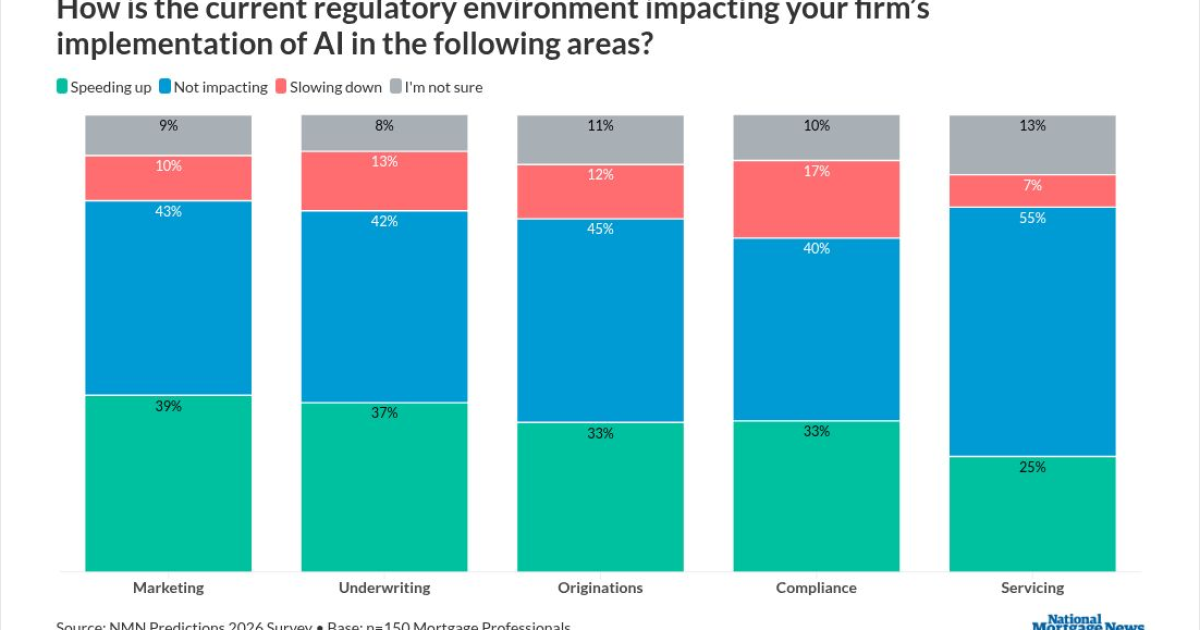
Artificial intelligence is finally stepping into the mortgage underwriting spotlight, with 57% of mortgage professionals predicting it will drive the most transformative industry shift in 2026. Thanks to major advancements in language models and workflow automation, AI is now capable of navigating the messy, document-heavy realities that have long slowed underwriting. From faster preapprovals to improved credit analysis and real‑time income verification, AI is streamlining processes while allowing underwriters to focus on true risk management. As regulatory winds shift and grassroots pressure builds within lending teams, the industry is entering a pivotal era where AI‑powered underwriting becomes not just an advantage — but an expectation.
Portland’s top 20 office towers have lost an unprecedented 70% of their value since 2019—plunging from $3 billion to under $1 billion—triggering tax revenue shortfalls, budget crises, and a surge in appeals as the city grapples with its biggest commercial real estate reset in modern history.
South Florida’s luxury real estate market just raised the bar again — this time with a $1 million virtual reality system that lets buyers walk through Dolce & Gabbana’s upcoming Miami tower long before construction wraps. Real estate master’s students were given an immersive look inside the project, discovering how VR is transforming high‑end development, influencing buyer psychology, and shaping the future skills today’s professionals need.
Long Island’s commercial real estate scene is kicking off 2026 with a surge of activity—industrial leases in Medford, neighborhood retail trades in Bohemia, Pizza Hut’s new DELCO expansion in Centereach, mixed‑use acquisitions in Melville, and major investor interest in bank‑leased and franchise-backed properties. From warehouses to restaurant rebrands, these deals highlight a region evolving fast and offering fresh opportunities for agents, investors, and professionals looking to stay ahead in the market.